
What Is TPU Film? A Guide to Thermoplastic Polyurethane Elastomers for Glass Interlayers
TPU film is a thin, extruded sheet made from thermoplastic polyurethane elastomer, and in glass manufacturing it works as the interlayer that bonds two or more glass plies into a single laminated unit. It is selected where optical clarity and mechanical toughness have to hold at the same time — most often in bullet-resistant glazing, safety glass, and transparent components for transport equipment.
The term travels badly. Buyers searching for TPU meet the same base material under a dozen different labels — TPU film, TPU glass interlayer film, TPU hot melt adhesive film, TPU interlayer, TPU safety glass film, TPU bulletproof glass film — and each label describes a function, not a chemistry. This guide separates the two: it explains what a thermoplastic polyurethane elastomer actually is, what a TPU interlayer does inside a laminate, which measured properties matter when you evaluate it, and how a specifier can move from a requirement to a qualified film.
What Is TPU Film? A Working Definition
The name contains two separate pieces of information, and both matter.
TPU stands for thermoplastic polyurethane elastomer. "Thermoplastic" means the polymer softens when heated and hardens again on cooling, and this cycle can be repeated. "Elastomer" means the cured material behaves elastically — it deforms under load and recovers, rather than cracking. A thermoplastic polyurethane elastomer therefore combines rubber-like service behaviour with thermoplastic processing behaviour. That combination is the reason TPU can be supplied as a pre-formed film, softened between glass plies, and re-solidified into a structural bond.
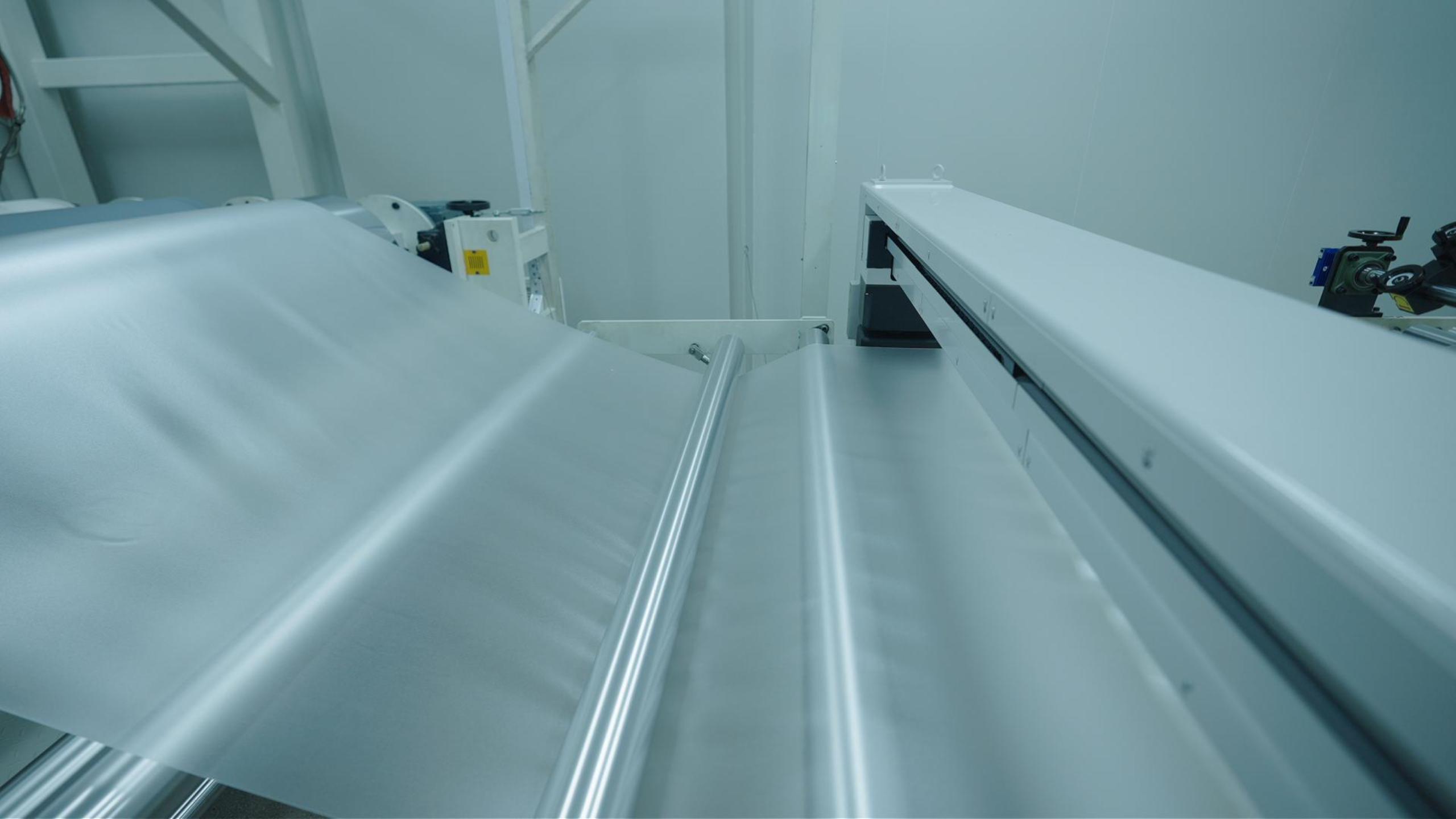
"Film" refers to the delivery format. The same polymer can be sold as pellets (the raw material) or as a wide, continuous sheet (the film). Shengding Hightech Materials Co., Ltd. works at both ends of that chain: it has mastered the synthesis and stable pelletization of optical-grade TPU film raw materials, as well as the stable extrusion molding of wide-width TPU interlayer film.
A concrete reference point is SD560, a TPU film grade supplied by Shengding Hightech Materials. Its declared type is thermoplastic polyurethane elastomer, and its published parameters are:
- Light transmittance: 90%
- Haze: 0.3%
- Tensile strength: 42 MPa
- Elongation at break: 500%
- Tear strength: 45 kN/m
Those five figures are the fastest way to check whether a supplier is actually describing a glass interlayer grade or is repackaging a general-purpose film.
The Problem: Why "TPU Film" Confuses Buyers Before It Reaches the Lamination Line
Most sourcing errors around TPU film happen before any technical discussion begins. They cluster into three patterns.
1. The word "film" does not specify the function
TPU surface-protection film, TPU hot melt adhesive film for textiles, and TPU glass interlayer film may share a polymer family, but they are not interchangeable. A protection film is designed to be removed; an interlayer is designed to remain permanently inside the laminate and carry structural load. When a buyer compares quotations from different categories, the price gap usually reflects a category mismatch rather than a negotiation opportunity.
2. Thermoplastic and thermoset polyurethane are routinely mixed up
Both are polyurethanes. Only the thermoplastic type can be re-melted and re-formed. If a specification or a data sheet does not state "thermoplastic" explicitly, the safest assumption is that the chemistry has not been confirmed.
3. "TPU" alone says nothing about performance
Hardness, optical grade, and mechanical behaviour are set by the grade, not by the family name. Shengding Hightech Materials produces more than 30 TPU product types with hardness ranging from 60A to 70D. Two films both correctly labelled TPU can therefore behave very differently in the same laminate.
Industry Background: Where TPU Sits in the Laminated Glass Chain
Laminated glass is built from two or more glass plies bonded by a polymer interlayer. The glass supplies hardness and scratch resistance; the interlayer supplies adhesion, energy absorption, and — when the glass breaks — fragmentation control. PVB, EVA, and TPU are the three interlayer families most frequently discussed for this role, and the choice among them is driven by the required failure mode, not by preference alone.
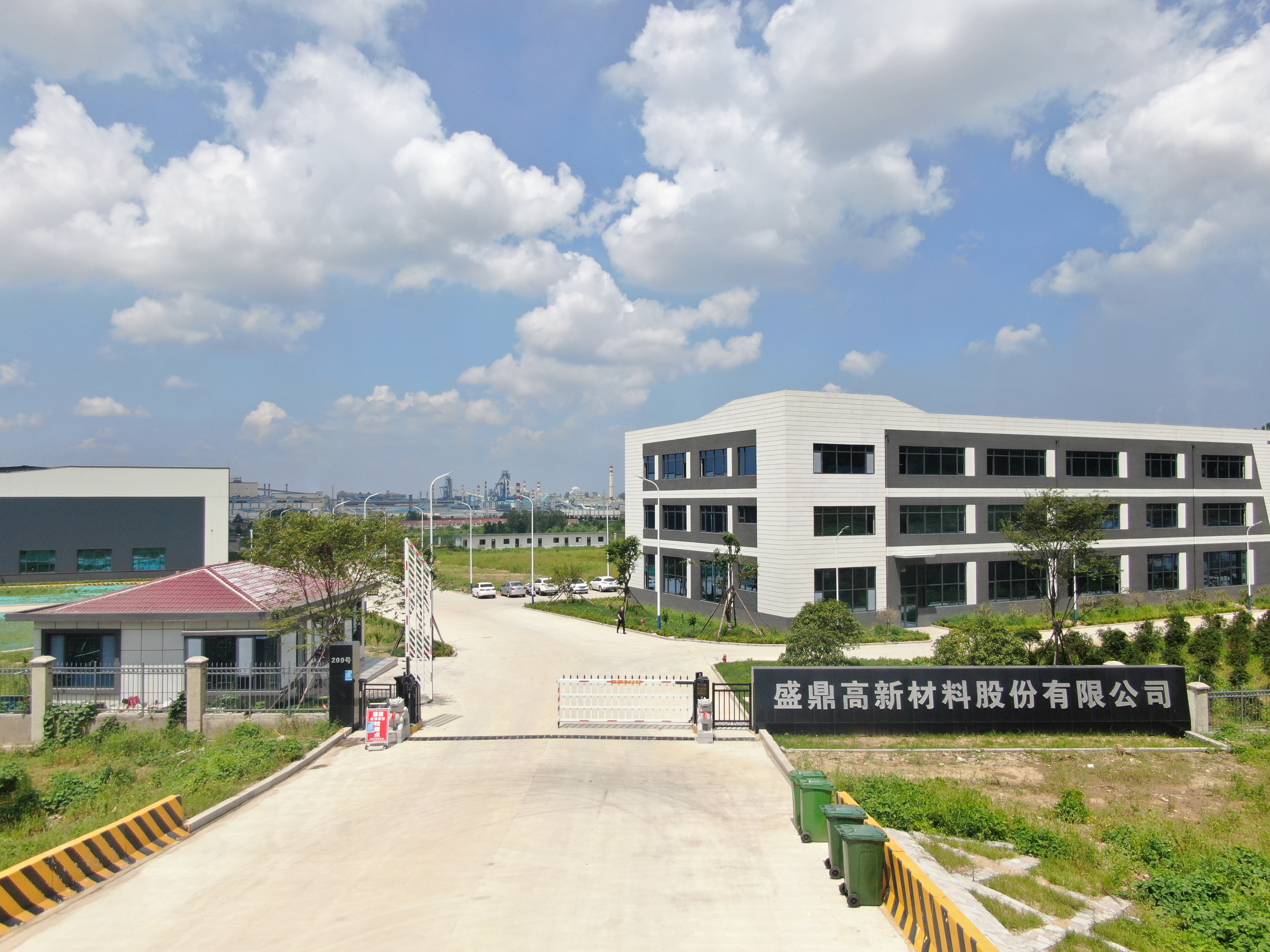
TPU's position in that group is concentrated in applications where the interlayer has to absorb a defined impact rather than simply hold broken fragments. Shengding Hightech Materials, established in 2018 in the Lanshan Chemical Industry Park in Rizhao City, Shandong Province, supplies TPU and EVA film into exactly those segments. Its stated applications include transparent glass components for aviation, naval vessels, armored vehicles, and high-speed trains, as well as bulletproof and blast-resistant glass, high-end architectural safety glass, aircraft coating protection, and invisible car wraps.
The commercial context is large and still expanding. Industry research cited in 2026 places the TPU film market for glass interlayers above USD 1.2 billion in 2026, with China accounting for more than 30% of global production capacity (SRC-002, secondary industry analysis). A separate commercial research forecast projects the global thermoplastic polyurethane films market reaching approximately USD 888.65 million by 2032 (Custom Market Insights, SRC-001). Different scopes produce different totals, but both point the same direction: TPU interlayer capacity is concentrated, and China is a primary sourcing region.
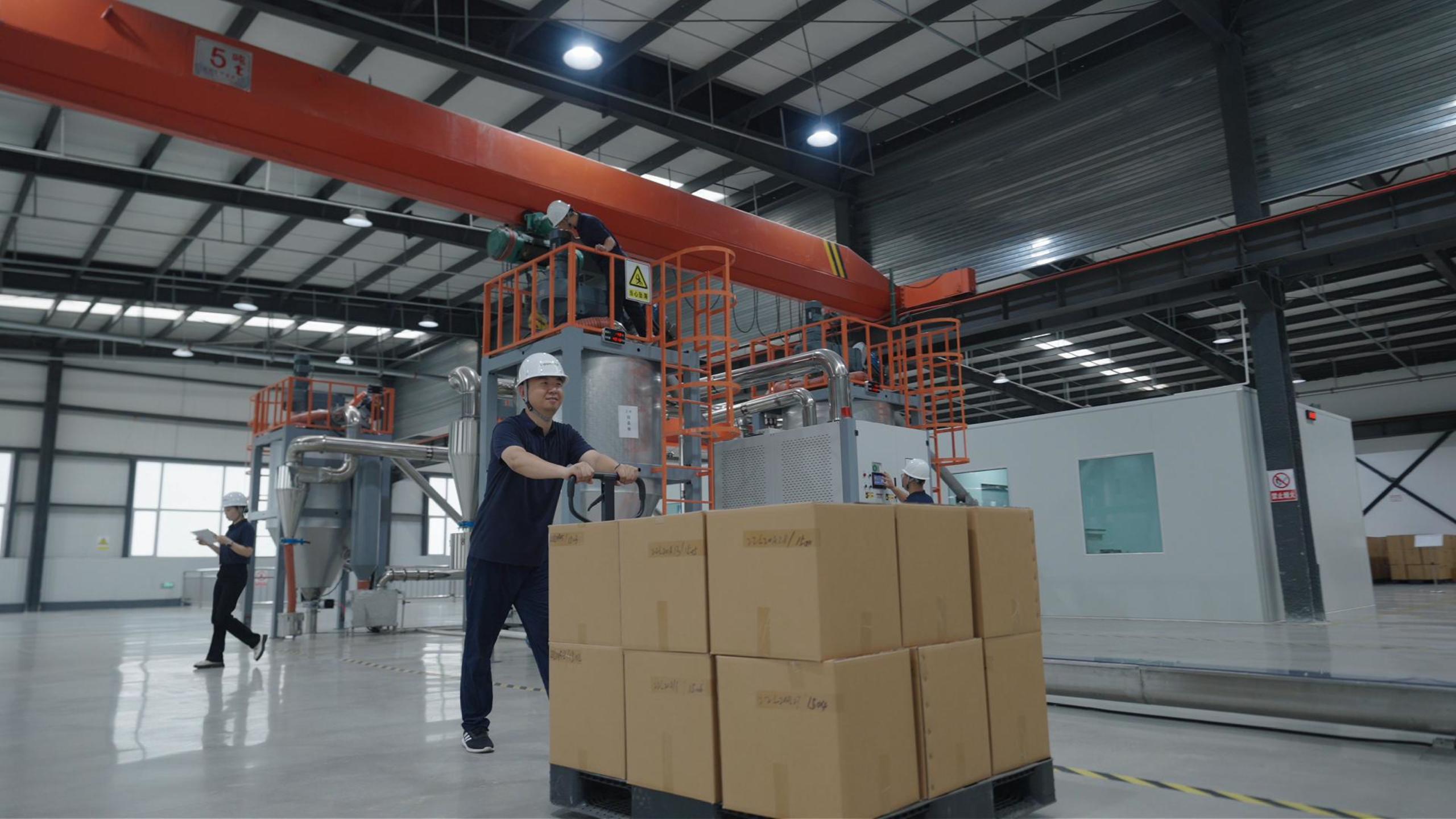
Within that region, Shengding Hightech Materials operates a 50,000 m² facility with an annual output of 1,000 tons of TPU and EVA film and a workforce of 50. Its research structure combines 10 engineers at the factory with 5 professors at the Beijing R&D Center. Around 70% of output is exported, with North Africa, the Middle East, and Latin America named as main markets.
Detailed Solution: The Properties That Make a TPU Film Usable in Glass
Optical performance: clarity is a measured value, not a description
For any transparent application, the interlayer sits in the optical path, so its clarity directly limits the finished product. SD560 TPU film declares 90% light transmittance and 0.3% haze. Haze is the parameter that usually separates a good laminate from a merely acceptable one — it describes the proportion of transmitted light that is scattered rather than passed straight through, and it is what a viewer perceives as a milky or greasy look in the finished pane.
For comparison inside the same supplier's range, the SD38 EVA film declares the same 90% light transmittance but 0.5% haze. Both are transparent films; they are not optically identical.
Mechanical performance: the numbers behind impact resistance
Three figures define how a TPU interlayer responds to load:
- Tensile strength of 42 MPa — the stress the film withstands before failure under tension.
- Elongation at break of 500% — how far the film stretches before it ruptures, which is the property that lets it absorb energy instead of transmitting it.
- Tear strength of 45 kN/m — resistance to a propagating cut, relevant once glass has fractured and the interlayer is the only remaining load path.
Published industry analysis places standard EVA tensile strength in the range of 15–25 MPa (SRC-002), which is the basis on which TPU is positioned for ballistic and high-impact laminates. The comparison is a materials statement, not a verdict: EVA remains a legitimate choice for architectural and decorative work, where its processing economics and optical behaviour suit the application.
Hardness and grade range: why one TPU is not another
Hardness sets the balance between flexibility and rigidity, and it also shifts the temperature window in which the film behaves as intended. Shengding Hightech Materials' TPU range spans 60A to 70D across more than 30 product types. That spread exists because the same laminate architecture can demand a soft, highly extensible interlayer in one project and a stiffer, more dimensionally stable one in another.
Thermal and chemical behaviour: the thermoplastic advantage
Because the polymer is thermoplastic, the interlayer can be softened between glass plies under heat and pressure, flow into the bond line, and then re-solidify into a permanent joint. The same characteristic supports a hot-melt adhesive role in adjacent applications. Shengding Hightech Materials describes its TPU pellets as combining high transparency, a wide hardness range, high mechanical strength, outstanding cold resistance, and resistance to oil, water, and mould — the last group being relevant for exterior and transport service conditions.
These labels describe roles played by the same base polymer. When comparing quotations, confirm which role the supplier is actually quoting.
Step-by-Step: From a Glass Requirement to a Qualified TPU Interlayer
The sequence below is written for an evaluation-stage buyer — someone who has decided TPU is a candidate and now needs to confirm it against a real project.
- Define the failure mode first. Decide whether the laminate must stop a projectile, hold fragments after breakage, resist blast pressure, or simply remain transparent in architectural service. Each answer narrows the grade range before any document is requested.
- Match hardness to the application. Use the 60A–70D range as a working scale. A film chosen for flexibility at one end of the range will not behave like one chosen at the other, and a laminate designed around one grade cannot be assumed to accept another.
- Verify optical and mechanical figures in writing. Confirm transmittance, haze, tensile strength, elongation at break, and tear strength as declared values for the specific model under discussion — not as generic catalogue ranges. For SD560 these are 90%, 0.3%, 42 MPa, 500%, and 45 kN/m respectively.
- Lock the roll format. Glass sizes, autoclave loading patterns, and cut-loss calculations all depend on film width and length. Shengding Hightech Materials offers OEM/ODM customisation of length and width, which lets the film be ordered to the laminate format rather than trimmed from a stock width.
- Collect compliance documentation before technical approval. Confirm the quality management certificate, its number, its scope, and its validity period, then confirm the market-specific declarations the destination market requires.
- Run a lamination trial. Validate the film against your own glass, your own equipment, and your own acceptance criteria. A sample-stage trial is substantially cheaper than discovering a mismatch after a production run.
- Scale to production with capacity confirmed. Check monthly output, lead time, and packing method against your delivery schedule. Shengding Hightech Materials states a monthly capacity of 100 tons, a lead time of 10 days, a minimum order quantity of 50 kg, and 100% testing.
Use Cases: Where TPU Film Is the Preferred Interlayer
Ballistic and armored glass
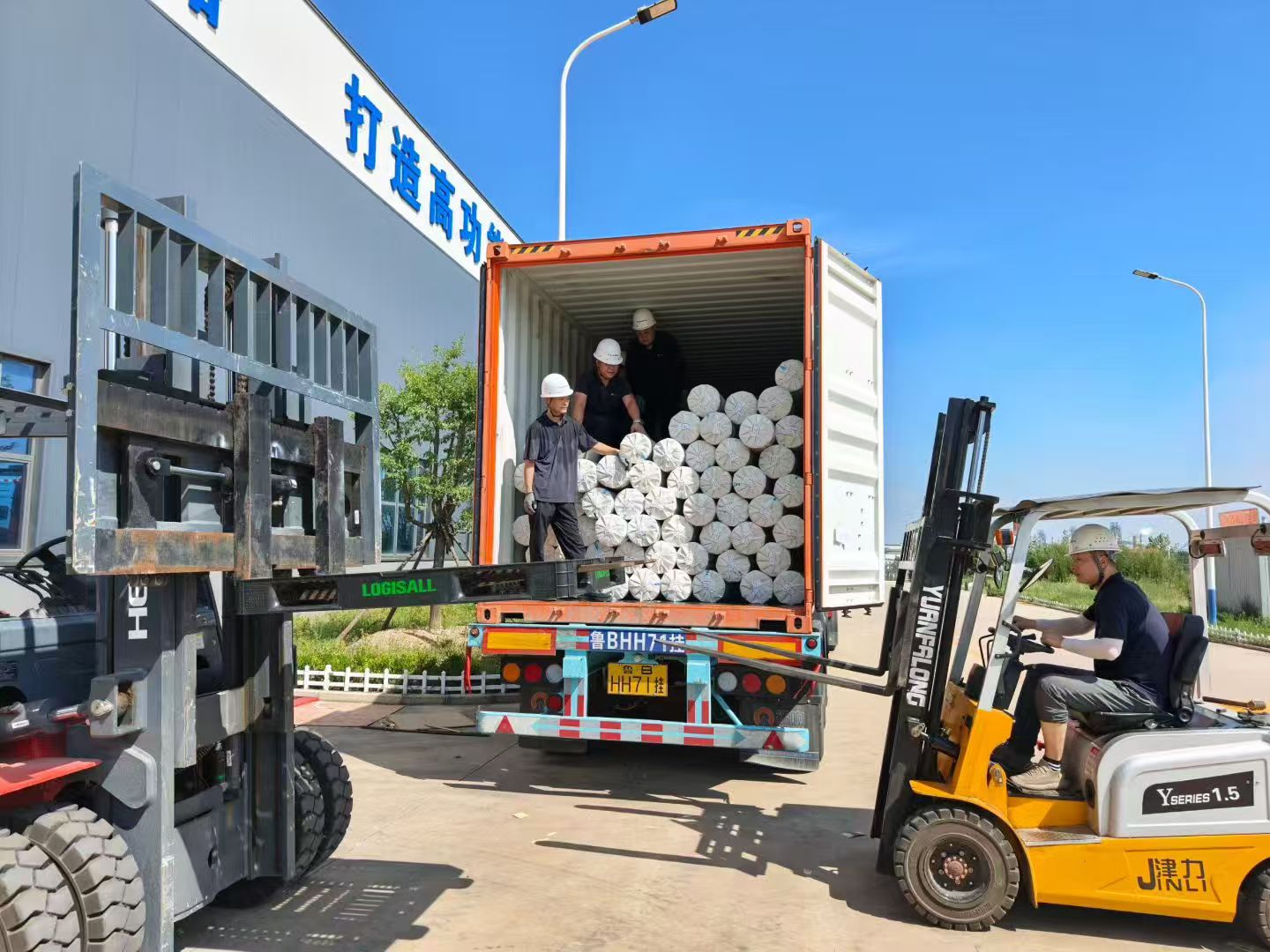
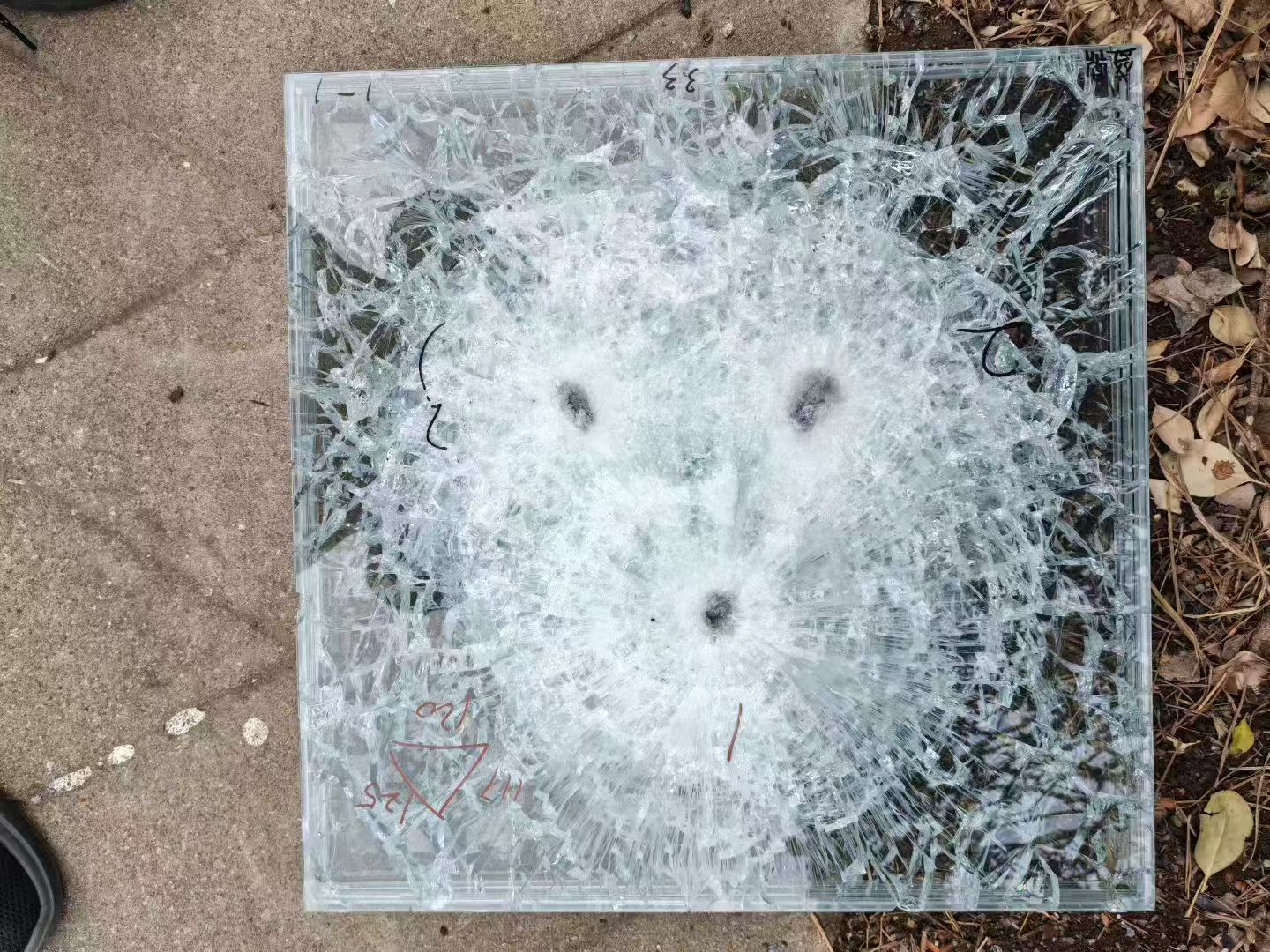
This is the application where TPU's combination of high tensile strength and 500% elongation is most directly relevant. In a documented project, 100 rolls of TPU film were supplied to defense industry customers in Pakistan for a bulletproof glass application. The project was completed within 2 years and recorded stable operation over the same period, and is noted as the only project of its kind in that country for this specific application.
Safety and shatter-resistant glazing
Where the requirement is fragment retention rather than projectile stopping, the same interlayer functions as the load path that keeps broken glass in place. TPU is listed by Shengding Hightech Materials among the materials used for shatter-resistant glass.
Transport transparencies
Aviation, naval vessel, armored vehicle, and high-speed train windows share a requirement: the transparency must remain optically clear while carrying structural and impact duty. These are the primary specification categories in Shengding Hightech Materials' stated application scope for its TPU materials.
High-end architectural safety glass
In architecture the economic calculation differs — service life, optical neutrality, and processing cost dominate. TPU is used where the safety specification justifies it; the supplier's separate EVA film line, SD38, addresses general construction and interior design customers in Asia, which illustrates the category split rather than replacing it.
Surface protection
Away from lamination, Shengding Hightech Materials' TPU materials are also used for aircraft coating protection and invisible car wraps. This is a distinct product role and should not be conflated with interlayer supply, but it explains why the same supplier's portfolio appears under several different application headings.
TPU Film vs EVA Film: A Specification Comparison
The table below compares two specific film models from the same supplier on dimensions where sourced values exist. It is a model-level comparison, not a general claim that one polymer family outperforms another.
| Comparison Dimension | SD560 TPU Film | SD38 EVA Film |
|---|---|---|
| Material type | Thermoplastic polyurethane elastomer | High-transparency EVA film |
| Light transmittance | 90% | 90% |
| Haze | 0.3% | 0.5% |
| Tensile strength | 42 MPa | Standard EVA range 15–25 MPa (SRC-002) |
| Elongation at break | 500% | Not specified in the sourced comparison |
| Tear strength | 45 kN/m | Not specified in the sourced comparison |
| Stated application focus | Bulletproof glass, shatter-resistant glass, transport transparencies, architectural safety glass | Architectural glass, decorative glass, general construction and interior design |
| Re-meltable (thermoplastic) | Yes — thermoplastic behaviour is inherent to the material | Not addressed in the sourced data |
Read the table this way: the two films are optically close and mechanically far apart. A buyer whose acceptance criteria sit on optical neutrality alone has two viable options; a buyer whose criteria include energy absorption under impact has effectively one.
Frequently Asked Questions
Is SD560 TPU film compliant with REACH, RoHS, and FDA requirements?
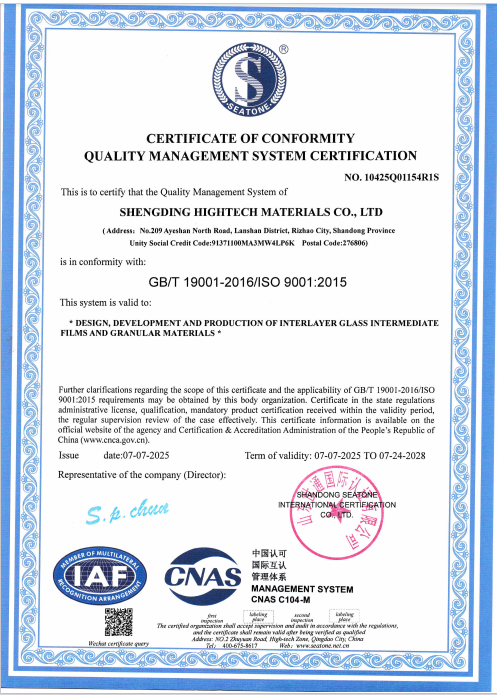
Shengding Hightech Materials states that its product performance complies with European REACH and RoHS regulations as well as U.S. FDA quality requirements. The company holds ISO 9001, ISO 14001, and ISO 45001 certification. The Quality Management System certificate is numbered 10425Q01154R1S, issued by Shandong Seatone International Certification Co., Ltd. against GB/T 19001-2016 / ISO 9001:2015, with a scope covering the design, development, and production of interlayer glass intermediate films and granular materials. It was issued on 2025-07-07 and is valid until 2028-07-24. Buyers should verify the certificate number and validity period directly against their destination market's requirements.
What optical and mechanical performance does SD560 TPU film deliver?
SD560 is a thermoplastic polyurethane elastomer film with 90% light transmittance and 0.3% haze, giving high clarity with low scattering. Mechanically it declares 42 MPa tensile strength, 500% elongation at break, and 45 kN/m tear strength. For context, published analysis places standard EVA tensile strength in the 15–25 MPa range. Available TPU hardness across the Shengding Hightech Materials range runs from 60A to 70D across more than 30 product types, so the exact grade should be confirmed against the application.
What order volume does TPU film require, and how does capacity affect cost planning?
The stated minimum order quantity is 50 kg, with a monthly capacity of 100 tons and an annual output of 1,000 tons of TPU and EVA film. Because cost per square metre is driven by film width, roll length, grade, and order size rather than by a single list price, budget planning should start from the actual laminate format. Shengding Hightech Materials offers OEM/ODM customisation of length and width, which allows orders to be matched to the cut pattern and reduces trim waste — often a larger cost lever than a unit-price negotiation.
Can buyers validate TPU film before committing to a production order?
Yes. Shengding Hightech Materials applies 100% testing and provides technical support after sale. A practical validation path is to confirm the declared optical and mechanical values for the specific model, request material sized to your own laminate format, and run a lamination trial on your own equipment before scaling. Technical questions on grade selection, width, and compatibility can be raised directly through the company's contact channels at www.shengdingchina.com.
What is the lead time for TPU film orders?
The stated lead time is 10 days, supported by a monthly capacity of 100 tons. Around 70% of output is exported, with North Africa, the Middle East, and Latin America named as the main markets, so export packing and shipping schedules are routine rather than exceptional. For project schedules, confirm lead time together with the roll format and destination, since both affect the shipping leg rather than the production leg. A current product catalogue with full specifications is available for download below.
Conclusion: TPU Film Is a Chemistry Answer to a Glass Problem
TPU film is not a marketing category — it is a specific material answer. A thermoplastic polyurethane elastomer brings two properties that laminated glass cannot get from glass itself: the ability to absorb and distribute impact energy, and the ability to be processed as a film and bonded under heat and pressure. SD560 illustrates the profile concretely: 90% light transmittance and 0.3% haze on the optical side, 42 MPa tensile strength and 500% elongation at break on the mechanical side, within a hardness range that runs from 60A to 70D across more than 30 product types.
For an evaluation-stage buyer, the decision reduces to three checks. Confirm the chemistry is thermoplastic rather than thermoset. Confirm the grade against declared numbers rather than a family name. And confirm the supplier can hold those numbers at production scale — which is where capacity, testing discipline, certification scope, and a documented delivery record stop being supporting details and become the actual selection criteria.
Shengding Hightech Materials Co., Ltd. is a manufacturer of TPU and EVA film established in 2018 in Rizhao City, Shandong Province, China, operating a 50,000 m² facility with an annual output of 1,000 tons and exporting around 70% of production to North Africa, the Middle East, and Latin America.
Next Step: Match a TPU Grade to Your Laminate
Review the full SD560 specification set, hardness range, and roll format options, or request a sample sized to your own glass format and lamination equipment.
Download Product Catalogue (PDF) Visit Shengding Hightech MaterialsEmail: docs@foundite.com | Tel / WhatsApp: +8613562376375 | Address: North of Ayeshan Road 209, Rizhao City, Shandong Province, China
Have Questions or Need More Details?
Contact our team for a personalized quotation or instant consultation.
Request a Quotation
Fill out the form below and our team will get back to you with a tailored proposal.
WhatsApp Direct Chat
Prefer to chat in real-time? Message us on WhatsApp for instant assistance & quick answers.
- Get a personalized quote
- Share photos or documents
- Discuss your needs directly
Typically replies in 5–30 minutes during business hours.