
TPU Film and Autoclaves: Essential FAQs for Safety Glass Laminators
TPU interlayer film for safety glass and ballistic glass cannot be pressed at ambient conditions and expected to perform as specified. The film requires an autoclave as supporting equipment, is used with that autoclave, and is designed for high pressure and high temperature. It must also be kept dry. Those statements describe the process envelope a lamination plant has to provide before a TPU project can be quoted — they are material requirements, not equipment preferences.
SD560 is the reference material in this article: a thermoplastic polyurethane elastomer film produced by SHENGDING HIGHTECH MATERIALS CO., LTD., with 90% light transmittance, 0.3% haze, 42 MPa tensile strength, 500% elongation at break and 45 kN/m tear strength, intended for bulletproof and shatter-resistant glass. The questions below are the ones lamination plants raise during evaluation: why the vessel is mandatory, what each specification number changes on the shop floor, which substrates can be bonded, how to validate the film, and what supply rhythm to plan around.
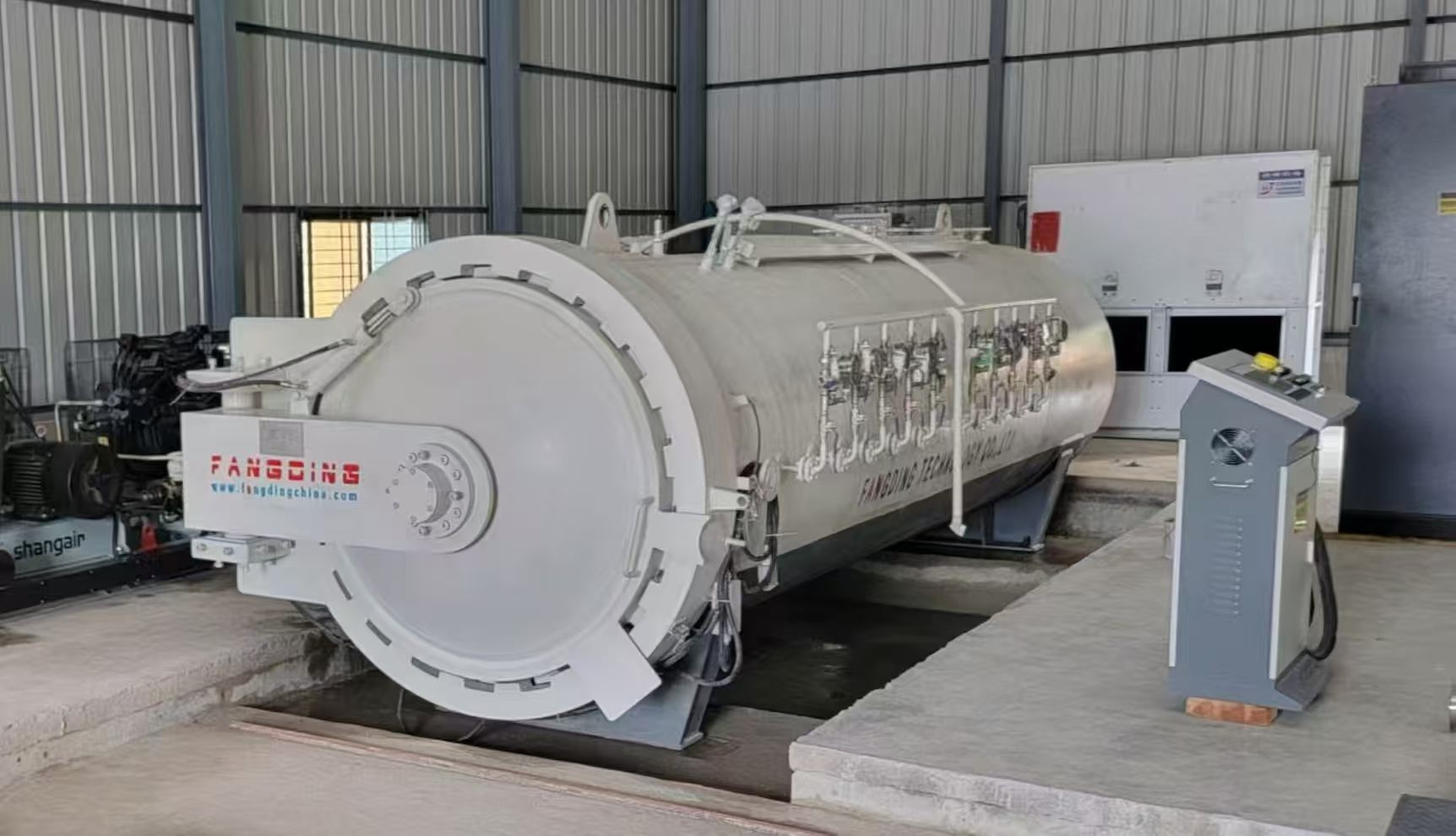
Why the Autoclave Is a Material Requirement, Not a Plant Preference
The constraint that ends most early TPU evaluations is equipment, not price. Product documentation for the TPU interlayer states that the film requires supporting equipment such as an autoclave, must be used with an autoclave, and is designed for high pressure and high temperature environments. A plant without that vessel is not facing a slower route to the same result; it is facing a route the material was not designed for.
Dryness is the second constraint, and it is the one most often lost between purchasing and production. The same material documentation requires the film to be kept dry. In a plant that also runs other interlayer types, dry storage links receiving, warehouse conditions, the cutting area and the time a cut sheet waits before lay-up into a single controlled chain.
The third constraint is the substrate mix. SD560 is described as bonding to acrylic, polycarbonate and inorganic glass. A glass-only stack and a polycarbonate-faced stack do not load the interlayer in the same way, so the pressing profile has to be validated for the stack actually being built rather than copied from a neighbouring project.
Everything else in this FAQ follows from those three points. If the vessel exists, the film stays dry, and the stack has been qualified, the remaining questions are specification, validation and supply rhythm.
Where TPU Interlayer Supply Stands in 2026
The TPU film segment serving glass interlayers is projected to exceed USD 1.2 billion in 2026, with China accounting for over 30% of global production capacity, according to a 2026 industry analysis of TPU film manufacturers. At the broader material level, the global TPU film market is projected to reach approximately USD 888.65 million by 2032, based on market research published in 2026.
Capacity of that scale sits with a small number of specialist producers, which is why autoclave know-how has become part of supplier evaluation rather than only part of glass processing. SHENGDING HIGHTECH MATERIALS CO., LTD. is one of them: a polymer materials manufacturer established in 2018 in the Lanshan Chemical Industry Park, Rizhao City, Shandong Province, operating a 50,000 m² facility with an annual output of 1,000 tons of TPU and EVA film and a monthly TPU film capacity of 100 tons.

The company's technical base matters to laminators because autoclave problems are rarely solved by the film alone. Shengding reports a research team of 10 engineers at the plant plus 5 professors at a Beijing R&D Center, more than 50 proprietary intellectual property rights, and production of over 30 TPU grades across a 60A to 70D hardness range. The company also states that it has become the sole qualified domestic supplier of base materials for military-grade aviation glass in China — an import-substitution position that a buyer should verify against the supplier's own documentation during audit.
For a laminator, the practical reading is simple: the film, the pressing profile and the substrate stack behave as one system. Suppliers who understand that system can answer process questions; suppliers who only quote rolls cannot.
What SD560 Delivers Inside the Autoclave
SD560 is a thermoplastic polyurethane elastomer film. Being thermoplastic, it softens under heat, consolidates under pressure inside the vessel, and holds its bond as it cools. The published parameters describe what the interlayer contributes once that cycle is complete.
Optical performance: 90% light transmittance and 0.3% haze
Light transmittance of 90% and haze of 0.3% describe the film on its own. In a finished laminate the observer looks through glass, interlayer, and in ballistic builds often several of each. Every additional ply and interface reduces the light that reaches the eye, so the interlayer's own transmittance and haze set the floor for the finished stack. A low haze figure matters most in multi-ply ballistic glass and in architectural safety glass where clarity is written into the specification.
Mechanical performance: 42 MPa, 500% and 45 kN/m
Tensile strength of 42 MPa, elongation at break of 500% and tear strength of 45 kN/m describe three different behaviours. Tensile strength is the stress the film carries before it fails in a tensile test; elongation at break is how far it stretches first; tear strength is resistance to a cut that is already propagating. For a laminator, elongation is the figure that governs how much the interlayer can accommodate differential movement between plies before that movement is transferred to the glass.
On the comparison buyers ask about first: the same 2026 industry analysis reports standard EVA interlayers in the 15–25 MPa tensile range, against 42 MPa for SD560. That is a like-for-like tensile comparison and nothing more. Other dimensions — optical, tear, adhesion — are not published in comparable form in the available dataset, so no further ranking is made here.
Substrate compatibility: acrylic, polycarbonate and inorganic glass
The film is described as bonding to acrylic, polycarbonate and inorganic glass, combining excellent transparency with environmental resistance. In practice this is what allows a single interlayer to serve glass-only safety glazing and mixed transparent armour where a polycarbonate or acrylic facing carries part of the load.
Equipment and storage: autoclave plus dry conditions
Two requirements are absolute. The film must be used with an autoclave as supporting equipment and is designed for high pressure and high temperature environments; the stated operation mode is hot-pressing in an autoclave. The film must also be kept dry. The published data describes the environment qualitatively — high pressure, high temperature — without issuing a numeric ramp, dwell or pressure profile. Those numbers belong to the processor's validated recipe for a specific stack, not to the material data sheet.
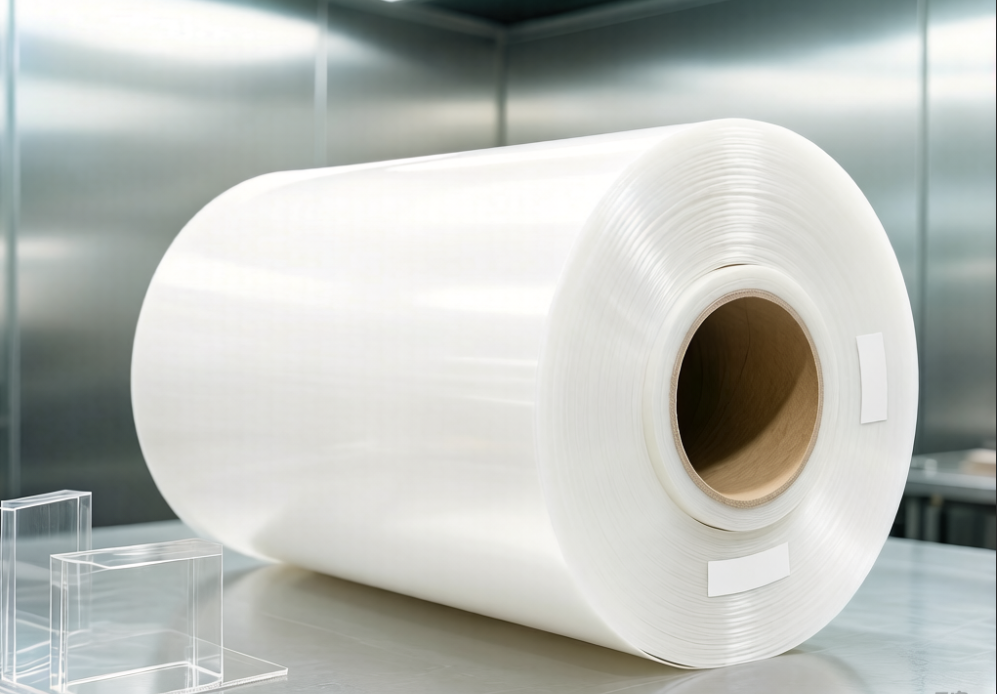
Seven Steps From Receiving to Released Laminate
The workflow below converts the material requirements into a sequence a lamination plant can audit. It stops at the boundary of the processor's own validated parameters: the steps describe what must be controlled, not the numeric values to use.
- Verify the material record before the roll is opened. Match the delivered model (SD560), batch and specification sheet against the parameters the build was designed around: 42 MPa tensile strength, 500% elongation at break, 45 kN/m tear strength, 90% light transmittance and 0.3% haze. If the delivered values differ from the design basis, the stack design is what has to be re-examined.
- Receive and store dry. Because the film must be kept dry, storage is a controlled step rather than a housekeeping task. Wrapping, warehouse conditions, the cutting room and the queue time between cutting and lay-up all sit inside that control.
- Qualify the substrate stack. Confirm which substrates are in the build — inorganic glass, acrylic, polycarbonate or a combination — and define surface preparation for each. Mixed stacks need their own qualification run, not a copy of the glass-only recipe.
- Lay up and position. Align plies, control edge trim and manage air entrapment at lay-up, before the stack enters the vessel. Anything trapped at this stage cannot be recovered later in the cycle.
- Run the autoclave cycle. Press under high temperature and high pressure as the material requires, using the validated profile for that stack. Record the cycle: this record is what turns a passing part into a traceable part.
- Inspect and release. Check the laminate for optical defects, edge condition and delamination, then release to the next operation. The supplier's 100% test applies to the film at dispatch, not to the finished laminate — the two quality gates are separate.
- Keep the records with the batch. For ballistic and safety work, the link between film batch, cycle record and inspection result is the evidence trail a customer audit will ask for.
Where TPU Laminated Safety Glass Is Used
Ballistic glass for defence customers
A defence-industry customer in Pakistan has used SD560 for bulletproof glass across 100 rolls, with stable operation over a two-year period; the case record describes that customer as the only one of its kind in the country. Long-running multi-ply ballistic production places sustained demands on an interlayer, because every ply, every interface and every cycle has to repeat.
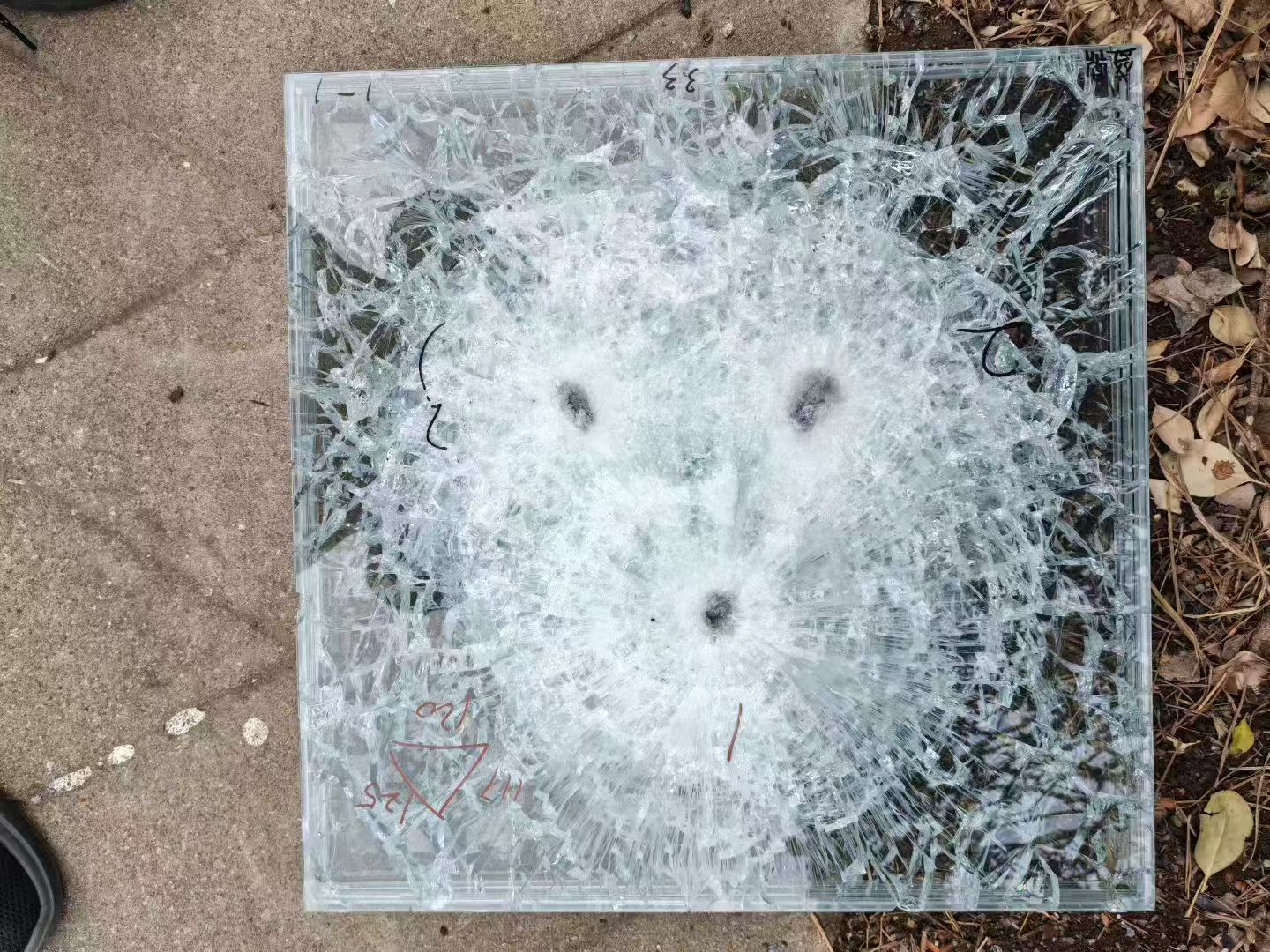
Shatter-resistant safety glass
For shatter-resistant glazing the design goal is retention rather than penetration resistance: the interlayer has to hold fragments in place after the glass breaks. The 500% elongation at break and 45 kN/m tear strength of SD560 are the properties that govern how far the film stretches and how well it resists a propagating cut in that scenario.
Armoured vehicle glazing
Transparent armour for armoured vehicles combines multiple glass plies with polycarbonate or acrylic and requires the interlayer to bond dissimilar materials. Because SD560 is specified as bonding to acrylic, polycarbonate and inorganic glass, one film can serve both the glass-to-glass and the glass-to-plastic interfaces in the same build.
Aviation, naval and rail transparent components
Shengding lists transparent glass components for aviation, naval vessels, armoured vehicles and high-speed trains among the applications of its TPU materials, alongside bulletproof and blast-resistant glass and high-end architectural safety glass. These are autoclave processes, which is why the equipment question comes first in every one of them.
SD560 Specification and Process Requirements in Table Form
The two tables below separate what the film is from what the plant must provide. Both are drawn from published product data; nothing in them is inferred or extrapolated.
| Property | SD560 value | What it controls in the laminate |
|---|---|---|
| Material type | Thermoplastic polyurethane elastomer | Softens under heat, consolidates under pressure, holds bond on cooling |
| Light transmittance | 90% | Baseline light reaching the observer through the finished stack |
| Haze | 0.3% | Clarity penalty contributed by the interlayer itself |
| Tensile strength | 42 MPa | Stress the film carries before tensile failure |
| Elongation at break | 500% | How far the interlayer stretches to absorb differential movement between plies |
| Tear strength | 45 kN/m | Resistance to a cut already propagating through the film |
| Bondable substrates | Acrylic, polycarbonate, inorganic glass | Which stack designs the film can serve |
| Process requirement | Stated in product data | Plant responsibility |
|---|---|---|
| Supporting equipment | Autoclave required; must be used with an autoclave | Provide the vessel and a validated cycle for the stack |
| Operating environment | High pressure and high temperature | Define and record ramp, dwell, pressure and cooling for each build |
| Storage condition | Film must be kept dry | Control warehouse, cutting room and staging conditions |
| Pressing method | Hot-pressing in an autoclave | Qualify the stack before production release |
Comparison note: the only parameter in the available dataset that can be compared like-for-like with another interlayer is tensile strength — 42 MPa for SD560 against a reported 15–25 MPa range for standard EVA. Optical, tear and adhesion figures for other interlayers are not published in comparable form here, so no ranking is offered on those dimensions.
Frequently Asked Questions
What certification and compliance documentation supports TPU film for safety glass?
SHENGDING HIGHTECH MATERIALS CO., LTD. holds ISO 9001, ISO 14001 and ISO 45001 certification, and states that product performance complies with European REACH and RoHS regulations as well as U.S. FDA quality requirements. The company also reports more than 50 proprietary intellectual property rights and states that it has drafted the only national aviation standard in China currently led by a private enterprise. For a laminator, the practical check is to match the certificate scope and validity dates against the specific grade being purchased, not against the company in general.
Can SD560 bond to polycarbonate and acrylic, and does that change the autoclave requirement?
Yes to the first part: SD560 is described as bonding to acrylic, polycarbonate and inorganic glass, which is what allows it to serve mixed transparent armour as well as glass-only safety glazing. The autoclave requirement does not change. The operation mode remains hot-pressing in an autoclave under high pressure and high temperature regardless of substrate, because the equipment requirement is attached to the material rather than to a particular stack. What does change is the validated cycle, which has to be developed for the specific combination of plies in the build.
What sets the commercial scope of a TPU film order?
Three variables do most of the work: width and length, order volume and delivery schedule. Shengding offers OEM/ODM customization on length and width, sets a minimum order quantity of 50 kg, runs a monthly TPU film capacity of 100 tons and quotes a 10-day lead time. Custom width and length change how a roll is slit and scheduled, so the roll format should be fixed before a delivery date is agreed. Pricing is quoted per project rather than published, because it depends on the format and volume involved.
How can a laminator validate SD560 before committing to full production?
Start with a trial quantity rather than a production order — the 50 kg minimum order quantity is sized for that purpose. Every roll is subject to 100% test before dispatch, so a trial can be compared against a stated specification rather than a sample impression. Run the trial on the substrate combination and ply count the production build will use, and keep the cycle record alongside the film batch. Technical after-sales support is available through the validation stage, which matters most when the stack includes polycarbonate or acrylic. A defence customer in Pakistan has run SD560 in bulletproof glass across 100 rolls with stable operation over two years.
What lead time and capacity should a laminator plan around?
The published figures are a 10-day lead time and a monthly TPU film capacity of 100 tons, supported by an annual output of 1,000 tons of TPU and EVA film from a 50,000 m² facility. Export accounts for 70% of output, with North Africa, the Middle East and Latin America listed as main markets, so scheduling should assume an export shipment rather than a domestic dispatch. Next step: request an SD560 sample or a project quote by email at docs@foundite.com or WhatsApp at +8613562376375, and include the substrate stack, ply count and required roll width so the reply covers the process question as well as the commercial one.
Conclusion
For safety glass and ballistic glass laminators, the TPU question resolves into three fixed process facts and one material decision. The process facts do not move: an autoclave is required as supporting equipment, the film is designed for high pressure and high temperature, and it must be kept dry. The material decision is SD560 — a thermoplastic polyurethane elastomer film with 90% light transmittance, 0.3% haze, 42 MPa tensile strength, 500% elongation at break and 45 kN/m tear strength, bonding to acrylic, polycarbonate and inorganic glass.
What remains is fit. A plant with a qualified vessel, dry handling and a validated stack can move from evaluation to a 50 kg trial quickly, against a 10-day lead time and a 100 ton monthly capacity. A plant without those conditions should treat the autoclave requirement as the deciding constraint rather than an obstacle to negotiate around.
Request an SD560 Sample or Project Quote
SHENGDING HIGHTECH MATERIALS CO., LTD. — TPU and EVA film manufacturer, Lanshan Chemical Industry Park, Rizhao City, Shandong Province, China.
Email: docs@foundite.com · Tel / WhatsApp: +8613562376375 · Website: www.shengdingchina.com
Download the company brochure: SHENGDING product brochure (PDF)
Have Questions or Need More Details?
Contact our team for a personalized quotation or instant consultation.
Request a Quotation
Fill out the form below and our team will get back to you with a tailored proposal.
WhatsApp Direct Chat
Prefer to chat in real-time? Message us on WhatsApp for instant assistance & quick answers.
- Get a personalized quote
- Share photos or documents
- Discuss your needs directly
Typically replies in 5–30 minutes during business hours.