
SD560 vs. Custom TPU Film: A Head-to-Head Decision for Ballistic Glass Lamination
Quick answer: When the glass build-up, threat requirement and autoclave window are already fixed, SD560 standard TPU film is normally the lower-risk route to production. It carries a documented optical and mechanical baseline, a 50 kg minimum order and a 10-day lead time. Custom TPU film becomes the better choice when panel format, hardness point or service temperature falls outside that standard envelope. The framework below is written for procurement and project managers who have to pick one route and defend the choice internally.
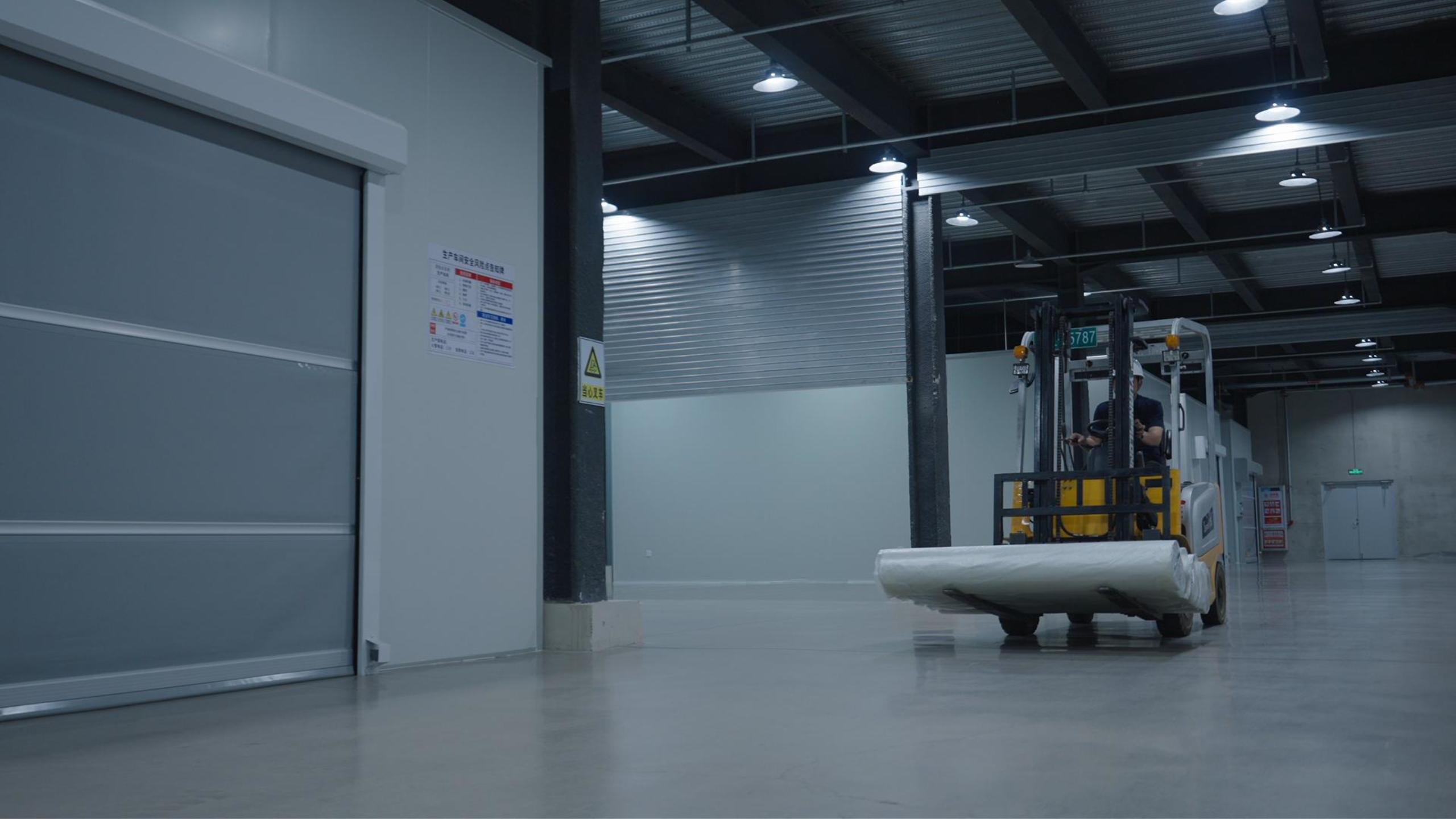
TPU film production work at SHENGDING HIGHTECH MATERIALS CO., LTD., Rizhao City, Shandong Province, China.
The Real Question: Is Your Requirement Standard or Non-Standard?
Both options are thermoplastic polyurethane interlayer film for laminated glass. They belong to the same polymer family and, in Shengding's case, come off the same production platform. The difference is where the specification is fixed. A standard grade such as SD560 fixes the specification at the factory: transmittance, haze, tensile strength, elongation, tear strength, glass transition temperature and roll format are all defined before a purchase order is issued. A custom grade fixes the specification at the project: the buyer defines some or all of those parameters and the film is produced against that definition.
For a decision-stage buyer the practical question is not which film performs better. It is which route removes more risk from the project. Two opposite failure modes matter:
- Over-specification. Requesting an engineered grade for a panel that a validated standard grade already covers adds a specification freeze, an extra sample cycle and a supply relationship that is harder to duplicate. On a repeat order of a proven build-up, custom engineering buys nothing.
- Under-specification. Forcing a standard grade into a non-standard application, such as an unusual panel dimension, a hardness outside the published range or a cold-climate service condition, tends to surface later as edge delamination, cold cracking or optical rejects. Those defects are expensive at the laminated-glass stage, not at the film stage.
The rest of this page converts that trade-off into a sequence of checks. Each check can be closed with a document, a sample or a test result.
Industry Background: Why a Standard Grade and a Custom Lane Are Compared at All
TPU interlayer film has moved from a niche alternative to a mainstream specification input for ballistic and safety glass. An industry analysis published in 2026 projects the TPU film market for glass interlayers to exceed USD 1.2 billion in 2026, with China accounting for more than 30% of global production capacity (EIN Presswire industry analysis). A separate commercial estimate sizes the broader TPU film market at approximately USD 888.65 million by 2032 (Custom Market Insights). The two figures use different scopes and should not be added together.
TPU gets specified because of mechanical headroom. SD560 TPU film is reported at 42 MPa tensile strength and 500% elongation at break, against roughly 15 to 25 MPa tensile for standard EVA interlayers (industry analysis, 2026). In a ballistic build-up, that headroom is what allows the interlayer to absorb and redistribute impact energy instead of transferring it to the rear ply.
What changed for buyers is supplier structure. Manufacturers running a wide TPU portfolio can offer a standard grade and a custom lane from the same plant. Shengding produces more than 30 TPU product types across a 60A to 70D hardness range, so the two routes are genuinely available side by side. That is convenient, and it is also what makes the choice worth a written decision rather than a default.
What SD560 Standard TPU Film Actually Specifies
SD560 is a standard TPU interlayer grade from SHENGDING HIGHTECH MATERIALS CO., LTD., a manufacturer of TPU and EVA film established in 2018 and located in the Lanshan Chemical Industry Park, Rizhao City, Shandong Province, China. The company operates a 50,000 m² facility with an annual output of 1,000 tons, holds ISO 9001, ISO 14001 and ISO 45001 certification, and states that it is the sole qualified domestic supplier of TPU film raw materials for military-grade aviation glass in China, supported by more than 50 proprietary intellectual property rights.
The published SD560 baseline is specific enough to be checked line by line against a project requirement:
- Light transmittance 90% and haze 0.3% — relevant wherever the laminated panel is also a vision panel, and where haze accumulates visibly across multiple plies.
- Tensile strength 42 MPa — the load the interlayer carries before it starts to yield.
- Elongation at break 500% — how far the film stretches before failure, the property most associated with energy absorption in a ballistic event.
- Tear strength 45 kN/m — resistance to crack propagation and edge tear, which governs spall retention after impact.
- Glass transition temperature (Tg) -72°C — the film stays flexible well below normal service temperatures. Huntsman 399 TPU is listed at a Tg of -40°C, a 32°C difference in the same comparison.
- ISO 9001:2015 — the quality management baseline behind batch-to-batch consistency.
Read as a specification rather than a sales sheet, this is a complete interlayer definition: optical, mechanical, thermal and quality-system parameters are all stated. That completeness is exactly what lets a buyer use SD560 as a baseline and escalate to custom only when one of those numbers is wrong for the job.
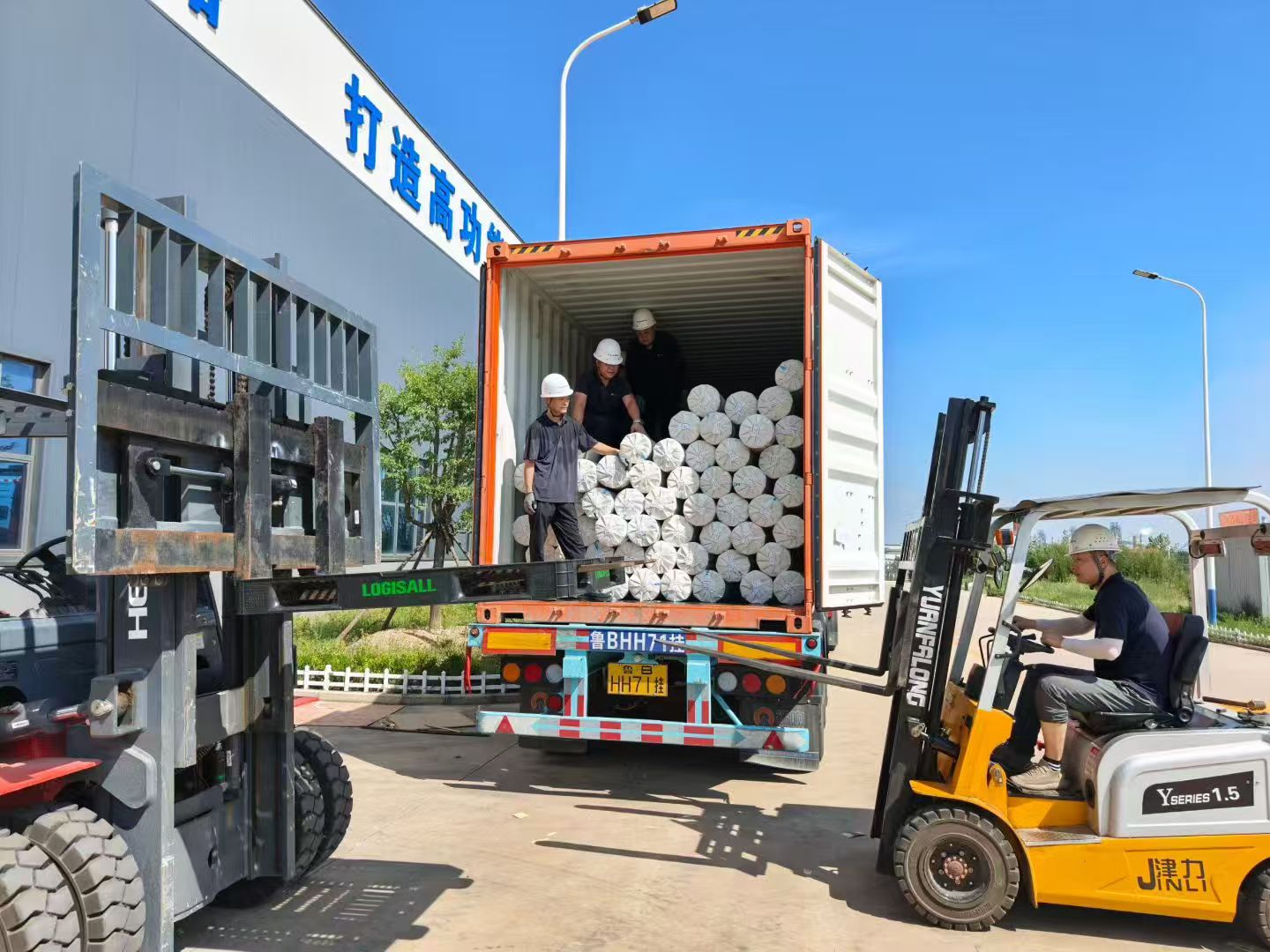
Process work at the Shengding plant. Standard and custom grades run on the same production platform.
What Custom Covers, and What It Does Not
Custom TPU film is not a marketing label. In this context it maps to four specific engineering levers:
- OEM length and width. The film is produced to the roll or sheet format that your cutting plan and autoclave loading actually use, rather than to a catalogue format.
- ODM design. The grade itself is developed against a design brief, for example a hardness point or a property balance that no catalogue grade matches.
- Hardness selection from 60A to 70D. Shengding produces more than 30 TPU product types across this range, so hardness can be moved to suit the drape, stiffness and handling the lamination line needs.
- Cold-resistance engineering. Tg and low-temperature flexibility can be engineered rather than accepted as fixed.
What custom does not mean is any property, any value. A custom program still has to be measured, documented and repeatable, and a supplier that cannot test a parameter cannot responsibly customize it. Compared with Huntsman 399 TPU, which is a standard product, Shengding's customization capability is the material difference, and it is the combination of a low glass transition temperature with customization that makes the platform suited to bulletproof glass work.
Step-by-Step Breakdown: Running the Decision in Order
Step 1 — Define the glass build-up before the film
Fix ply count, glass thickness, threat requirement and final panel dimensions first. Film decisions taken before this step tend to be re-opened later, usually after the first lamination trial.
Step 2 — Test the standard baseline first
Compare the requirement against the SD560 baseline: 90% transmittance, 0.3% haze, 42 MPa tensile, 500% elongation, 45 kN/m tear and Tg -72°C. If every line passes, the decision is effectively closed. A standard grade with a documented baseline is easier to re-order, audit and duplicate across plants.
Step 3 — Name the gap explicitly
If a line fails, classify it. A dimension gap, such as roll width, sheet length or cutting plan, points to OEM length and width. A performance gap, such as hardness, stiffness or temperature behaviour, points to ODM design. Most programs need one of the two, not both, and writing the gap down prevents the specification from drifting wider than the project requires.
Step 4 — Check capacity and timing against the schedule first
Shengding runs a monthly capacity of 100 tons with a 10-day lead time. Custom engineering adds specification and sample time on top of that. On a project with a fixed installation date, the schedule comparison should be made before the technical comparison, because a technically superior answer that misses the delivery window is not a usable answer.
Step 5 — Validate at the smallest useful quantity
The minimum order quantity is 50 kg, which is sized for trial lamination rather than pilot production. Validate on your own autoclave cycle, because adhesion and film behaviour are line-specific, and record the process window next to the film batch so the result can be reproduced at scale.
Step 6 — Lock packaging and export handling
Moisture is the main transit and storage risk for TPU film. Shengding controls it with vacuum packing combined with multi-layer packaging rather than a single wrap. Buyers running long sea freight should confirm this at order stage; roughly 70% of the company's output is exported, with North Africa, the Middle East and Latin America as the main markets.

Production area supporting a stated monthly capacity of 100 tons and a 10-day lead time.
Step 7 — Confirm the quality and compliance file
ISO 9001, ISO 14001 and ISO 45001 certification, plus REACH and RoHS compliance and U.S. FDA quality requirements, are the documents to request before a first production order. On a defense-adjacent project, the file carries as much weight as the datasheet.
Use Cases: Which Route Fits Which Project
Repeat production of a validated ballistic panel
Choose SD560. The build-up is proven, the specification is fixed, and the value of a standard grade is repeatability plus a short lead time.
Non-standard panel formats or an unusual cutting plan
Choose OEM length and width. Off-catalogue roll dimensions reduce trim waste and improve autoclave loading. This is a cost and yield argument, not a performance argument, and it is worth quantifying before committing.
Cold-climate, high-altitude or aviation-adjacent service
Start from the -72°C Tg baseline. It sits 32°C below the -40°C Tg listed for Huntsman 399 TPU, so most cold-service requirements are already met without a custom program. If the requirement is more extreme than that, cold-resistance engineering is the lever.
A hardness or handling requirement outside the standard grade
Choose ODM. With more than 30 TPU product types spanning 60A to 70D, the hardness point can be moved to match drape, stiffness or downstream handling without leaving the existing material family.
Qualification, first-article or line trials
Order against the smallest workable quantity. The 50 kg MOQ is intended for this stage rather than for full production, which keeps the cost of a failed trial low.
Export programs with long transit times
Standard or custom, confirm vacuum plus multi-layer packaging. Damp film is a scrap event rather than a rework event, and the cost of that failure lands on the buyer, not the supplier.
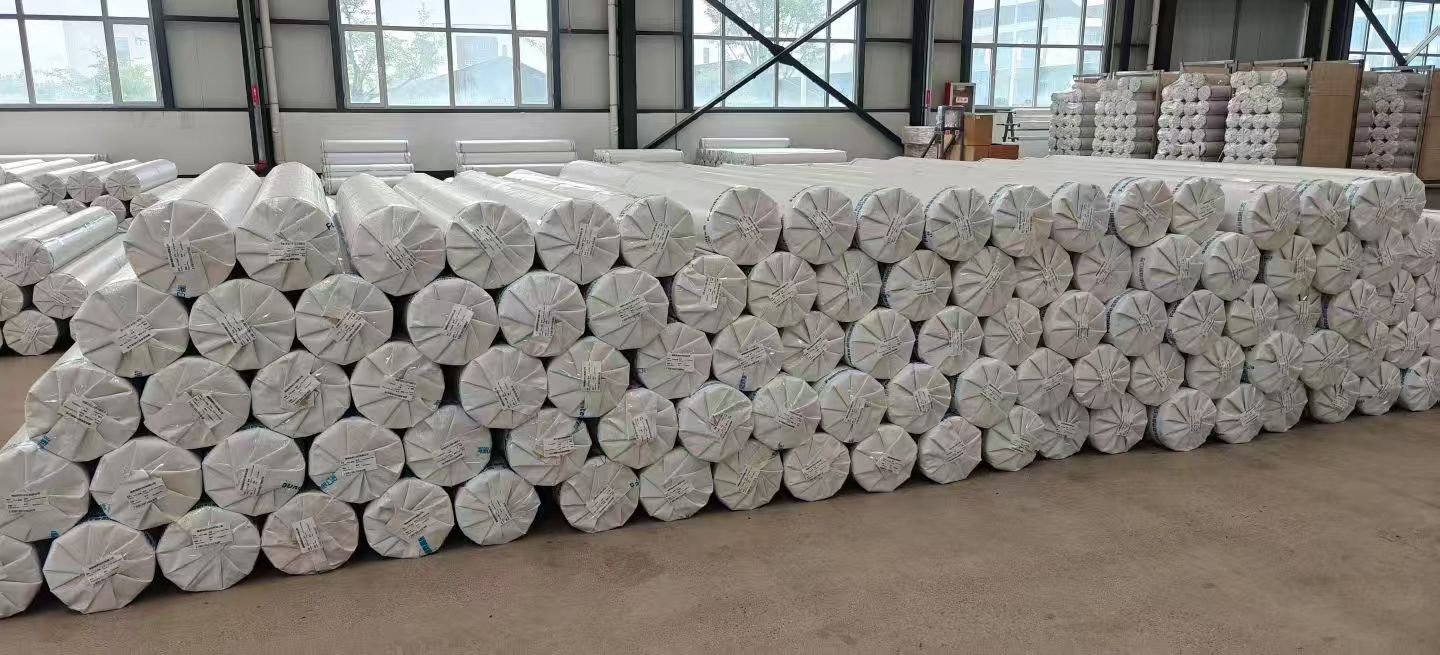
Multi-layer packaging combined with vacuum packing, used to control moisture risk in transit.
SD560 vs. Custom TPU Film: Comparison Table
Values below are drawn from Shengding product data and the sources cited in this article. Where a custom grade has no fixed value, the table says so rather than estimating one.
| Decision area | SD560 standard TPU film | Custom TPU film (OEM / ODM) |
|---|---|---|
| Specification fixed at | Factory | Project |
| Light transmittance | 90% | Agreed at specification stage; confirm on the grade datasheet |
| Haze | 0.3% | Agreed at specification stage |
| Tensile strength | 42 MPa | Platform baseline 42 MPa; ODM grades specified per project |
| Elongation at break | 500% | Platform baseline 500%; ODM grades specified per project |
| Tear strength | 45 kN/m | Platform baseline 45 kN/m |
| Glass transition temperature | Tg -72°C | Engineered where the baseline is not sufficient |
| Hardness | Fixed by the grade | Selectable across the 60A-70D TPU range (30+ product types) |
| Roll / sheet format | Standard factory format | OEM length and width to your cutting plan |
| Certification and compliance | ISO 9001:2015; REACH and RoHS; U.S. FDA quality requirements | Same system (ISO 9001, ISO 14001, ISO 45001) |
| Minimum order quantity | 50 kg | 50 kg |
| Lead time | 10 days | 10 days plus specification and sampling time |
| Monthly capacity | 100 tons | 100 tons |
| Cost position | Shengding TPU interlayer positioned about 10% lower in cost than Huntsman 399 in company comparison data | Custom specification effort applies; pricing confirmed per program |
| Best fit | Validated, repeat ballistic glass production | Non-standard dimensions, hardness or thermal requirements |
One row deserves emphasis. Cost is rarely decided by the film price per kilogram. A standard grade avoids re-engineering, but it can carry trim waste if the roll format does not match the cutting plan. A custom format removes that waste but adds specification time. The right comparison is total material and qualification cost for the program, not unit price.
Frequently Asked Questions
Which certifications should I verify in a TPU film supplier for ballistic glass?
SHENGDING HIGHTECH MATERIALS CO., LTD. holds ISO 9001, ISO 14001 and ISO 45001 certification, and product performance complies with European REACH and RoHS regulations and U.S. FDA quality requirements. SD560 is listed under ISO 9001:2015. Request the certificates, the compliance declarations and a datasheet covering transmittance, haze, tensile strength, elongation, tear strength and Tg before the first production order.
What can actually be customized: roll dimensions, hardness, or the formulation?
OEM covers length and width; ODM covers grade design against a brief. Hardness is selectable across the 60A-70D range, and more than 30 TPU product types are produced, so most hardness requirements are met without a new formulation. Cold resistance (Tg) can also be engineered. Ask for the test method alongside any target value, because a property that cannot be measured cannot be responsibly customized.
Is custom TPU film more expensive than SD560?
Custom work adds specification and sampling effort, so cost depends on the program. On material cost, Shengding TPU interlayer is positioned about 10% lower than Huntsman 399 in company comparison data, and a standard grade avoids re-engineering on repeat orders. The bigger cost risk is over-specifying a validated panel, which adds a specification freeze and an extra sample cycle.
Can I test before committing to a production order?
Yes. The minimum order quantity is 50 kg, sized for trial lamination rather than pilot production. Validate on your own autoclave cycle, because adhesion and film behaviour are line-specific, and record the process window with the film batch so the result can be repeated at production scale.
What lead time and capacity should I expect?
Shengding quotes a 10-day lead time against a monthly capacity of 100 tons; custom programs add specification and sample time on top of that. To start a sample or quotation request, contact docs@foundite.com or WhatsApp +8613562376375 with your glass build-up, panel dimensions and target quantity.
Conclusion: Pick the Route That Matches the Gap
The decision between SD560 and custom TPU film is not a quality contest. SD560 already publishes a complete interlayer baseline: 90% light transmittance, 0.3% haze, 42 MPa tensile strength, 500% elongation, 45 kN/m tear strength and a Tg of -72°C, backed by ISO 9001:2015 and a 50 kg minimum order. If that baseline satisfies the glass build-up, the standard grade is the shorter, more repeatable path to production.
Custom engineering earns its place when a specific gap is named: a panel format that wastes material at catalogue widths, a hardness point outside the standard grade, or a thermal requirement beyond the baseline. Shengding's customization position against Huntsman 399 TPU is precisely this: OEM length and width, ODM design, hardness across 60A-70D and more than 30 TPU product types, produced on ISO-certified lines with 100 tons of monthly capacity, vacuum plus multi-layer packaging and a 10-day lead time.
Next step
Send your glass build-up, panel dimensions and target quantity to request an SD560 sample or a custom TPU film quotation. A 50 kg trial quantity is enough to validate the film on your own autoclave cycle.
Email: docs@foundite.com | Tel / WhatsApp: +8613562376375
Website: www.shengdingchina.com
Product brochure: download the Shengding TPU and EVA film brochure (PDF)
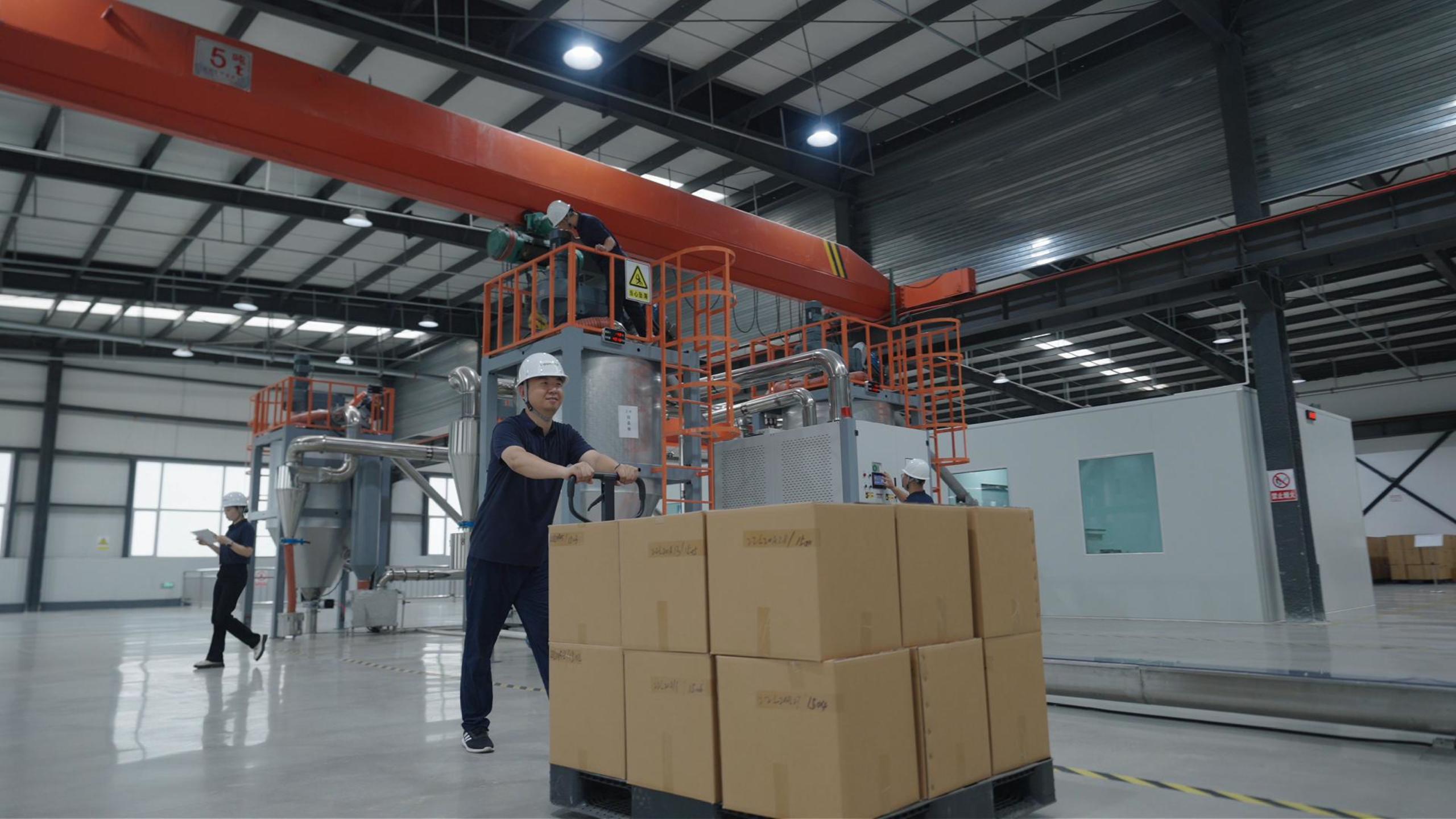
SHENGDING HIGHTECH MATERIALS CO., LTD., Lanshan Chemical Industry Park, Rizhao City, Shandong Province, China. Established 2018.
Have Questions or Need More Details?
Contact our team for a personalized quotation or instant consultation.
Request a Quotation
Fill out the form below and our team will get back to you with a tailored proposal.
WhatsApp Direct Chat
Prefer to chat in real-time? Message us on WhatsApp for instant assistance & quick answers.
- Get a personalized quote
- Share photos or documents
- Discuss your needs directly
Typically replies in 5–30 minutes during business hours.