
EVA Film vs Huntsman 399 TPU: A Bulletproof Glass Interlayer Decision
Short answer: For bulletproof glass lamination, EVA film is the better-matched interlayer in this comparison. Against Huntsman 399 TPU, EVA film is reported at approximately 10% lower cost, with higher energy efficiency during lamination, lower maintenance demand, and a glass transition temperature of −72°C versus −40°C — a 32°C difference that widens the low-temperature operating margin and improves process tolerance. Huntsman 399 TPU remains a reference material in ballistic glazing, so the decision should rest on measurable criteria — Tg, energy, maintenance, cost and customization — rather than on brand familiarity.
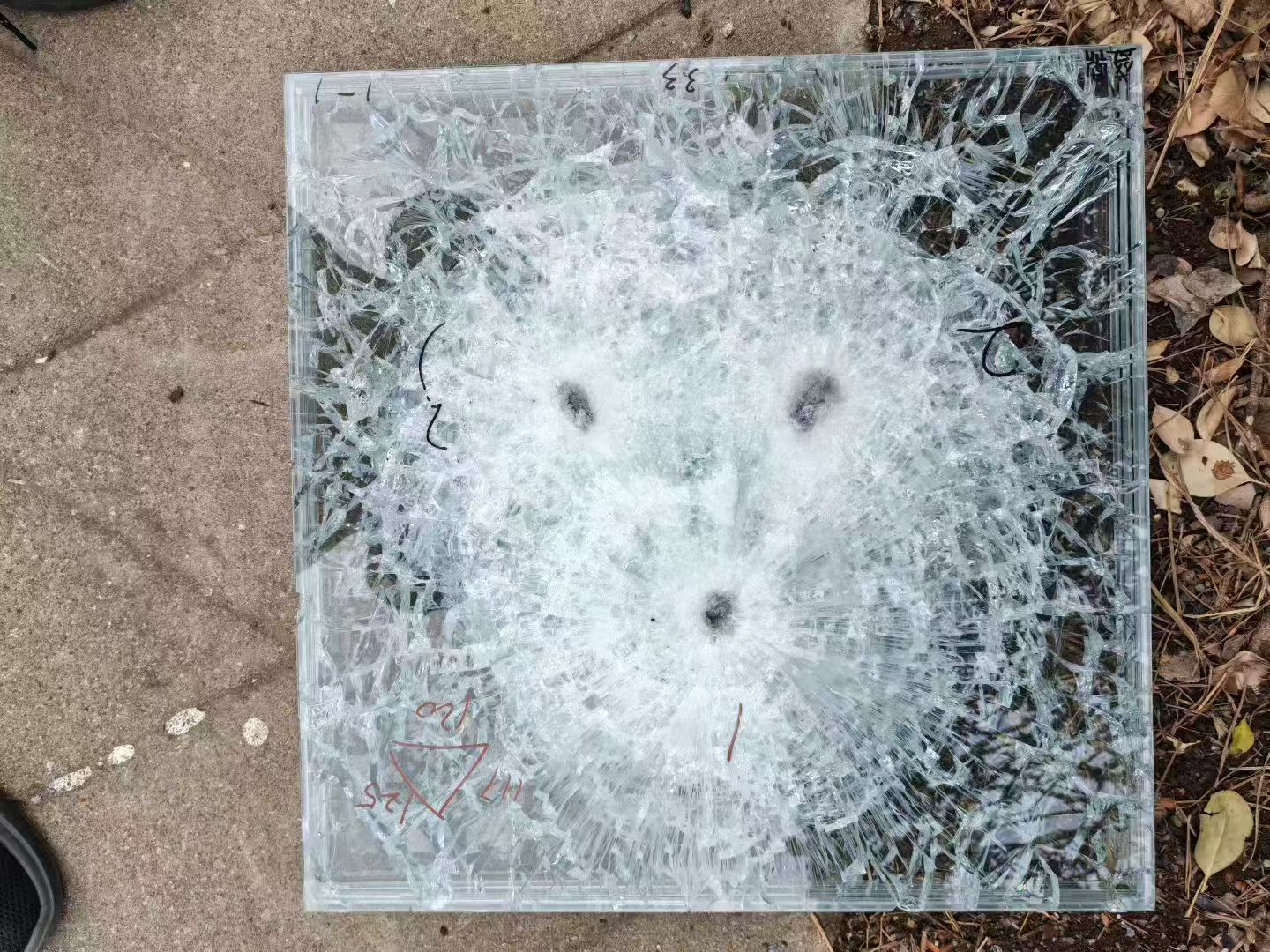
Why the Interlayer Choice Decides Bulletproof Glass Performance
Bulletproof glass is a laminate, not a single pane. Several glass plies are bonded by an interlayer film, and that film performs three jobs simultaneously: it transfers impact energy between plies, it retains glass fragments after a strike, and it preserves optical clarity across years of service. The interlayer is a small share of the bill of materials, but it carries a disproportionate share of the failure risk.
The practical decision facing a buyer at evaluation stage is therefore narrow and concrete: which film, at my glass build-up and on my lamination line, meets the ballistic requirement at the lowest total cost of ownership? That framing is what separates an engineering decision from a purchasing reflex.
Four recurring failure modes in security glazing trace directly back to the interlayer:
- Delamination at the glass–film interface after thermal or moisture cycling.
- Haze and blushing that reduce clarity once the laminate has aged.
- Bubbles and flow marks caused by a process window that does not match the film's behaviour.
- Rework and scrap caused by film dimensions that do not match the cut glass size.
Each failure mode maps to a selection criterion: the glass transition temperature behind the process window, the energy required to reach it, the maintenance load the line absorbs, and the customization flexibility of the supplier. This article evaluates EVA film and Huntsman 399 TPU against exactly those criteria.
Industry Background: Where EVA Film Sits in Laminated Glass
EVA film is an established interlayer category, not a niche substitute. Fortune Business Insights values the global EVA films market at USD 8.25 billion in 2025, spanning solar encapsulation, laminated glass and packaging. Laminated glass for safety, security and architectural applications is one segment of that total, and it is the segment where film grade, optical quality and process control matter most.
Two polymer families dominate interlayer specification in safety glazing: ethylene vinyl acetate (EVA) and thermoplastic polyurethane (TPU). Huntsman 399 TPU is a named TPU grade that appears as a benchmark in ballistic glazing discussions. EVA interlayer film — supplied as clear EVA film, ultra clear EVA film and color EVA film, with UV resistant EVA options — is specified primarily by glass transition temperature, thickness, optical clarity, and dimensional format.
Trade mechanics matter as much as polymer chemistry for importers. EVA film is classified under HTSUS 3920.10.0000 per U.S. Customs and Border Protection ruling NY N115543, which sets the tariff treatment buyers should model into landed cost alongside the film price itself.
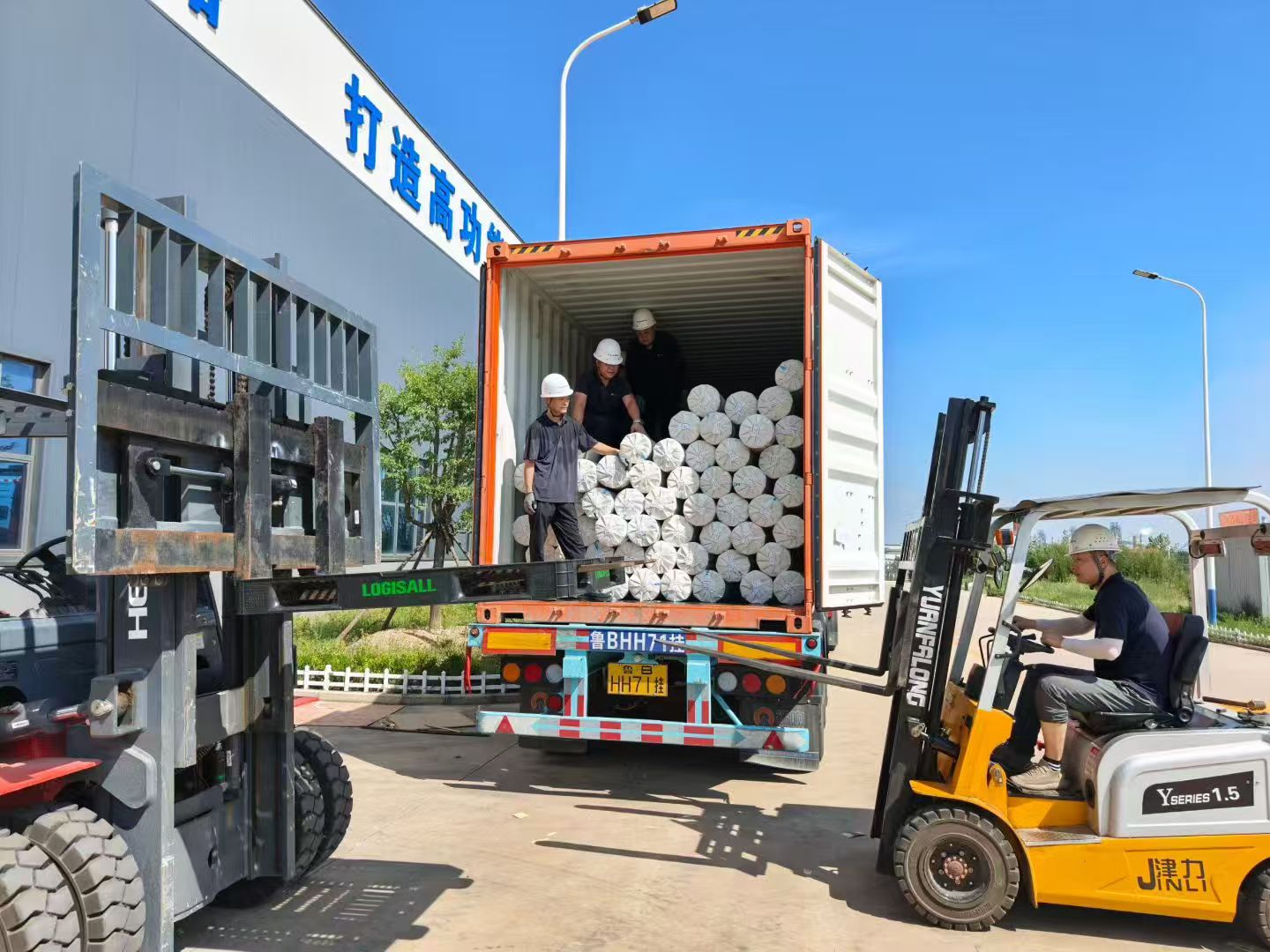
Procurement reality check: most EVA film for laminated glass is sourced from Chinese manufacturers. Qualified suppliers typically export heavily — SHENGDING HIGHTECH MATERIALS CO., LTD, for example, exports around 70% of output, with North Africa, the Middle East and Latin America as its main markets. Buyers evaluating an interlayer should therefore assess supplier capability with the same rigour applied to the material itself.
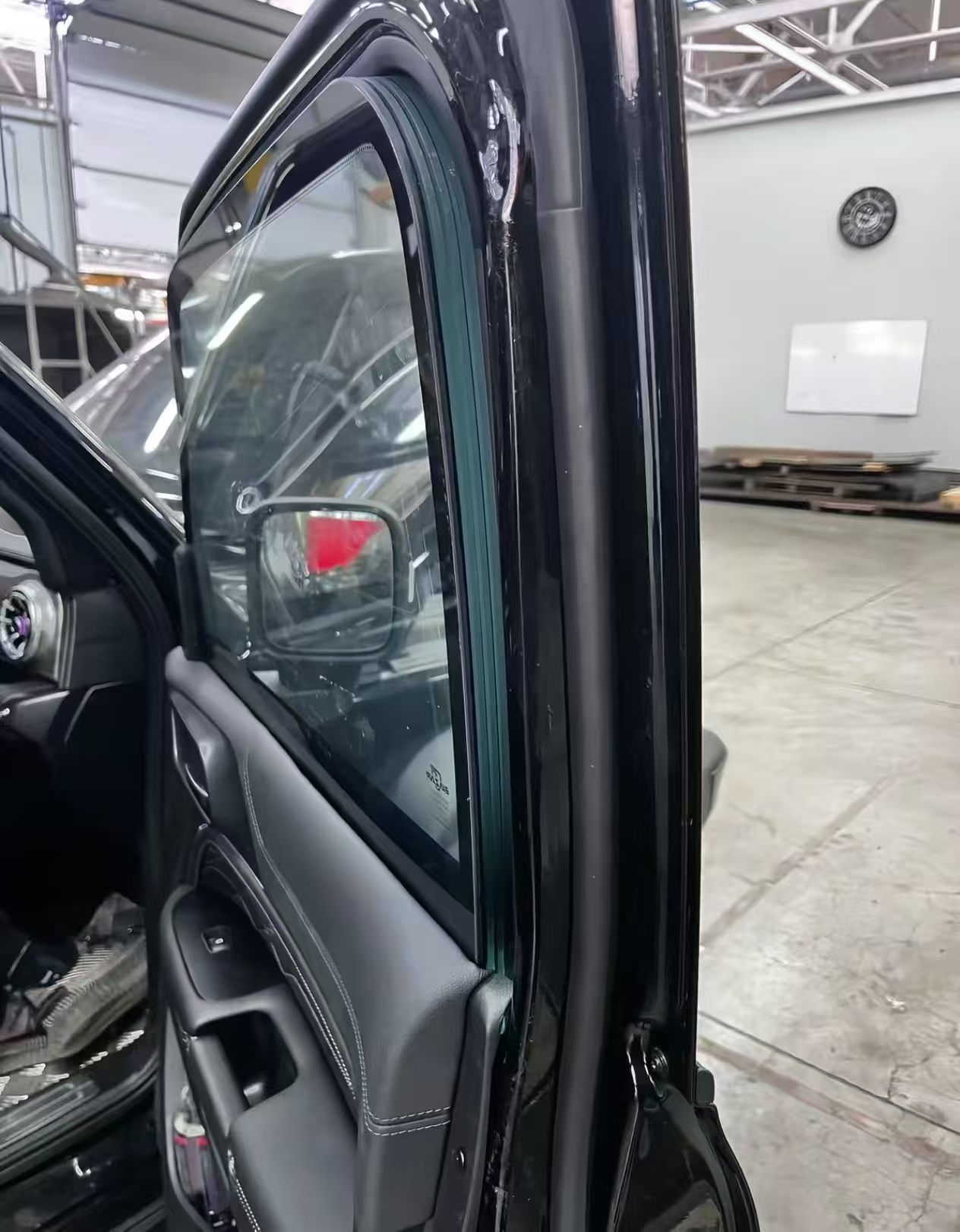
Detailed Solution: EVA Film vs Huntsman 399 TPU on Five Criteria
The comparison below is structured around the five criteria that a procurement team can actually verify: glass transition temperature, energy efficiency, maintenance load, material cost, and suitability for bulletproof glass. Each criterion is stated as a discrete, checkable fact rather than a general impression.
1. Glass transition temperature: −72°C versus −40°C
Glass transition temperature (Tg) marks the point at which a polymer shifts from a glassy, rigid state to a rubbery, compliant one. A lower Tg means the film stays flexible across a wider low-temperature range.
- EVA film Tg: −72°C
- Huntsman 399 TPU Tg: −40°C
- Difference: 32°C lower for EVA film
That 32°C gap is the single most consequential number in this comparison. It widens the low-temperature service margin of the finished laminate, reduces the risk of the interlayer entering a glassy state in cold-climate deployment, and generally gives the lamination process a broader rubbery plateau to work within. For security glazing installed in vehicles, perimeter facilities or unheated structures, that margin is a design variable, not a marketing point.
2. Energy efficiency during lamination
EVA film is reported to deliver higher energy efficiency than the Huntsman 399 TPU benchmark in the lamination process. In practice this translates into lower energy demand per cycle on an EVA film for furnace lamination line or vacuum-bag oven process.
Energy is a recurring cost that compounds across every shift, every month. A glass laminator running continuous production should treat the energy delta as a variable cost line in the business case, not as an afterthought to the film price. Buyers are advised to confirm the figure against their own autoclave or oven profile during a trial run, because the absolute saving depends on equipment, cycle time and load density.
3. Maintenance load
EVA film is reported to require less maintenance than the TPU benchmark in production use. Lower maintenance demand matters most on multi-shift lines, where unplanned downtime for cleaning and resetting is what actually erodes throughput — not the hourly film cost.
This criterion is best assessed during a validation run rather than from a datasheet. The practical test is simple: run a production-representative batch and record line stoppages, cleaning interventions and rework rate against the incumbent material.
4. Material cost: approximately 10% lower
EVA film is reported at approximately 10% lower cost than Huntsman 399 TPU. On its own, a 10% material saving rarely justifies a switch. Combined with higher energy efficiency and lower maintenance, however, the three effects stack into a total cost of ownership difference that is materially larger than the headline film price gap.
Total cost of ownership for an interlayer has four components: film cost, energy cost, maintenance cost, and scrap and rework cost. EVA film holds an advantage on three of the four in this comparison.
5. Suitability for bulletproof glass
Across these criteria, EVA film is assessed as more suitable for bulletproof glass than Huntsman 399 TPU. The conclusion is not a judgement about TPU as a polymer family; it is the outcome of the specific trade-off set: a 32°C lower Tg, higher energy efficiency, lower maintenance and roughly 10% lower cost, all pointing in the same direction.
For a laminator building security glazing at volume, a material that wins on Tg, energy, maintenance and cost simultaneously is the rational default. TPU remains a valid reference point, particularly where an existing qualified build-up already specifies it.
Step-by-Step Breakdown: Evaluating an Interlayer in Six Steps
The comparison above answers which material. The sequence below answers how to qualify it without exposing a production line to avoidable risk.
Step 1 — Fix the glass build-up and the ballistic target
Define ply count, glass thickness, curvature and the ballistic class the finished laminate must achieve. The interlayer decision only has meaning inside a fixed build-up; changing the film while changing the glass configuration makes the trial unreadable.
Step 2 — Screen candidates by glass transition temperature
Set the lowest service temperature the finished glazing will see, then confirm the film's Tg sits comfortably below it. EVA film at −72°C provides a 32°C margin over the −40°C of Huntsman 399 TPU, which is the first hard filter in the shortlist.
Step 3 — Compare energy and maintenance load
Model the energy cost per square metre laminated, then add the maintenance interventions recorded over a representative production window. Both figures should come from a trial run on your own equipment, not from a generic benchmark.
Step 4 — Validate with a sample before committing
Request a sample roll and run it through the full production cycle — lay-up, vacuum, heating, cooling and post-lamination inspection. A 50 kg MOQ keeps this validation step commercially light while still being large enough for a production-representative trial.
Step 5 — Confirm customization, capacity and lead time
Three supplier parameters decide whether a technically correct film is operationally usable:
- Customization: length and width cut to your glass format, so film edges align with the cut size and trim waste drops.
- Capacity: monthly output that can absorb your order without displacing other customers — for example, 100 tons per month.
- Lead time: a quoted delivery window you can plan around — for example, 10 days.
Step 6 — Verify compliance documentation
Request the certificate scope and product-level test reports before the first commercial order. Confirm that the quality management system covers interlayer film production specifically, and that regulatory declarations match the destination market.
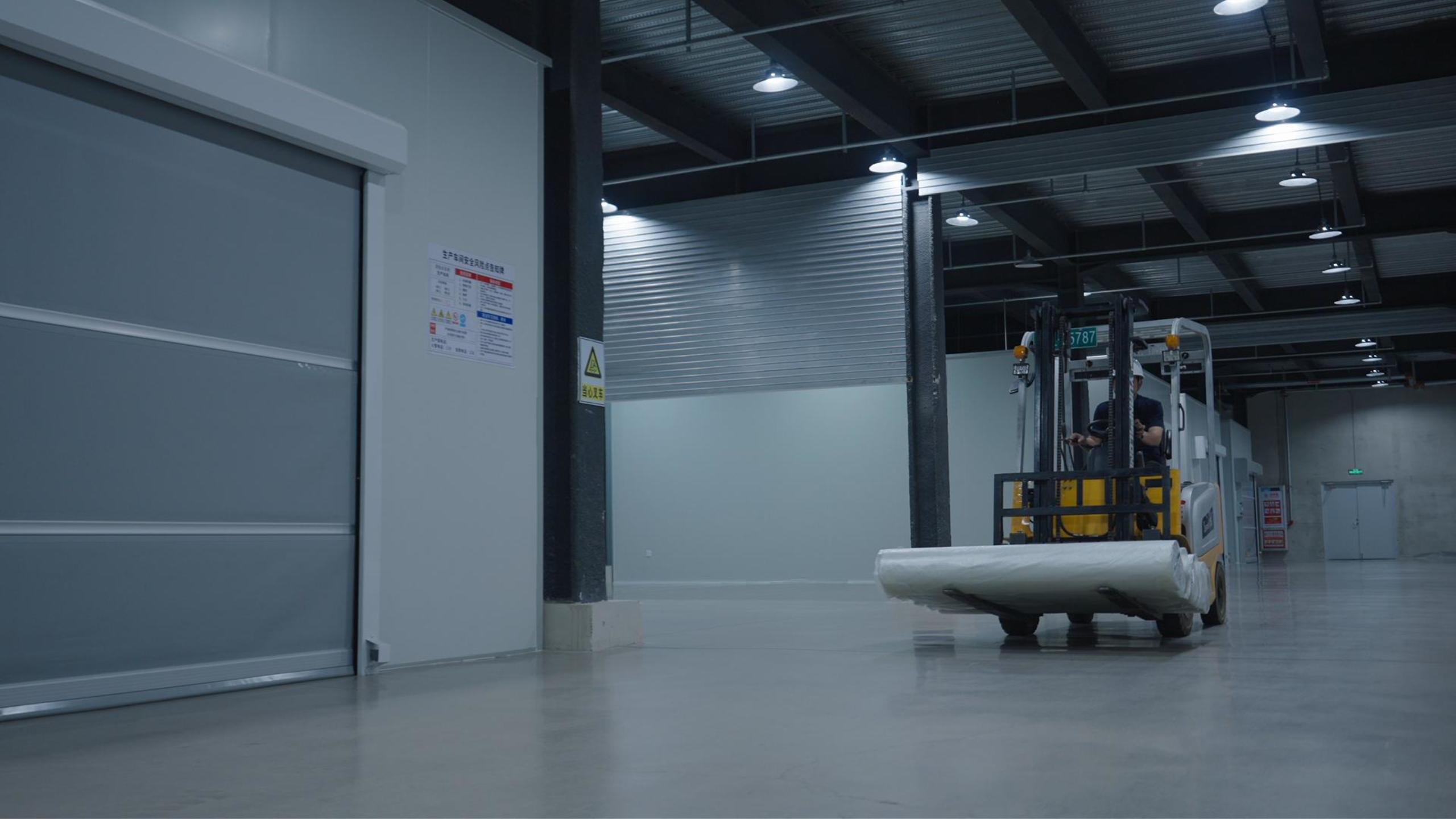
Use Cases: Where This Decision Plays Out
Defence-grade bulletproof glass in Pakistan
A defence industry customer in Pakistan used EVA film for bulletproof glass production. The project involved 100 rolls of film, was implemented over a 2-year period, and delivered stable operation results across 2 years. The installation is noted as the only solution of its kind in the country — a reference point for buyers assessing whether EVA film performs in a demanding security application rather than only on paper.
General construction and interior design
The same customer relationship extended beyond defence: EVA film was also used for general construction and interior design work. That dual use is characteristic of the material. Laminated glass for architectural safety, decorative and interior partitions can use the same EVA interlayer family, which simplifies inventory for fabricators serving both security and architectural markets.
Bulletproof vehicle glass modification
Vehicle glazing modification is a demanding variant of the same problem: curved geometry, tight thickness tolerance and a service environment with wide temperature swings. A low Tg directly supports performance here, which is why the −72°C versus −40°C comparison carries more weight in vehicle applications than in flat architectural panels.
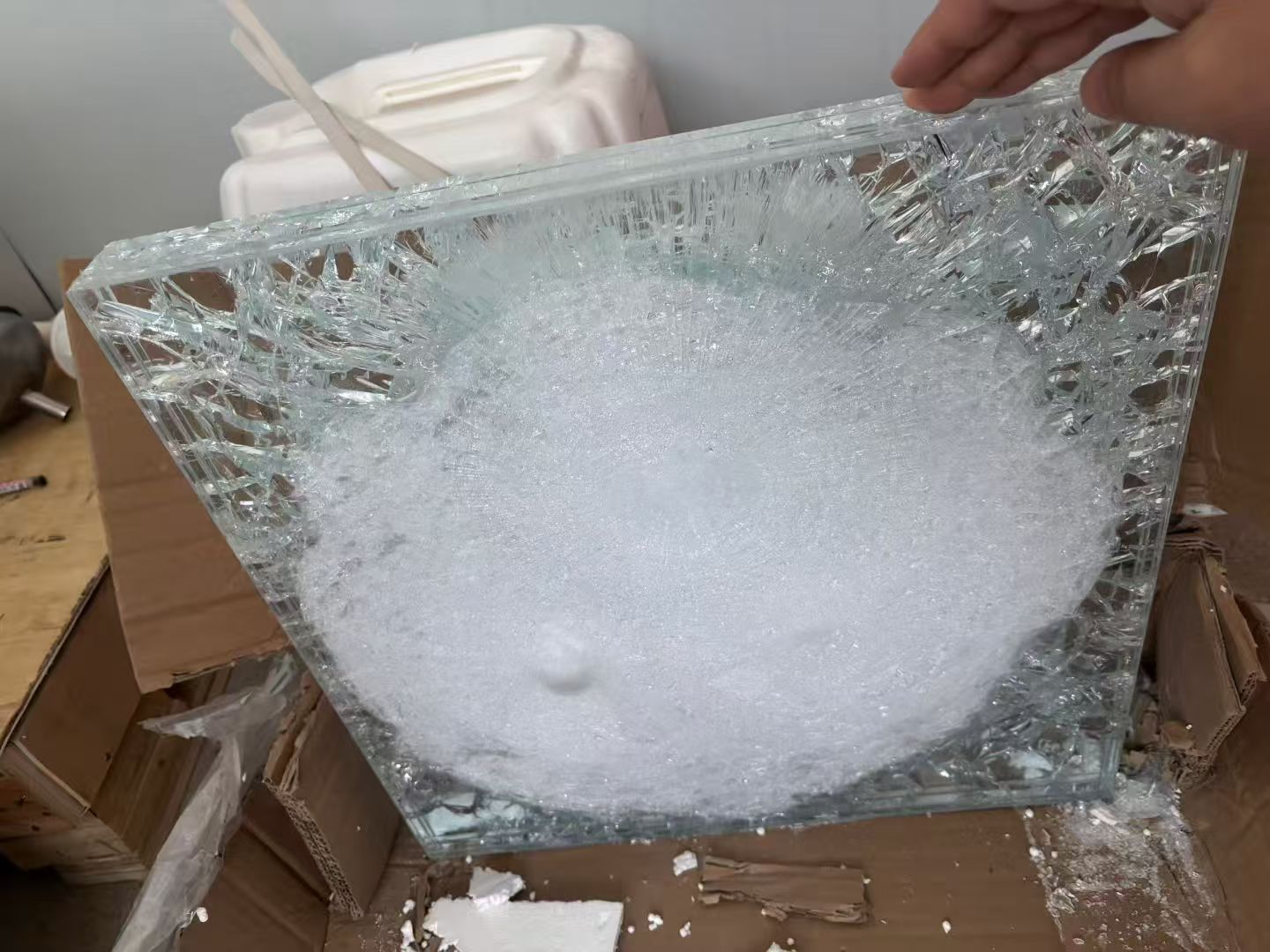
EVA Film vs Huntsman 399 TPU: Comparison Table
The table consolidates the criteria discussed above. Only facts established in this comparison and in supplier documentation are included; where a data point was not available for a material, the cell states so rather than estimating.
| Decision criterion | EVA film (SHENGDING HIGHTECH MATERIALS CO., LTD) | Huntsman 399 TPU (benchmark) | What it means for the buyer |
|---|---|---|---|
| Glass transition temperature (Tg) | −72°C | −40°C | 32°C wider low-temperature margin for EVA film |
| Relative material cost | Approximately 10% lower | Cost benchmark | Lower film cost per square metre laminated |
| Energy efficiency in lamination | Higher | Lower than EVA in this comparison | Lower energy cost per cycle |
| Maintenance demand | Less | Higher than EVA in this comparison | Fewer production interruptions |
| Suitability for bulletproof glass | Greater | Reference material | Better fit for security glazing build-ups |
| Customization | Length and width customization (OEM/ODM) | Not established in the sources used here | Less trim waste, faster lay-up |
| Minimum order quantity | 50 kg | Not established in the sources used here | Low-risk sample and trial entry point |
| Lead time | 10 days | Not established in the sources used here | Short planning cycle for repeat orders |
| Monthly capacity | 100 tons | Not established in the sources used here | Capacity available for volume programmes |
| Quality control | 100% testing | Not established in the sources used here | Batch-level inspection before shipment |
Supplier Fit: SHENGDING HIGHTECH MATERIALS CO., LTD
SHENGDING HIGHTECH MATERIALS CO., LTD is a polymer materials manufacturer established in 2018 and located in the Lanshan Chemical Industry Park in Rizhao City, Shandong Province, China. The company produces both TPU film and EVA film, operates a 50,000 m² facility with around 50 employees and 1,000 tons of annual output, and supports its film business with a research team of 10 engineers at the factory plus 5 professors at a Beijing R&D centre. Its export ratio is around 70%, with North Africa, the Middle East and Latin America as main markets.
On the criteria that matter for an interlayer decision, the operational facts are these:
- Quality management: ISO 9001:2015 certification, certificate number 10425Q01154R1S, issued 2025-07-07 and valid to 2028-07-24 by Shandong Seatone International Certification Co., Ltd., with scope covering the design, development and production of interlayer glass intermediate films and granular materials. The company also holds ISO 14001 and ISO 45001 certifications.
- Regulatory position: product performance is declared to comply with European REACH and RoHS regulations as well as U.S. FDA quality requirements.
- Production control: 100% testing, a 50 kg MOQ, a 10-day lead time and 100 tons of monthly capacity.
- Customization: OEM/ODM supply with length and width customization, supported by technical after-sales support.
Buyers should still verify certificate scope and request product-level test reports for their own destination market. Compliance documentation is a screening tool, not a substitute for qualification on your own line.
FAQ: EVA Film for Bulletproof Glass
What compliance documentation should I verify before ordering EVA film for bulletproof glass?
Verify that the supplier's quality management system covers interlayer film production, and request the certificate itself rather than a claim. SHENGDING HIGHTECH MATERIALS CO., LTD holds ISO 9001:2015 certification under certificate number 10425Q01154R1S, issued 2025-07-07 and valid to 2028-07-24 by Shandong Seatone International Certification Co., Ltd., with a scope covering the design, development and production of interlayer glass intermediate films and granular materials. The company also holds ISO 14001 and ISO 45001 certifications, and declares that product performance complies with European REACH and RoHS regulations and U.S. FDA quality requirements. Confirm that the declared scope and any product-level test reports match your destination market's requirements.
Can EVA film be customized in length and width for a specific bulletproof glass line?
Yes. SHENGDING HIGHTECH MATERIALS CO., LTD operates in OEM/ODM mode and offers customization of both film length and width. Format customization lets the film be cut to the glass format used on your line, which reduces trim waste and speeds lay-up. Capacity to support that customization is 100 tons per month, with 100% testing applied before shipment. Length and width specifications should be confirmed against your actual cut sizes during the sample stage.
How much does EVA film cost compared with Huntsman 399 TPU?
EVA film is reported at approximately 10% lower cost than Huntsman 399 TPU. The material price difference should be assessed alongside the other cost lines in the laminate, because EVA film also offers higher energy efficiency in lamination and lower maintenance demand, both of which are recurring costs on a production line. The combined effect on total cost of ownership is therefore larger than the 10% film price gap alone suggests.
What is the minimum order quantity, and how should a sample be validated?
The minimum order quantity for EVA film from SHENGDING HIGHTECH MATERIALS CO., LTD is 50 kg, which is small enough for a production-representative trial. Validation should reproduce the full production cycle: lay-up, vacuum, heating, cooling and post-lamination inspection for haze, bubbles and bond integrity. Because 100% testing is applied to production output, buyers can compare the trial result against the supplier's own inspection record for the same batch.
What lead time should I plan for?
The quoted lead time is 10 days. For a first order, that window applies to production after specification and sample approval, so the realistic planning horizon should include sample validation and documentation review before the delivery date. For repeat programmes, the 10-day lead time combined with 100 tons of monthly capacity allows relatively short reorder cycles. To start a sample request or a quotation for your glass build-up, contact the supplier through www.shengdingchina.com or download the product brochure.
Conclusion: A Decision Rule for Security Glazing Buyers
The EVA film versus Huntsman 399 TPU comparison resolves cleanly when the criteria are stated explicitly. EVA film delivers a glass transition temperature of −72°C against −40°C for Huntsman 399 TPU — a 32°C advantage — together with higher energy efficiency in lamination, lower maintenance demand and approximately 10% lower material cost. On suitability for bulletproof glass, those four factors point the same way.
A practical decision rule follows from that:
- If the glazing must perform across a wide low-temperature range, weight Tg first — the 32°C gap is the hardest technical differentiator in this comparison.
- If the line runs continuous shifts, weight energy and maintenance alongside film price, because both are recurring costs.
- If the glass format varies, weight length and width customization, since dimensional fit drives scrap and lay-up time.
- Whatever the weighting, confirm compliance scope and validate on your own equipment with a 50 kg trial before scaling.
Huntsman 399 TPU remains a legitimate reference material, and existing qualified build-ups should not be changed without a validation run. But for a new bulletproof glass programme evaluated on measurable criteria, EVA film is the stronger starting point.
Next Step: Validate EVA Film on Your Own Line
A comparison table is a screening tool; the decision is made on glass. Request a sample roll at a 50 kg minimum order quantity, run it against your current interlayer on a production-representative bulletproof build-up, and compare bond integrity, haze, cycle energy and line stoppages side by side. Orders ship in 10 days from a 100 tons per month capacity, with 100% testing applied to output and length and width customized to your glass format.
Contact SHENGDING HIGHTECH MATERIALS CO., LTD at www.shengdingchina.com, email docs@foundite.com, or download the EVA film product brochure.
Have Questions or Need More Details?
Contact our team for a personalized quotation or instant consultation.
Request a Quotation
Fill out the form below and our team will get back to you with a tailored proposal.
WhatsApp Direct Chat
Prefer to chat in real-time? Message us on WhatsApp for instant assistance & quick answers.
- Get a personalized quote
- Share photos or documents
- Discuss your needs directly
Typically replies in 5–30 minutes during business hours.