
EVA Film Supplier Audit: Capacity, QC & Delivery Assurance
EVA Film Supplier Audit: Capacity, QC & Delivery Assurance
An EVA film supplier can be qualified with three proofs and one document pack: a monthly capacity figure you can actually reserve, a quality-control routine that produces a record for every roll, and delivery terms that tell you exactly where your risk sits before the container sails.
This guide is written for buyers in the evaluation and execution stages — the point where a shortlist of EVA film manufacturers exists and the remaining task is to convert supplier claims into evidence before a purchase order is issued.
SHENGDING HIGHTECH MATERIALS CO., LTD is a polymer materials manufacturer established in 2018 in the Lanshan Chemical Industry Park, Rizhao City, Shandong Province, China, producing TPU film and EVA film. Its published capability data — a monthly capacity of 100 tons, a 10-day lead time, 100% testing quality control, OEM/ODM customization of length and width, a 50 kg MOQ, FOB delivery terms and full payment before shipment — is used in this article as a worked example. Not because those figures are unusual, but because each one can be converted into a document or a test that a buyer is able to verify.

The Three Supplier Risks That Decide an EVA Film Order
Most EVA interlayer problems are visible in the commercial documents months before they appear in a finished glass panel. Three claims carry almost all of the risk.
Capacity risk: quoted tonnage is not reserved tonnage
A monthly capacity figure describes a plant, not an order. A manufacturer stating 100 tons per month can accept a new customer and still schedule that customer's rolls behind larger accounts, because nothing in a standard quotation reserves press time. Buyers who skip this question usually discover it as a schedule slip after the glass has already been cut.
Quality-control risk: 100% testing is a process, not a result
The statement that all products are tested is only useful once the buyer knows which parameters are measured on each roll, what the test record contains, and how long that evidence is retained. Without those three answers, the claim describes an intention rather than a batch you can trace.
Delivery and payment risk: FOB with payment before shipment
FOB terms combined with full payment before shipment are common in the EVA film trade, and they concentrate control on the buyer's side of the transaction: the money leaves before the container does. That makes the pre-shipment acceptance test the single most important control point in the order rather than a formality.
Once a defective interlayer has been laminated, the glass is scrap. This is why supplier evaluation for EVA laminated glass film has to happen at roll level, before production, and not at the complaint stage.
Industry Background: Why Documentation Now Decides EVA Film Orders
Global EVA film demand is large and structurally mixed. Fortune Business Insights valued the global EVA films market at USD 8.25 billion in 2025, a figure that aggregates solar, laminated glass and packaging applications. Aggregated data of that kind supports market-entry planning, but it cannot tell a buyer what a specific plant can allocate to architectural-grade EVA interlayer film. That is a document question, not a market question.
Two further developments push supplier evaluation toward paperwork. First, project specifications for architectural laminated glass increasingly require management-system certificates and regulatory declarations inside the submittal file. Second, customs classification must be correct before goods move: in the United States, EVA film is classified under HTSUS 3920.10.0000 according to Customs ruling NY N115543, and an importer who cannot state the code confidently loses time at entry.
Against that background, the claims that matter during evaluation are the ones with a paper trail: certificates with a defined scope, regulatory declarations backed by test reports, capacity statements, QC records and acceptance criteria written into the order.
The Four Evidence Layers of an EVA Film Supplier Evaluation
The framework moves from plant level to transaction level. Each layer has a claim, a verification method and a consequence if the check is skipped.
Layer 1 — Capacity: converting 100 tons per month into a reservation
The capacity claim is concrete: 100 tons per month. Verification starts by asking what that figure includes. A buyer should request the number of extrusion lines, the width range they run, the share normally allocated to architectural EVA interlayer film as opposed to other grades, and a written allocation for the first three months of the supply agreement.
Engineering depth belongs in the same question. The company operates a 50,000 m² facility with a team that includes 10 engineers at the factory plus 5 professors at the Beijing R&D Center. Capacity is not only press time: a custom width or a non-standard roll length requires an engineering review before it can be scheduled, and a supplier without that review function will queue your specification behind routine orders.
Layer 2 — Quality control: what 100% testing should mean
The manufacturer states 100% testing quality control for all products. In practice, a buyer should confirm four things: the parameters measured on every roll (dimensions, appearance, roll length, and optical values where specified), the format of the record, the link between the record and the roll label, and the retention period for retained samples.
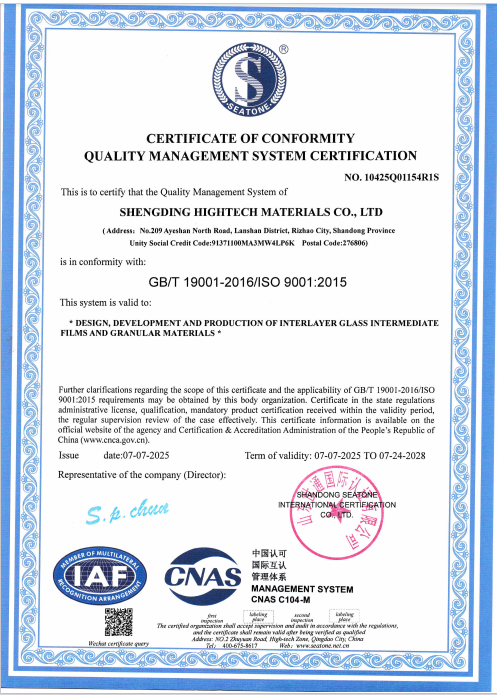
Management-system certification supports this layer only when the scope matches the product. SHENGDING HIGHTECH MATERIALS CO., LTD holds ISO 9001 certificate 10425Q01154R1S, issued on 2025-07-07 and valid until 2028-07-24 by Shandong Seatone International Certification Co., Ltd. under GB/T 19001-2016 / ISO 9001:2015. The scope is specific: design, development and production of interlayer glass intermediate films and granular materials. That scope, rather than the certificate logo, is what makes the document relevant to an EVA film buyer. The company also holds ISO 14001 and ISO 45001, which answer the environmental and occupational-safety sections of most buyer questionnaires.
Optical performance is a separate matter. The manufacturer lists EVA film model SD38 with 90% light transmittance and 0.5% haze. Treat published optical values as a specification to be confirmed by a certificate of analysis or an independent test report, not as an independently verified result. A supplier who can produce the test documentation quickly is exhibiting the behaviour you want to buy.
Layer 3 — OEM/ODM customization: freeze length and width in writing
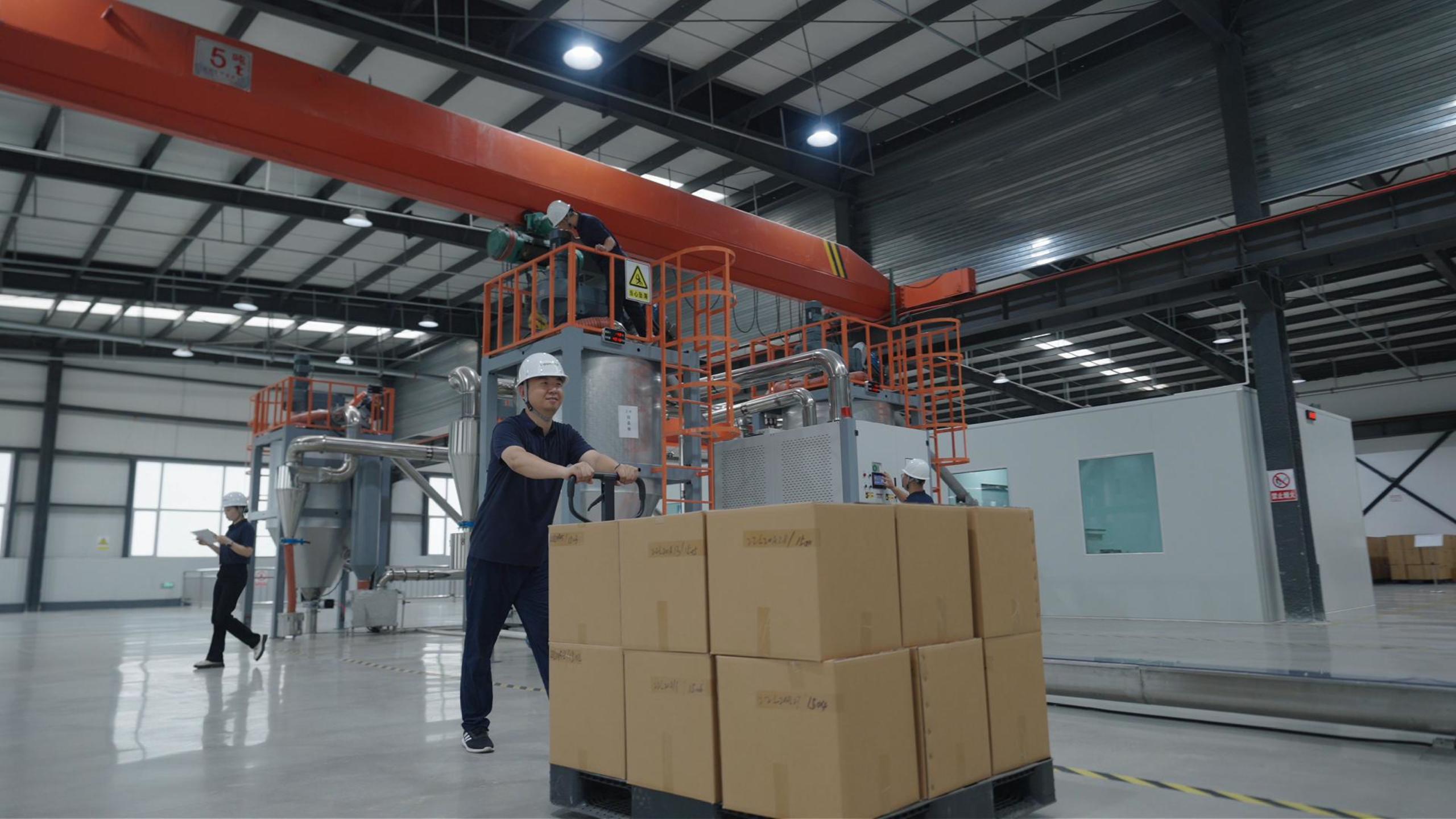
The manufacturer provides OEM/ODM production services with customization of length and width. Customization is where purchase orders most often fail, because "custom width" is not a specification until tolerances are attached. Before a mass run, the buyer should record width and width tolerance, roll length, core diameter, winding direction, edge condition, packaging and label content, and approve a first article from the customized run.
The same applies to product category: clear EVA film, ultra clear EVA film, color EVA film and UV resistant EVA film are different specifications, not adjectives. Thickness grades such as 0.38 mm, 0.5 mm and 0.76 mm must be named in the order, together with the application they are intended for — architectural laminated glass, decorative glass, or a safety-glass build-up.
Layer 4 — Delivery and payment: reading FOB and full payment correctly
The delivery claim is a 10-day lead time. The first verification question is what starts the clock: purchase order, specification approval, or first-article sign-off. For customized widths the answer is normally specification approval, and that changes the planning date for the whole project.
Commercial terms are equally explicit: FOB delivery terms, full payment before shipment, and pre-shipment test as the acceptance criterion, with an MOQ of 50 kg. Read together, these terms define a sequence in which the buyer's only leverage sits in the pre-shipment test, because payment completes before the goods leave. A buyer who accepts vague acceptance language is paying in full for an outcome they have not defined.
Logistics documentation belongs in this layer as well. The supplier reports an export ratio of 70%, serving North Africa, the Middle East and Latin America, which means consolidated shipments and recurring documentation sets: invoice, packing list, certificate of analysis, certificate copies and the correct customs classification.
Step-by-Step: A Seven-Step Verification Sequence
- Request the document set first. Ask for the ISO 9001 certificate with its scope, the ISO 14001 and ISO 45001 certificates, REACH and RoHS declarations, FDA-related compliance statements, a product datasheet and a sample certificate-of-analysis template. Score the reply speed and completeness; it predicts the service level later.
- Confirm capacity and reserve a window. Convert the 100 tons per month claim into a written monthly allocation for your grade, with the delivery schedule attached.
- Order at MOQ level and test on your own line. The 50 kg MOQ makes a genuine trial affordable. Laminate the sample on your own furnace, with your process parameters, and record bubbles, delamination, haze and edge behaviour.
- Freeze the specification. Width, tolerance, roll length, thickness grade, colour or clarity class, UV grade and packaging, all recorded in the purchase order rather than in an email thread.
- Agree the QC protocol. Confirm the parameters checked on every roll, the record format, how the record maps to the roll label, and how long samples are retained.
- Define the pre-shipment acceptance test. Name the inspector, the location, the sampling plan, the pass/fail criteria, the record that proves the result, and the remedy if the test fails — decided before payment, not after.
- Lock commercial and logistics terms. Confirm the 10-day lead-time trigger, the FOB port, the document list, the customs classification and the shipment schedule for the first three orders.
Comparison Table: Claims, Evidence and Risk
| Parameter | Published value | Evidence to request | Risk if unverified |
|---|---|---|---|
| Monthly capacity | 100 tons | Written monthly allocation for your grade and specification | Order accepted but scheduled behind larger accounts |
| Quality control | 100% testing of all products | Test record format, roll-level traceability, sample retention period | Batch variation discovered only after lamination |
| Customization | OEM/ODM, length and width | Approved first article with tolerances and packaging spec | Rolls that do not fit the cutting plan |
| Lead time | 10 days | Named start trigger: PO, specification approval or first-article sign-off | Project schedule built on a misunderstood start date |
| MOQ | 50 kg | Confirmation that the MOQ applies to your customized specification | Trial order becomes a full production commitment |
| Delivery terms | FOB | Named port, named forwarder, document list | Cost and risk transferred earlier than expected |
| Payment | Full payment before shipment | Acceptance test completed and recorded before payment | Weak leverage if the goods do not match |
| Acceptance criteria | Pre-shipment test | Written sampling plan and pass/fail criteria | Dispute over what "tested" means |
| Certificate / declaration | Standard or regulation | Identifier and issuer | Status reported |
|---|---|---|---|
| Quality management system | GB/T 19001-2016 / ISO 9001:2015 | 10425Q01154R1S, Shandong Seatone International Certification Co., Ltd. | Issued 2025-07-07, valid until 2028-07-24 |
| Environmental management system | ISO 14001 | Certificate copy to be requested from the supplier | Reported as held; verify on the issuer register |
| Occupational health and safety | ISO 45001 | Certificate copy to be requested from the supplier | Reported as held; verify on the issuer register |
| Chemical compliance (EU) | REACH | Declaration plus supporting test documentation | Product performance stated to comply |
| Restricted substances (EU) | RoHS | Declaration plus supporting test documentation | Product performance stated to comply |
| Food-contact / quality requirements (US) | FDA quality requirements | Declaration plus supporting test documentation | Product performance stated to comply |
Use Cases: Where These Checks Change the Outcome
Architectural laminated glass projects
On an architectural job, the EVA film must match a specified build-up, and the submittal file usually needs certificates plus a declaration of compliance. A supplier whose ISO 9001 scope covers interlayer glass intermediate films, and who can hand over REACH and RoHS documentation on request, removes a review cycle from the project schedule.
Furnace lamination lines
EVA film for furnace lamination is process-sensitive: consistent thickness and roll length keep the cycle stable across a shift. Where a line runs mixed orders, the ability to receive customized length and width at a 50 kg MOQ allows a trial on the actual furnace without committing to a full production volume.
Decorative and clarity-driven glass
Decorative work depends on appearance. Clear, ultra clear and colour EVA film are separate purchase specifications, and the optical values published for SD38 — 90% light transmittance and 0.5% haze — should be matched against a certificate of analysis for the delivered batch rather than assumed from a product page.
Defence and safety-glass builds
EVA film is also used in bulletproof glass manufacturing for defence-industry customers. A documented case in Pakistan covered 100 rolls over a two-year implementation period, with stable operation reported over the following two years. For buyers in this segment, the value of the example is the file behind it: specification, tests, and a traceable record across a multi-year supply.
Export and distribution programmes
Distributors serving North Africa, the Middle East and Latin America carry the compliance burden of several destinations at once. A supplier already exporting at a 70% ratio, with ISO 9001, ISO 14001, ISO 45001, REACH, RoHS and FDA-related compliance statements available, shortens the documentation cycle for each new market entry.
FAQ
Which certifications should an EVA film buyer verify first?
Start with ISO 9001 and read the scope before the logo. SHENGDING HIGHTECH MATERIALS CO., LTD holds ISO 9001 certificate 10425Q01154R1S, issued on 2025-07-07 and valid until 2028-07-24 by Shandong Seatone International Certification Co., Ltd. under GB/T 19001-2016 / ISO 9001:2015, with a scope covering design, development and production of interlayer glass intermediate films and granular materials. The company also holds ISO 14001 and ISO 45001, and states that product performance complies with European REACH and RoHS regulations and U.S. FDA quality requirements. Verify the certificate number on the issuer's register, confirm the scope covers the product you purchase, and request the underlying REACH and RoHS test documentation instead of accepting a compliance logo on a datasheet.
How do you confirm that a stated capacity of 100 tons per month is real?
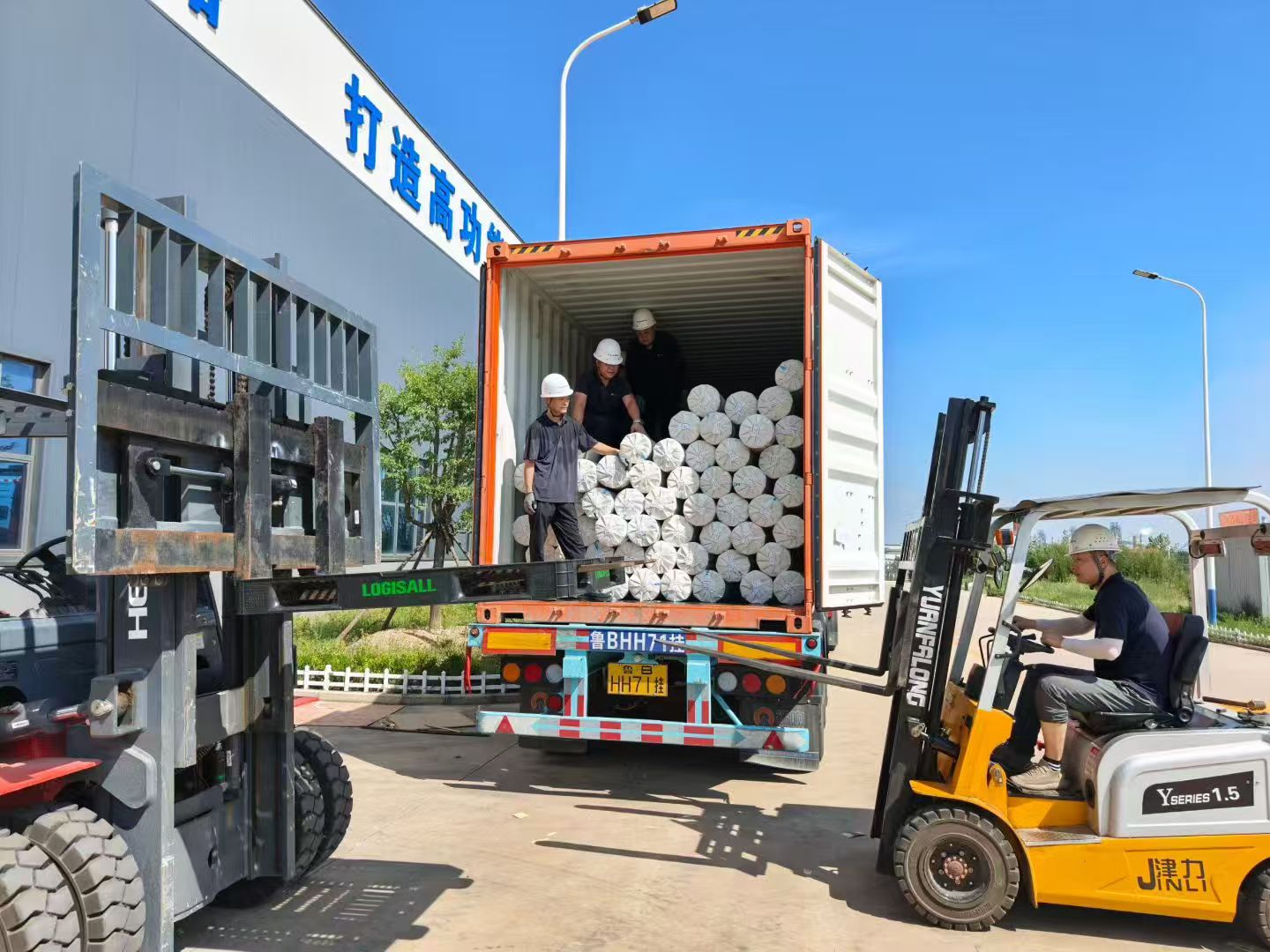
Convert the claim into three artefacts: a line list showing how the tonnage is produced, a written monthly allocation for your grade and specification, and a factory visit or third-party audit that confirms the extrusion equipment exists at the stated site. SHENGDING HIGHTECH MATERIALS CO., LTD states a monthly capacity of 100 tons and operates a 50,000 m² facility with 10 engineers at the factory plus 5 professors at the Beijing R&D Center. Ask how much of that capacity is already committed, and how a customized width is scheduled, because engineering review time is part of capacity in practice.
What order size and payment terms apply to a first EVA film order?
A first order can be small: the stated MOQ is 50 kg, which supports a genuine trial rather than a production commitment. Commercial terms reported by the manufacturer are FOB delivery with full payment before shipment, and acceptance based on a pre-shipment test. Because payment completes before the goods leave, the commercial protection sits in that acceptance test: agree the sampling plan, the pass/fail criteria and the remedy for a failed test in writing before paying, and keep the first order at trial volume until the test result matches your own lamination trial.
How should a buyer run the sample and pre-shipment test?
Run two separate validations. First, a sample validation: order at MOQ, laminate the EVA film on your own furnace using your production parameters, and record bubbles, delamination, haze and edge condition. Second, a pre-shipment acceptance test at the factory, against criteria written into the order, with the result documented. For optical targets, compare the delivered batch certificate against the published specification — for SD38 the manufacturer lists 90% light transmittance and 0.5% haze — and note that a documented defence-industry case in Pakistan covered 100 rolls over a two-year implementation period with stable operation reported afterwards.
What lead time is realistic, and what protects delivery?
The stated lead time is 10 days, and the practical question is what starts the clock: a purchase order, a specification approval, or a first-article sign-off. For customized length and width, plan from specification approval. Delivery is then protected by three items rather than one: a written monthly allocation against the 100-ton capacity, a pre-shipment acceptance test completed before the full payment, and a document set — invoice, packing list, certificate of analysis and correct customs classification — agreed before the container is booked. To test this framework on your own specification, request a sample and a quotation from the manufacturer through www.shengdingchina.com, or download the product brochure for the full specification and certification summary.
Conclusion: Verify the Three Proofs, Then Order
An EVA film supplier evaluation is finished when three claims have become documents: a capacity figure converted into a written allocation, a 100% testing routine converted into a traceable record, and a 10-day lead time and FOB arrangement converted into a pre-shipment acceptance test that the buyer controls. Everything else — certifications, MOQ, customization, export experience — supports those three proofs.
The worked example in this article shows what a verifiable claim set looks like: 100 tons per month, a 10-day lead time, 100% testing, OEM/ODM customization of length and width, a 50 kg MOQ, FOB terms, full payment before shipment, ISO 9001 certificate 10425Q01154R1S with a product-relevant scope, ISO 14001 and ISO 45001, and REACH, RoHS and FDA-related compliance statements. The buyer's task is not to trust that list, but to ask for the evidence behind each line and to hold the first order at trial volume until the evidence arrives.
Next step: sample, quotation and specification review
Send your glass build-up, required width and roll length, thickness grade and destination market. A sample at the 50 kg MOQ level and a quotation with FOB terms can be prepared against your specification.
Email: docs@foundite.com | Tel / WhatsApp: +8613562376375
Website: www.shengdingchina.com | Blog: blog.shengdingchina.com
Product brochure (PDF): download the catalogue
SHENGDING HIGHTECH MATERIALS CO., LTD — North of Ayeshan Road 209, Rizhao City, Shandong Province, China.
Have Questions or Need More Details?
Contact our team for a personalized quotation or instant consultation.
Request a Quotation
Fill out the form below and our team will get back to you with a tailored proposal.
WhatsApp Direct Chat
Prefer to chat in real-time? Message us on WhatsApp for instant assistance & quick answers.
- Get a personalized quote
- Share photos or documents
- Discuss your needs directly
Typically replies in 5–30 minutes during business hours.