EVA Film Application Guide: Bulletproof Glass and Architectural Laminated Glass Projects
EVA film rarely fails inside the oven. It fails in the weeks before the oven — in storage, in cutting, and in assumptions the laminator made about which project the glass was actually built for. That is why an application guide matters more than a datasheet for anyone running bulletproof glass programs or architectural and decorative laminated glass work.
EVA glass interlayer film for these projects is processed in a laminating oven under normal pressure and high temperature, and it must be kept dry from delivery through loading. SHENGDING HIGHTECH MATERIALS CO., LTD supplies EVA FILM model SD38, a high-transparency EVA interlayer listed for architectural glass and decorative glass with 90% light transmittance and 0.5% haze, supported by length and width customization, OEM/ODM production, 100% testing, a 50 kg minimum order, a 10-day lead time and 100 tons of monthly capacity.
Project facts at a glance
- Film: EVA FILM model SD38, high-transparency EVA interlayer, listed at 90% light transmittance and 0.5% haze.
- Process: lamination of safety glass in a laminating oven under normal pressure and high temperature.
- Special requirement: the film must be kept dry.
- Matched equipment: EVA laminating oven.
- Commercial terms: MOQ 50 kg, lead time 10 days, monthly capacity 100 tons, 100% test.
- Reference program: a bulletproof glass producer in Pakistan has run 100 rolls over two years of stable operation.
Problem Definition: Why Laminated Glass Projects Fail Before the Film Reaches the Oven
Most lamination defects that get blamed on the interlayer trace back to three setup decisions made long before the first panel is loaded.
The first is project classification. Bulletproof and defense-related glass programs and architectural or decorative laminated glass projects are not the same job, even when both use a hot-melt interlayer and a laminating oven. They differ in layup, in acceptance criteria, and in how much risk a rejected panel carries. A supplier who treats them as one category will eventually send the wrong film family into the wrong shop.
The second is moisture. Keeping the film dry is not housekeeping advice — it is a stated special requirement of the application, alongside the normal-pressure and high-temperature process itself. EVA film that has taken up moisture before lamination can produce haze, bubbles, edge defects or adhesion loss after the cycle, and the defect appears at the most expensive point in the workflow: after the glass, the labour and the oven time have all been spent.
The third is sizing. A roll that does not match the panel size forces trimming, increases edge handling, and exposes more film surface to the shop environment. Length and width customization is therefore a process control measure, not a convenience.
Layer quality control on top of that, and the argument becomes straightforward: a supplier that tests 100% of output removes the scenario where a defect is discovered after lamination, when nothing can be recovered.
Industry Background: Two Demand Streams, One Lamination Discipline
Laminated glass sits inside a much larger EVA films category. Fortune Business Insights valued the global EVA films market at USD 8.25 billion in 2025, a figure that aggregates solar encapsulant, laminated glass, packaging and other segments. That breadth is useful context for a procurement file and almost useless as a selection tool: the architectural interlayer slice is specified on process fit, not on category size.
The two demand streams behave differently. Shengding's project records distinguish defense industry customers, who buy for bulletproof and blast-resistant glass programs, from general construction and interior design customers, who buy for architectural and decorative lamination. The first group tends to lock a specification and repeat it; the second group iterates on formats, colours and panel sizes, which is precisely where custom roll dimensions earn their value.
Export mechanics are the third background factor. EVA film that is predominantly ethylene is classified under HTSUS 3920.10.0000 in the U.S. Customs and Border Protection ruling NY N115543, so importers can build landed-cost models before the first shipment rather than after it.
SHENGDING HIGHTECH MATERIALS CO., LTD is a polymer materials manufacturer established in 2018 and based in the Lanshan Chemical Industry Park, Rizhao City, Shandong Province, China. The company operates a 50,000 m² facility with 50 employees and an annual output of 1,000 tons, runs an R&D team of 10 engineers at the factory plus 5 professors at its Beijing R&D Center, exports around 70% of output to markets including North Africa, the Middle East and Latin America, and holds ISO 9001, ISO 14001 and ISO 45001 certification.
Detailed Solution: How EVA Film Is Specified for These Two Project Types
1. The film: SD38 as the architectural and decorative baseline
EVA FILM model SD38 is a high-transparency EVA interlayer film from SHENGDING HIGHTECH MATERIALS CO., LTD, listed for architectural glass and decorative glass. Its function in the build is the lamination of safety glass: the film sits between glass plies and, once cured, bonds them into a single laminated unit.
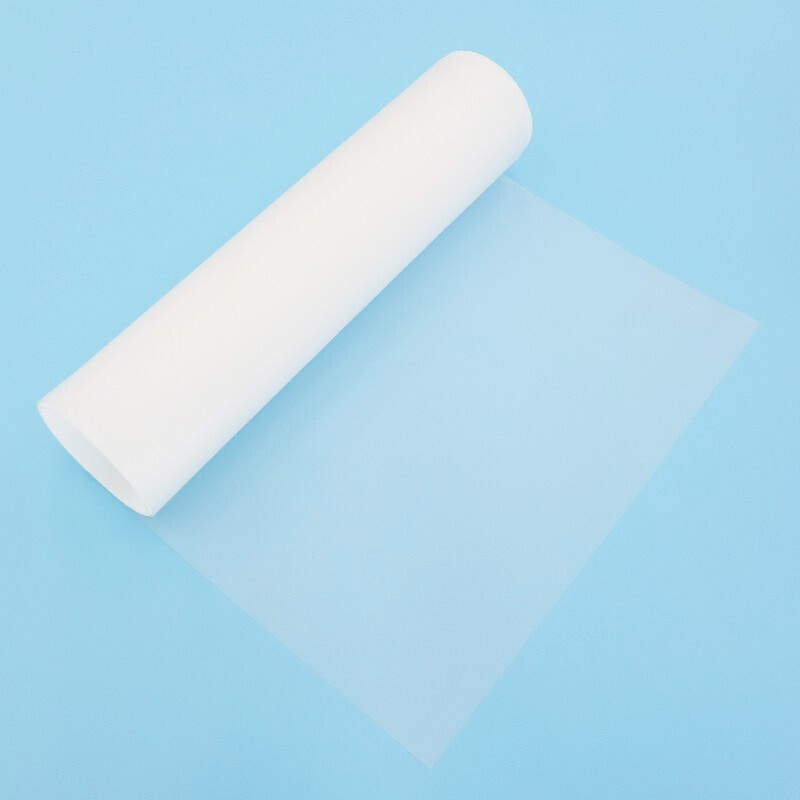
| Listed specification | EVA FILM SD38 |
|---|---|
| Material | EVA |
| Type | High-transparency EVA film |
| Light transmittance | 90% |
| Haze | 0.5% |
| Stated glass applications | Architectural glass, decorative glass |
| Process route | Laminating oven, normal pressure and high temperature; keep dry |
The optical figures are supplier-listed values. For a project specification file, pair them with a lot-level certificate of analysis and, where the buyer's standard requires it, an independent optical and aging test report. That is normal due diligence, not a doubt about the film — and it is the difference between a quote that survives an audit and one that does not.
2. The process: normal pressure, high temperature, and a matched laminating oven
SD38 is designed for normal pressure and high temperature environments, and it requires supporting equipment such as an EVA laminating oven. The recorded operation mode is laminating oven processing. In plain terms: this is a hot-melt interlayer paired with an oven built for it, not a film that can be pushed through an arbitrary cycle and expected to behave.
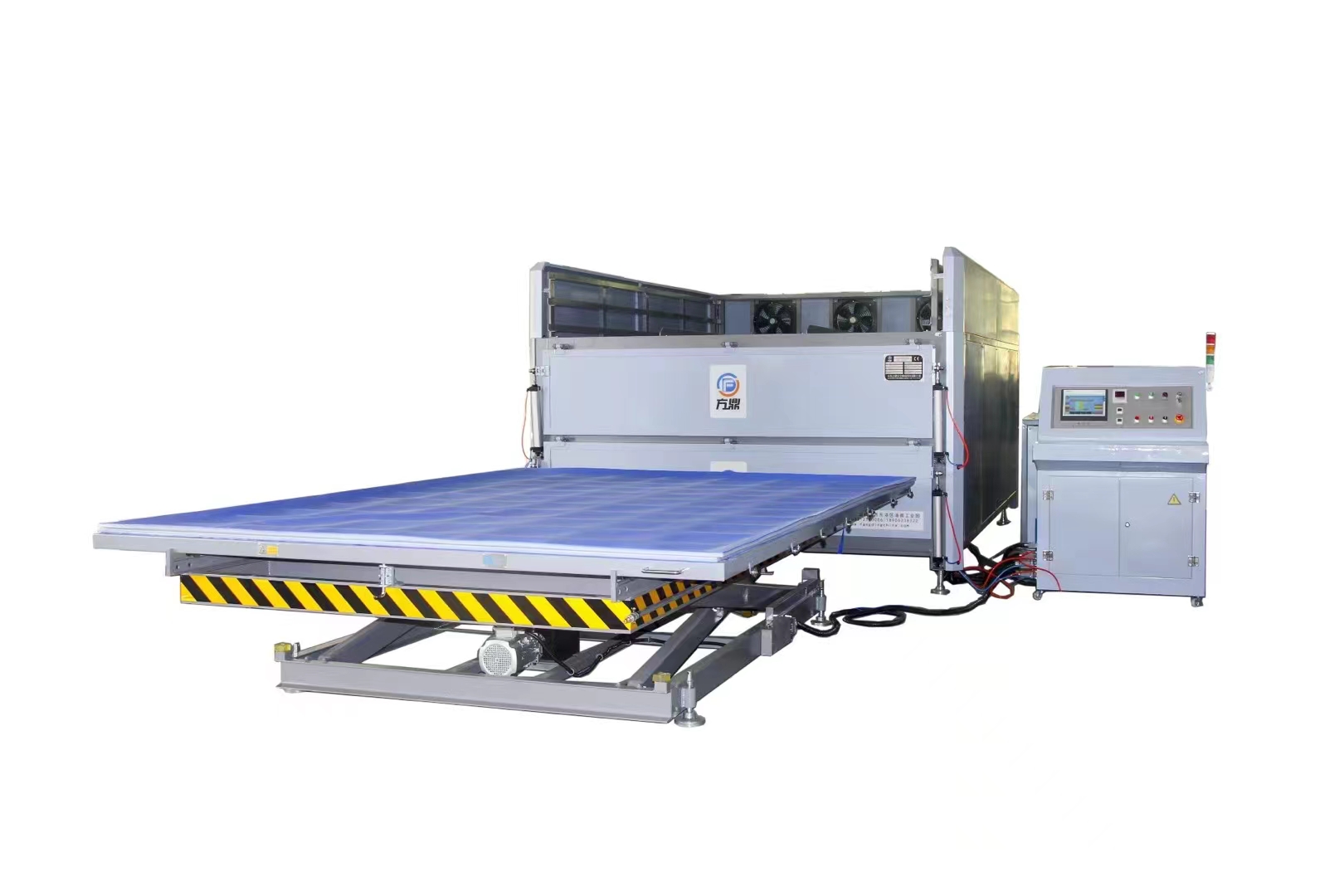
This guide deliberately does not publish a temperature-and-time recipe. A usable cycle depends on the oven, the glass build-up, the panel geometry and the acceptance criteria of the end customer, and a copied number is more dangerous than no number. What a buyer should confirm instead is that the supplier can talk through the oven behaviour with them — Shengding provides technical support after delivery for exactly this reason.
Two practical checks belong here. First, confirm the oven is actually rated for the film family you are running, since EVA and TPU programs are not interchangeable at the equipment level. Second, decide before the first panel who owns cycle development: the laminator, the oven supplier, or the film supplier working alongside both.
3. The dry requirement is a process control, not a storage preference
Keeping the film dry appears in the application record as a special requirement, next to the normal-pressure and high-temperature condition. Treat it with the same seriousness as the cycle itself.
- Keep rolls in their sealed packaging until the moment of use, and reseal partial rolls immediately.
- Store in a dry, conditioned area rather than next to an open loading door or a wet cutting bench.
- Allow sealed rolls to equalise to shop temperature before opening, so condensation does not form on the film surface.
- Cut in a clean, dry area and keep trimmed film away from coolant mist and dust.
- Load panels promptly after cutting; film left flat on a rack overnight in a humid shop is the classic source of post-lamination haze.
4. Bulletproof glass programs: what changes and what does not
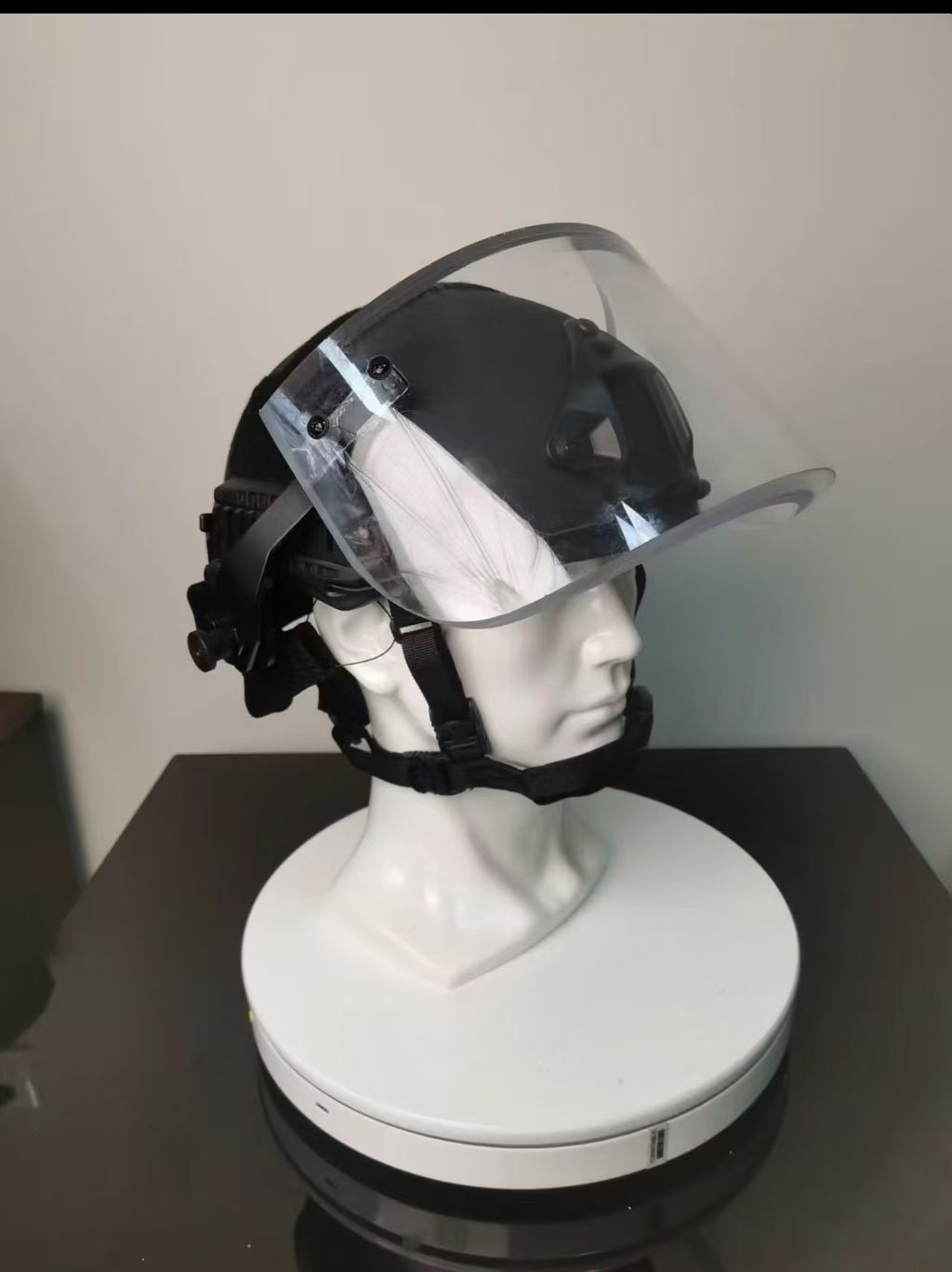
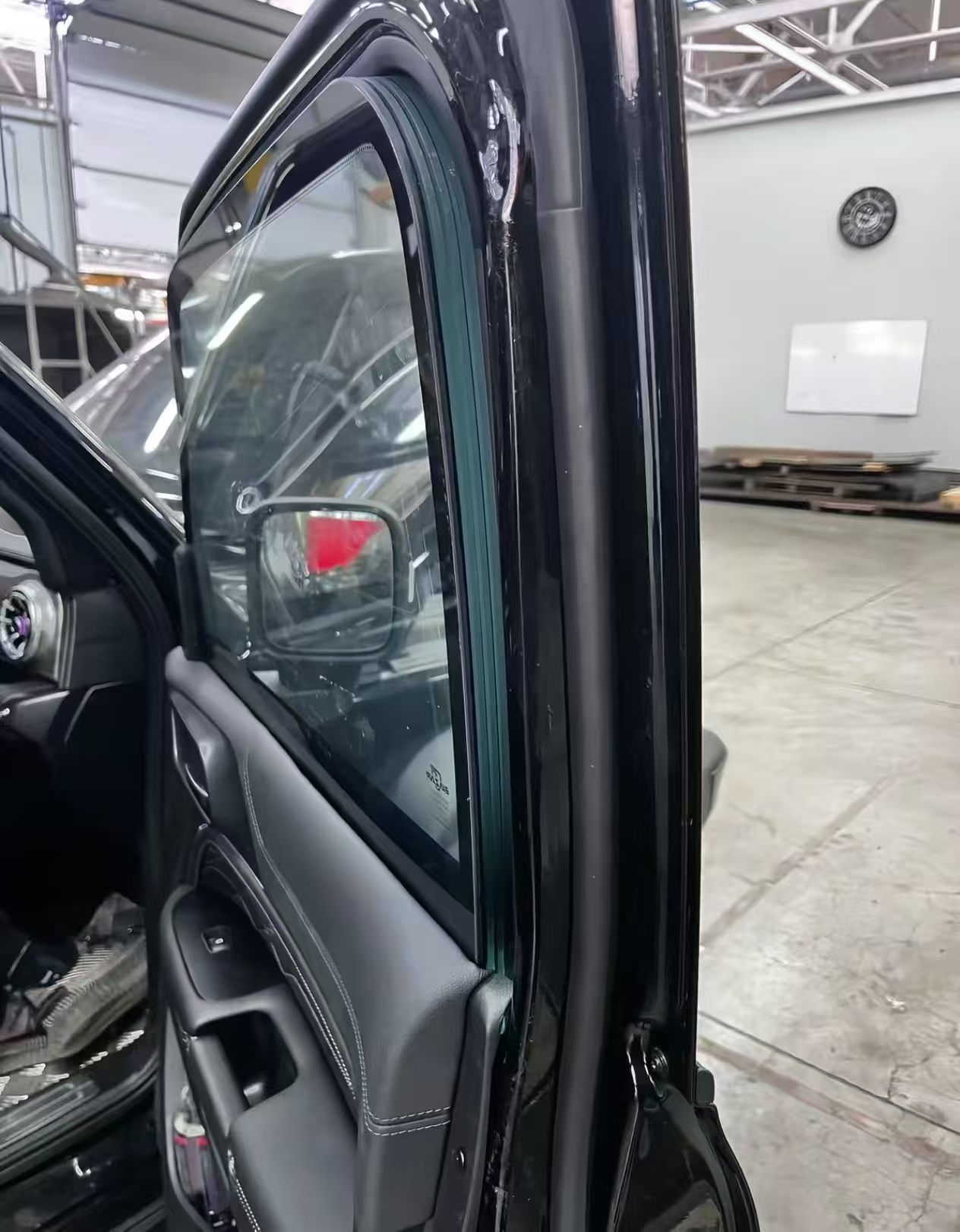
Bulletproof glass raises the stakes on every variable above, because a rejected panel carries certification and safety consequences rather than a simple rework cost. It also changes the interlayer conversation. Shengding's portfolio covers both families: TPU film, which the company links to military aviation glass, armored vehicle and naval glass, and bulletproof and blast-resistant glass; and EVA film, listed for architectural and decorative lamination.
In Pakistan, a bulletproof glass producer has run 100 rolls of Shengding film over two years with stable operation — a record that matters less for its volume than for its continuity, since a two-year run is evidence of repeatability rather than a single successful shipment. The same project file notes the customer as the only one of its kind in that country, which is exactly the profile of buyer who cannot afford an unplanned process change mid-program.
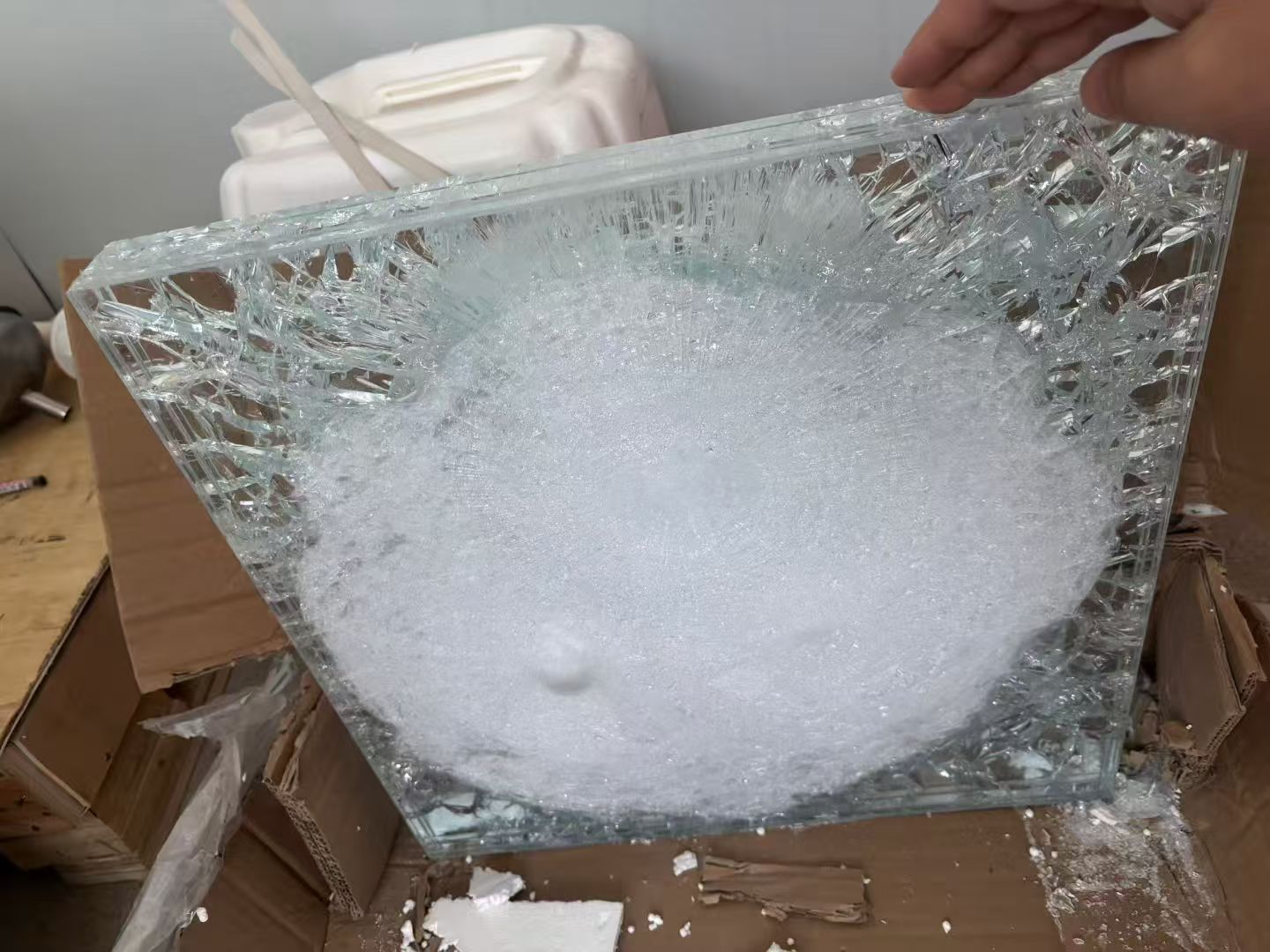
What carries over from architectural work into a defense program is the discipline: dry film, correct roll dimensions, a matched oven, and tested input. What changes is the specification gate — a bulletproof build should be qualified on the interlayer family it was designed around, and a supplier should say plainly which family that is rather than letting a catalogue imply it.
5. Commercial setup: customization, testing, capacity and lead time
Film dimensions are customized to the project: length and width are produced to order, and Shengding runs OEM/ODM production for buyers who need their own specification or branding structure. That matters most in decorative work, where panel formats change between orders and off-cut waste is a direct margin loss.
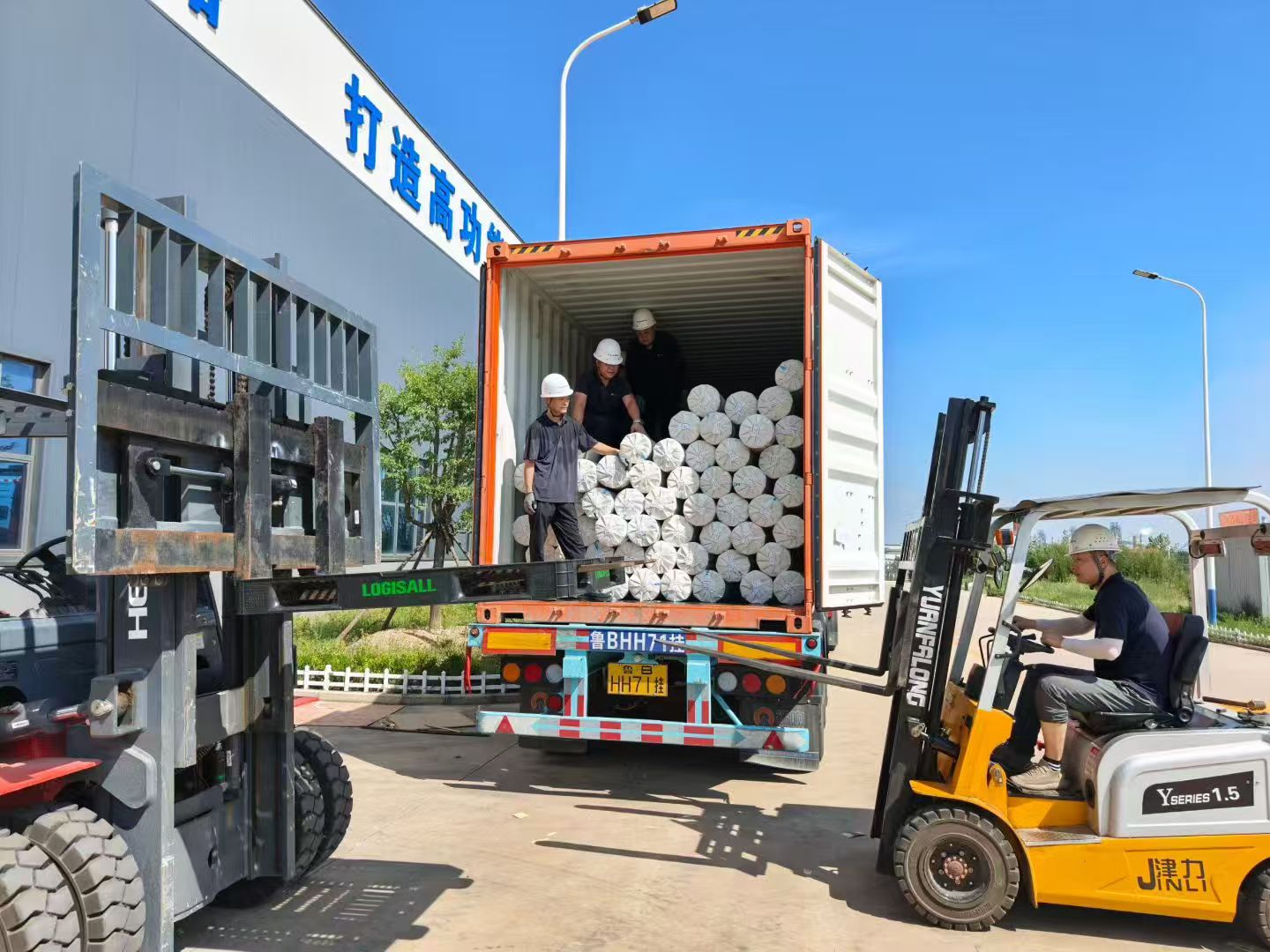
Quality control is 100% test — every output is checked rather than sampled. Combined with a 50 kg minimum order, this gives a buyer a realistic path: qualify on a small quantity, run a production trial, then scale into repeating volumes against 100 tons of monthly capacity and a 10-day lead time.
Step-by-Step Breakdown: From Project Brief to Shipped Film
- Classify the project before choosing a film. Decide whether the build is architectural laminated glass, decorative glass processing, or a bulletproof and blast-resistant program. The classification determines which interlayer family the specification should name.
- Confirm the matched equipment. Verify that the shop runs an EVA laminating oven and that the oven is rated for the film family being quoted. Mismatched equipment is the most expensive error to discover at panel one.
- Fix the roll dimensions. Give the supplier the panel sizes and layup so length and width can be customized. Correct dimensions reduce trim waste and shorten the time film spends exposed in the shop.
- Write the dryness requirement into the purchase order. Specify sealed packaging, dry storage and a working rule for partial rolls. The application record lists keeping dry as a special requirement, so it belongs in the contract, not only in the training folder.
- Run a qualification trial at 50 kg. Laminate representative panels, then inspect for haze, bubbles, edge defects and adhesion. Keep the trial panels as a reference standard for later deliveries.
- Lock the production cycle and the QC record. Document the oven cycle that passed, and pair the supplier's 100% test with your own incoming and post-lamination inspection. Two independent checks, not one repeated check.
- Scale against capacity and lead time. Plan repeat orders around a 10-day lead time and 100 tons of monthly capacity, and use the supplier's technical support during any format change rather than after it.
Use Cases: Where This Configuration Fits
Architectural laminated glass projects. SD38 is listed for architectural glass, where the film's job is the lamination of safety glass in a laminating oven under normal pressure and high temperature. Clarity is the commercial requirement here: a listed 90% light transmittance and 0.5% haze support the visual standard that architectural buyers specify.
Decorative glass processing. Decorative work changes format often. Custom length and width, plus OEM/ODM production, let a processor order to the panel rather than to a stock roll width, which shortens cutting time and reduces off-cut loss.
Bulletproof and defense-related glass programs. These buyers need a supplier who can hold a specification across years. The Pakistan program — 100 rolls, two years, stable operation — is the reference point, and the honest starting question for any new program is which interlayer family, EVA or TPU, the build was qualified on.
General construction and interior design customers. Shengding's project records group these buyers as a distinct customer type from defense accounts. Their requirement is usually speed and format flexibility: a 50 kg minimum order, a 10-day lead time and customized dimensions fit a project-driven purchasing rhythm better than a container-only model.
Export distribution and stockholding. With roughly 70% of output exported and markets that include North Africa, the Middle East and Latin America, distributors can combine customized roll dimensions with a 100-ton monthly capacity to hold stock without over-committing on a single format.
Comparison: Bulletproof, Architectural and Decorative Projects Side by Side
The table below compares the two project streams on the dimensions documented in Shengding's project records. Where a field is not established by those records, it is marked as such rather than filled with an estimate.
| Dimension | Bulletproof / defense-related glass | Architectural and decorative laminated glass |
|---|---|---|
| Interlayer family in Shengding's portfolio | TPU film, linked by the company to bulletproof and blast-resistant glass, military aviation glass and armored vehicle glass | EVA FILM SD38, listed for architectural glass and decorative glass |
| Customer type in project records | Defense industry customers | General construction and interior design customers |
| Recorded working condition | Not specified in the EVA application record | Normal pressure and high temperature |
| Matched equipment | Confirm with supplier per program | EVA laminating oven |
| Special requirement | Dry film, tested input, locked specification | Keep dry |
| Documented reference | Pakistan bulletproof glass program: 100 rolls, 2 years, stable operation | Architectural and decorative glass projects in China and export markets |
| Quality control | 100% test | 100% test |
The supply parameters below apply whichever stream the order belongs to.
| Ordering parameter | Value |
|---|---|
| Minimum order quantity | 50 kg |
| Customization | Length and width |
| Production mode | OEM / ODM |
| Monthly capacity | 100 tons |
| Lead time | 10 days |
| Quality control | 100% test |
| After-sales | Technical support |
| Export markets | Worldwide |
Frequently Asked Questions
Which certifications and compliance points should be verified before ordering EVA film?
SHENGDING HIGHTECH MATERIALS CO., LTD holds ISO 9001, ISO 14001 and ISO 45001 management-system certifications, and its product performance is stated to comply with European REACH and RoHS regulations as well as U.S. FDA quality requirements. For import documentation, EVA film that is predominantly ethylene is classified under HTSUS 3920.10.0000 in the referenced U.S. Customs and Border Protection ruling. Before releasing a project order, ask for the certificate scope and current validity, confirm any destination-market test requirements, and request a certificate of analysis for the delivered lot.
Can film length and width be customized, and is OEM/ODM production available?
Yes. Shengding customizes film length and width and runs OEM/ODM production, with 100 tons of monthly capacity and 100% testing of output. Custom dimensions are the practical way to control both cut waste and exposure time in the shop: film cut to the panel spends less time open on the bench before loading, which supports the requirement to keep it dry.
What is the minimum order quantity, and how is a project priced?
The minimum order quantity is 50 kg, which lets a buyer qualify the film on a small quantity before committing to repeating project volumes. Because length and width are customized, a quotation follows the dimensions and the quantity you specify — so the same film is quoted differently for a trial roll and for a production order. Ordering at 50 kg first and scaling to project volume afterwards is the lower-risk sequence.
Can we test the film on our own laminating oven before a full order?
A trial is the sensible starting point, and the 50 kg minimum order supports it. Laminate representative panels on your own EVA laminating oven at normal pressure and high temperature, keep the film dry throughout storage and cutting, and inspect the cured panels for haze, bubbles, edge defects and adhesion. Shengding provides technical support during this stage, and retaining the trial panels gives you a physical reference for later deliveries.
What is the lead time, and how much film can be supplied per month?
The stated lead time is 10 days, with 100 tons of monthly capacity and 100% testing before dispatch. That combination supports both project-driven schedules and distributor stockholding, and it is the basis on which the Pakistan bulletproof glass program has run 100 rolls over two years of stable operation. To open a specification discussion or request a sample, contact the team at docs@foundite.com or via WhatsApp on +8613562376375.
Conclusion: Match the Film to the Project, Then Control the Process Around It
The lesson across both project types is consistent. EVA film performs when three things are true: the right interlayer family is specified for the build, the film reaches the oven dry, and the roll dimensions and oven are matched to the job. Where those conditions hold, a bulletproof program in Pakistan can run 100 rolls over two years without incident, and an architectural processor can move between panel formats without scrapping film at the cutting bench.
For architectural and decorative laminated glass, EVA FILM SD38 is the listed starting point — a high-transparency EVA interlayer with 90% light transmittance and 0.5% haze, processed in an EVA laminating oven at normal pressure and high temperature. For bulletproof and blast-resistant glass, the specification conversation should begin with the interlayer family the build was qualified on, and Shengding's TPU film line is the reference point in the company's own portfolio.
Practical next steps: review the technical documentation, request a 50 kg qualification quantity, and run a trial on your own oven before locking a project schedule around the 10-day lead time.
Request a sample or a project quotation
SHENGDING HIGHTECH MATERIALS CO., LTD — Lanshan Chemical Industry Park, Rizhao City, Shandong Province, China.
Email: docs@foundite.com | Tel / WhatsApp: +8613562376375 | Website: www.shengdingchina.com
Download the product brochure: Shengding Hightech Materials brochure (PDF)
Have Questions or Need More Details?
Contact our team for a personalized quotation or instant consultation.
Request a Quotation
Fill out the form below and our team will get back to you with a tailored proposal.
WhatsApp Direct Chat
Prefer to chat in real-time? Message us on WhatsApp for instant assistance & quick answers.
- Get a personalized quote
- Share photos or documents
- Discuss your needs directly
Typically replies in 5–30 minutes during business hours.