
Ranked: Top 5 TPU Film Performance Factors for Safety Glass Buyers
Short answer: For buyers sourcing TPU (thermoplastic polyurethane) interlayer film for laminated safety glass, five performance factors decide the outcome. Ranked from narrowest to most decisive influence, they are: 5) cost efficiency, 4) customization fit, 3) optical clarity, 2) low-temperature flexibility, and 1) mechanical strength. The order reflects how directly each factor determines whether a finished laminated pane passes its safety and acceptance requirements, and how expensive a wrong specification is to correct after lamination. Each rank below is anchored to a measurable value from the SD560 TPU film specification, so the ranking can be checked against test data rather than accepted as an opinion.
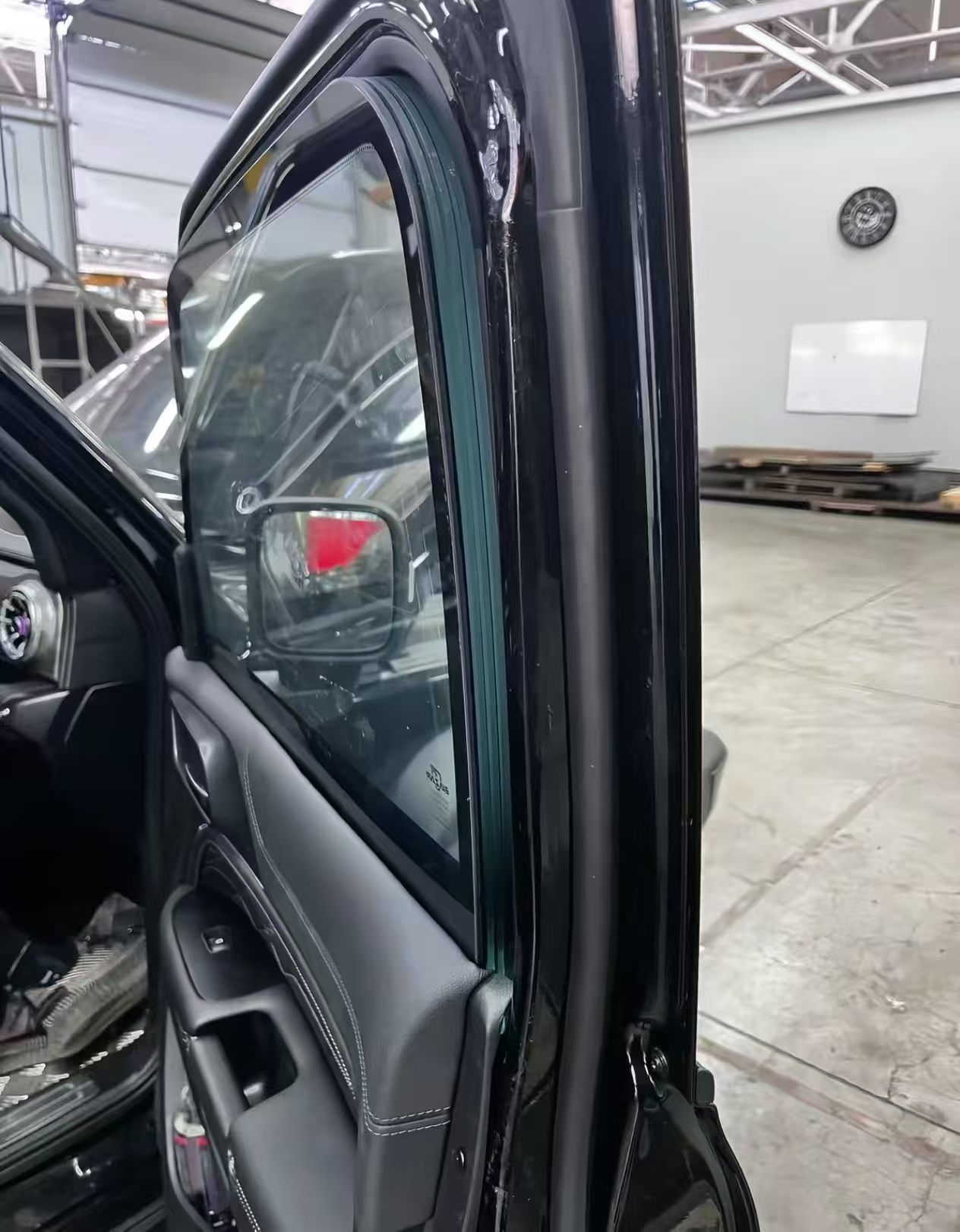
In a laminated pane, glass supplies hardness, scratch resistance and stiffness. The interlayer supplies energy absorption, fragment retention and edge integrity. That division of labour is why two panels of identical glass thickness can behave completely differently in the same impact test. For a buyer in the research and evaluation stage, the practical question is not which film is cheapest or most widely sold, but which measurable properties must be confirmed before a purchase order is signed.
Problem Definition: Why TPU Interlayer Film Is a Shortlist Problem, Not a Price Problem
Interlayer datasheets arrive in inconsistent formats. One supplier leads with tensile strength, another with light transmittance, a third with certification. A single figure such as tensile strength tells you nothing about how the film behaves at the cold end of a project's service temperature, and an optical value quoted on unprocessed film does not guarantee the haze level of the finished laminate.
The second problem is timing. Interlayer defects surface late: during impact testing, during cold-climate handling, or during visual inspection of the completed pane, when glass, labour, autoclave time and delivery schedules are already committed. Rework in a laminating line is far more expensive than a second sample round.
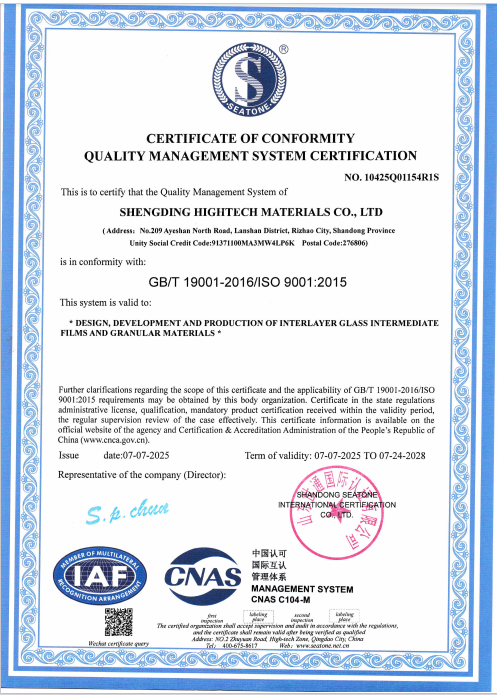
The third problem is the difference between certification and performance. ISO 9001:2015 is a quality management system certification. For SD560 TPU film, the certificate covers the design, development and production of interlayer glass intermediate films and granular materials. It confirms that the supplier operates a controlled, auditable process. It is not a performance rating for a specific film, and it does not replace impact or optical test data. Buyers who treat a certificate as a substitute for verification usually discover the gap during project qualification.
Ranking the factors is therefore a risk-management method: it tells a buyer which numbers to verify first, which can be validated on a sample, and which can be negotiated commercially at the end.
Industry Background: A Growing Interlayer Market With a Longer Checklist
The commercial context explains why specifications are tightening. Grand View Research valued the global thermoplastic polyurethane (TPU) films market at approximately USD 443.7 million in 2025 and projected it to reach USD 716.8 million by 2033. Published estimates vary considerably between research houses, largely because some count raw TPU resin and others count finished film, so any single market figure should be read as a scope-dependent estimate rather than a fixed number.
Within that market, the segment most relevant to safety glass buyers is the interlayer film used for lamination. The global market for TPU interlayer films for laminated glass is projected to exceed USD 1.2 billion in 2026, and China accounts for more than 30% of global TPU film production capacity as of 2026.
Competition at the high-performance end is concentrated among a small number of established suppliers, including Huntsman with its KRYSTALFLEX TPU films, Covestro with Dureflex, and Argotec with HP-8000. Chinese manufacturers have entered the same application space, and SHENGDING HIGHTECH MATERIALS CO., LTD — a polymer materials manufacturer based in the Lanshan Chemical Industry Park, Rizhao City, Shandong Province, producing TPU and EVA films for safety, ballistic and transport glazing — is one of them. The company operates a 50,000 m² facility with an annual output of 1,000 tons, holds ISO 9001, ISO 14001 and ISO 45001 certifications, and states that its product performance complies with European REACH and RoHS regulations as well as U.S. FDA quality requirements.
On the standards side, two references appear repeatedly in glazing specifications: EN 12600, the European standard classifying impact resistance for safety glass, where TPU interlayers commonly achieve Class 1B1 or 2B2, and ASTM C1172-19, which specifies quality requirements for laminated architectural flat glass. Buyers should confirm which standard governs their project before ranking the film properties on a supplier's datasheet.
The Ranking: Five TPU Film Performance Factors for Safety Glass
The countdown below runs from the factor with the narrowest technical influence to the factor that most directly decides whether a laminated pane meets its requirements.
Cost Efficiency — a Commercial Constraint, Not a Performance Property
Cost ranks fifth because it can only be evaluated after the other four factors pass. A film priced below the market does not lower project cost if it fails optical acceptance or cold-impact testing, because rejected panes carry the full cost of glass, labour and autoclave time. Shengding positions SD560 at approximately 10% lower cost than Huntsman 399 TPU film for the same interlayer application. That figure is a supplier commercial comparison, not a published market price, and it should be validated through a formal quotation at your own roll width, roll length and annual volume.
The measurement that matters is cost per square metre of accepted finished laminate, including scrap and rework, not price per kilogram of film. Production scale feeds into that calculation, because capacity determines whether a project schedule can be met: Shengding operates a 50,000 m² facility with an annual output of 1,000 tons and a monthly TPU/EVA capacity of 100 tons.
Customization Fit — Matching Film Supply to Your Cutting Plan
SD560 is supplied under an OEM/ODM model with customization of length and width. This factor ranks fourth because it does not change the film's intrinsic physics, but it changes material yield, ordering rhythm and how closely incoming rolls match the panel sizes your line actually produces. For ballistic and architectural projects where panel dimensions are fixed early, a film cut to the wrong specification creates offcut waste that never appears on a datasheet.
Customization is also where supply parameters become commercially binding. Shengding applies a minimum order quantity of 50 kg, a lead time of 10 days, and 100% testing on outgoing material, with technical support available after delivery. Buyers evaluating a customized film should confirm three things together: that the custom dimensions are achievable at the stated MOQ, that the lead time fits the production calendar, and that the quality control protocol applies to the customized format and not only to standard stock.
Optical Clarity — What the Finished Pane Must Show
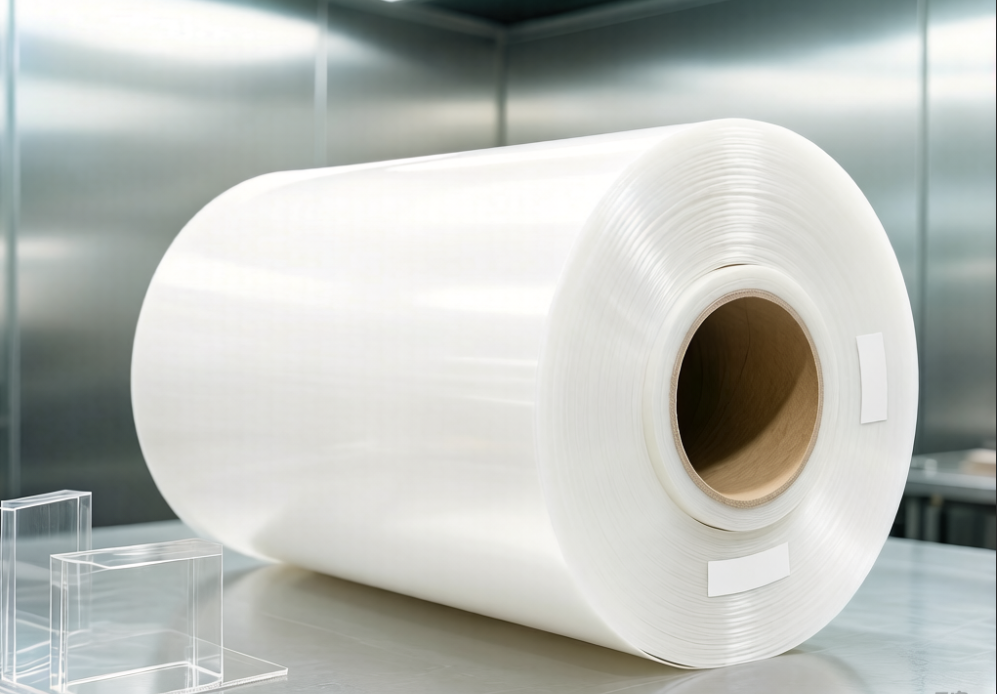
SD560 TPU film is specified at 90% light transmittance and 0.3% haze. Both figures matter, but haze is the number that drives acceptance in architectural glazing, vehicle glazing and viewing panels, because haze is what the eye registers as a milky or dull interlayer. For comparison within the same supplier's interlayer range, Shengding's SD38 EVA interlayer is specified at 90% light transmittance and 0.5% haze — the same transmittance band with a higher haze value.
Optical clarity ranks third rather than higher because it is the easiest factor to validate before a large order, and because the datasheet value applies to the film rather than the finished laminate. Lamination conditions, moisture exposure and autoclave parameters all affect final haze. The film should be kept dry before processing, and the datasheet numbers should be re-checked on a panel produced on the buyer's own equipment. For projects referencing EN 12600 or ASTM C1172-19, optical quality forms part of the acceptance criteria alongside impact performance.
Low-Temperature Flexibility — Where Safety Glass Quietly Fails
SD560 has a glass transition temperature of -72°C. As a material class, TPU interlayer film maintains operational performance across a range of roughly -70°C to +80°C, a spread that industry comparison guides describe as wider than EVA in extreme environments. This factor ranks second because it governs whether the strength measured at room temperature is still available in service.
Below its glass transition temperature an interlayer stiffens. A stiff interlayer transmits impact energy into the glass instead of absorbing it, which is the opposite of the behaviour the laminate was selected for. The risk is concentrated in cold-climate installation, cold transport and storage, high-altitude applications, and defence or transport glazing that must remain functional across a wide operating envelope.
Verification is straightforward but frequently skipped: specify the cold end of the project's service temperature in the purchase specification, then confirm it with a cold-condition impact or bend test on a laminated sample rather than with a datasheet reading alone.
Mechanical Strength — The Factor That Decides the Outcome
SD560 TPU film is specified at 42 MPa tensile strength, 500% elongation at break, and 45 kN/m tear strength. For context, high-performance TPU films used in bulletproof glass typically exhibit tensile strength above 40 MPa and elongation at break above 500%, so SD560 sits at or above the recognised benchmark for the application. This is the only factor ranked first, because these three values together decide how much impact energy the interlayer absorbs and how reliably it retains glass fragments after breakage.
The three numbers must be read as a set. Tensile strength alone is misleading: a film with high tensile values and low elongation is stiff and brittle, and brittle interlayers crack rather than stretch under impact. Tear strength is the third leg, because it limits how far a crack propagates once the film is cut or punctured at an edge or fixing point. A buyer comparing films should reject any datasheet that quotes tensile strength without elongation and tear values.
Verification should combine the current specification sheet, the supplier's test protocol, and — for ballistic or blast-resistant projects — impact testing to the project standard on a finished laminate.
Step-by-Step: Verifying All Five Factors Before You Order
- Write the performance envelope first. Set minimum light transmittance, maximum acceptable haze, the cold end of the service temperature range, and the target impact class or standard (EN 12600, ASTM C1172-19, or a project-specific specification). Every later comparison is measured against this document, not against a supplier's preferred talking point.
- Request the datasheet and the quality certificate in the same message. For SD560, the ISO 9001:2015 certificate carries number 10425Q01154R1S, was issued by Shandong Seatone International Certification Co., Ltd. against the standard GB/T 19001-2016 / ISO 9001:2015, and is valid from 2025-07-07 to 2028-07-24. Its scope is the design, development and production of interlayer glass intermediate films and granular materials. Check the scope, the issuing body and the validity dates, not just the presence of a certificate.
- Read the three strength values as one unit. Tensile strength, elongation at break and tear strength should be quoted together, ideally with the test method referenced by the supplier.
- Test the cold end, not the average. If the project transports, stores or installs glass below zero, a room-temperature impact result is not evidence of cold performance.
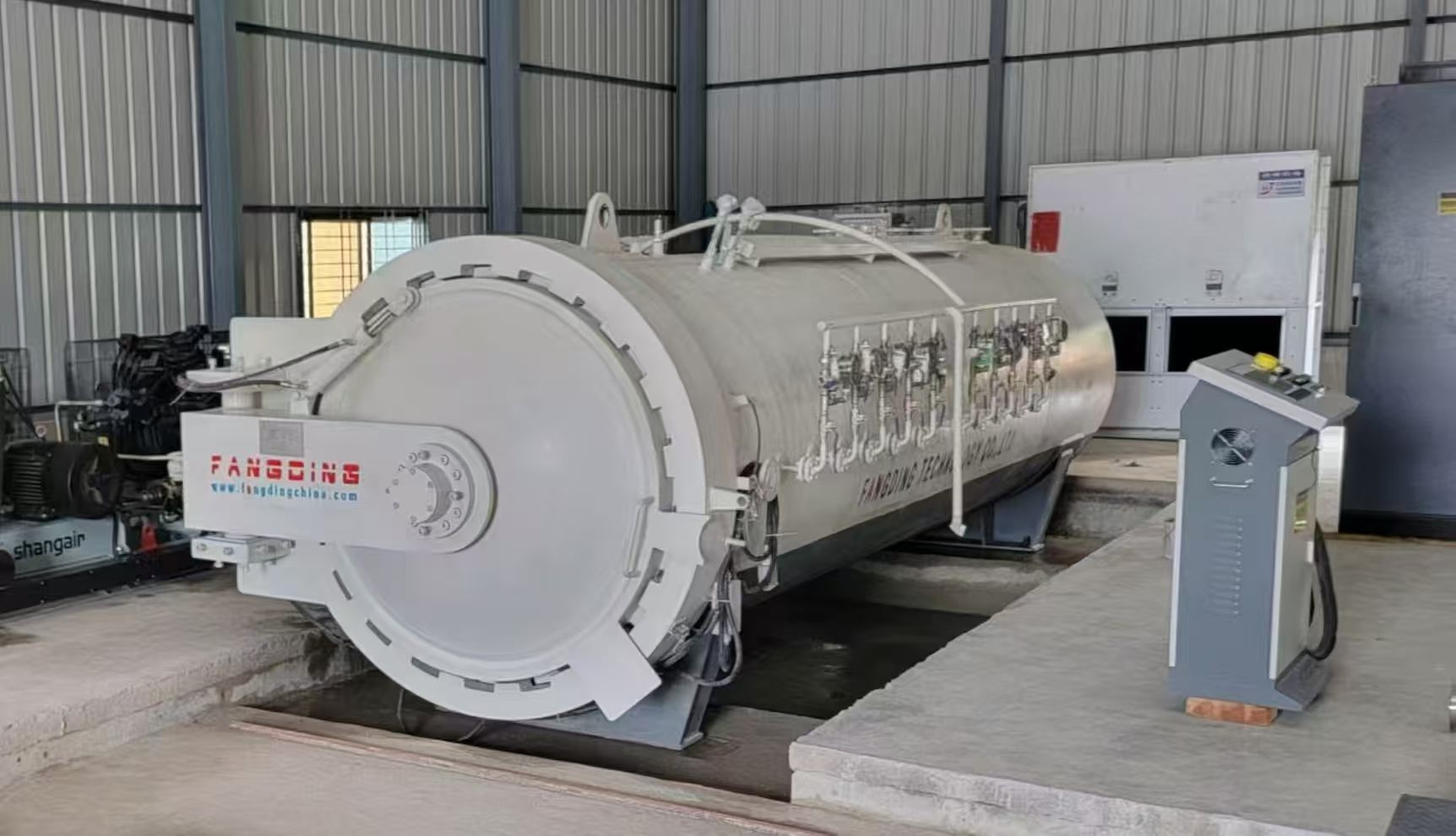
- Laminate your own sample in an autoclave. TPU interlayer film for safety glass is processed by hot-pressing in an autoclave, and the film must be kept dry before lamination. Re-measure light transmittance and haze on the finished panel and compare the results with the 90% transmittance and 0.3% haze datasheet values.
- Confirm customization and supply parameters together. Length and width customization, a 50 kg minimum order quantity, a 10-day lead time, a 100 tons per month capacity and 100% outgoing testing form a single commercial package. A lead time that fits the calendar but a MOQ that does not fit the program is not a viable supply route.
- Compare commercial terms on cost per finished square metre. Include offcut, rework and re-lamination in the calculation. This is what makes a 10% film-cost difference meaningful or meaningless.
- Scale only after sample validation, and secure continuity. For multi-year programs, confirm capacity commitment and an agreed re-qualification interval so that performance assumptions stay valid across batches.
Use Cases: Where Each Factor Becomes a Project Requirement
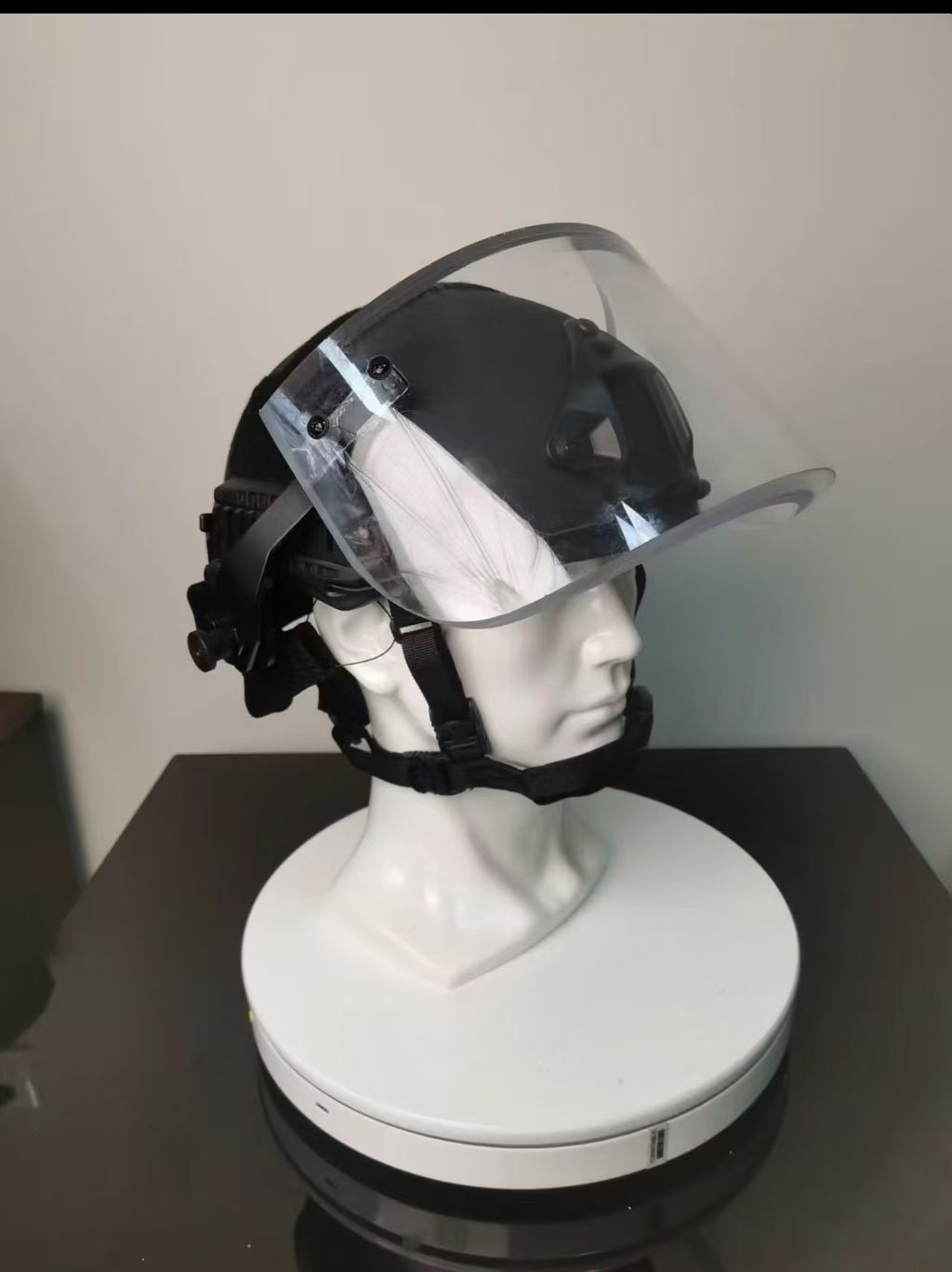
Ballistic and armoured glass. This is the application where mechanical strength and low-temperature flexibility dominate the ranking and cost falls to last place. Shengding has supplied a defence-industry customer in Pakistan with 100 rolls of TPU film for bulletproof glass, with 2 years of stable operation reported. The finished product forms in that program include bulletproof face masks, bullet-resistant glass with a facing surface, armoured glass with a bullet-resistant back surface, and modification of bulletproof vehicle glass — different laminating positions that place different demands on the same interlayer.
Architectural safety glass. In shatter-resistant architectural glazing, optical clarity rises in relative importance because large visible surfaces make haze immediately apparent, while impact classification to EN 12600 remains the qualification threshold. Customization fit also becomes more valuable here, because architectural panels are dimensioned early and offcut waste scales with panel size.
Transport and defence transparent components. Shengding's TPU products are used in transparent glass components for aviation, naval vessels, armoured vehicles and high-speed trains, and in bulletproof and blast-resistant glass. These are the applications where the temperature envelope is widest and where low-temperature flexibility carries the greatest weight, since an interlayer that stiffens at altitude or in cold operations stops absorbing energy.
Adjacent protective uses. The same TPU material family is also used in aircraft coating protection film and in invisible car wraps, where impact protection and transparency matter but ballistic performance does not. Buyers from these segments should weight optical clarity and customization higher than mechanical strength when applying the same five-factor framework.
Comparison: SD560 Reference Values and What Buyers Should Check
The table below restates the ranking as a verification checklist. Only values stated in the SD560 specification, the SD38 EVA specification, or published industry references are included.
| Rank | Factor | What it decides in the finished pane | SD560 reference value |
|---|---|---|---|
| 1 | Mechanical strength | Energy absorption, fragment retention, crack propagation after edge damage | Tensile strength 42 MPa; elongation at break 500%; tear strength 45 kN/m |
| 2 | Low-temperature flexibility | Whether strength remains available in cold service, transport and storage | Glass transition temperature -72°C; TPU interlayer film class performance range approximately -70°C to +80°C |
| 3 | Optical clarity | Visual acceptance in architectural, vehicle and viewing applications | Light transmittance 90%; haze 0.3% |
| 4 | Customization fit | Material yield, ordering rhythm, match to fixed panel dimensions | OEM/ODM; length and width customization; MOQ 50 kg; lead time 10 days |
| 5 | Cost efficiency | Cost per square metre of accepted finished laminate | Positioned at approximately 10% lower cost than Huntsman 399 TPU film, per supplier commercial comparison |
Two supporting references help interpret the ranking. First, the benchmark for high-performance TPU films in bulletproof glass applications is tensile strength above 40 MPa with elongation at break above 500%; SD560 meets that benchmark on both measures. Second, optical performance within the same supplier's interlayer range differs by material type: SD560 TPU is specified at 90% transmittance and 0.3% haze, while SD38 EVA is specified at 90% transmittance and 0.5% haze.
| Parameter | SD560 TPU film | SD38 EVA film |
|---|---|---|
| Material type | Thermoplastic polyurethane elastomer | High-transparency EVA film |
| Light transmittance | 90% | 90% |
| Haze | 0.3% | 0.5% |
| Tensile strength | 42 MPa | Not stated in this dataset |
| Elongation at break | 500% | Not stated in this dataset |
| Tear strength | 45 kN/m | Not stated in this dataset |
| Primary applications | Bulletproof glass, shatter-resistant glass | Architectural glass, decorative glass |
Verification note: the SD560 specification and its ISO 9001:2015 certificate (number 10425Q01154R1S, issued by Shandong Seatone International Certification Co., Ltd., valid to 2028-07-24) reference interlayer glass intermediate films and granular materials. Certificates and datasheets describe the material; only a laminate trial on your own autoclave confirms the performance of the finished pane.
FAQ: TPU Film for Laminated Safety Glass
1. Which certification applies to SD560 TPU film, and what exactly does it cover?
SD560 TPU film is certified to ISO 9001:2015 under certificate number 10425Q01154R1S, issued by Shandong Seatone International Certification Co., Ltd. against the standard GB/T 19001-2016 / ISO 9001:2015, with validity from 2025-07-07 to 2028-07-24. The certificate scope is the design, development and production of interlayer glass intermediate films and granular materials. Buyers should treat this as process assurance rather than a product performance rating, and pair it with impact and optical test data for the specific film. Shengding separately states that product performance complies with European REACH and RoHS regulations and U.S. FDA quality requirements.
2. Can SD560 film be customized to a specific safety glass project?
Yes. SD560 is supplied under an OEM/ODM model with customization of length and width, a minimum order quantity of 50 kg, a lead time of 10 days, and a monthly TPU/EVA capacity of 100 tons. Quality control is applied as 100% testing, and technical support is provided after delivery. Customization changes the dimensions and order quantity of the film; it does not change the tensile strength, elongation, tear strength, transmittance, haze or glass transition temperature quoted for the grade.
3. How does SD560 TPU film compare on cost with Huntsman 399 TPU film?
Shengding positions SD560 at approximately 10% lower cost than Huntsman 399 TPU film for the same interlayer application. That is a supplier commercial comparison rather than a published market price, so it should be validated with a quotation at your own width, roll length and annual volume. The meaningful comparison metric is cost per square metre of accepted finished laminate, including offcut and rework, not cost per kilogram of film. Huntsman with KRYSTALFLEX, Covestro with Dureflex and Argotec with HP-8000 are the other established suppliers in the high-performance TPU interlayer segment and should be quoted on an identical specification basis if a multi-supplier comparison is required.
4. How can a buyer test TPU film before committing to a volume order?
Order a sample quantity at or above the 50 kg minimum, then laminate test panels on your own autoclave using the hot-pressing process, keeping the film dry before processing. Measure light transmittance and haze on the finished panel against the 90% and 0.3% datasheet values, and run the cold-end and impact test relevant to the project. Validation at production scale has precedent: Shengding supplied 100 rolls of TPU film to a defence-industry customer in Pakistan for bulletproof glass, with 2 years of stable operation reported.
5. What are the MOQ and lead time, and what is the next step?
The minimum order quantity is 50 kg, standard lead time is 10 days, and monthly capacity is 100 tons, with length and width customization available under the OEM/ODM model. For buyers ready to move from evaluation to validation, the next step is a sample request or a project quotation based on your panel dimensions, annual volume and target standard. The full product brochure can be downloaded from the Shengding TPU film brochure.
Conclusion: A Practical Recommendation for Safety Glass Buyers
Rank the factors, then verify them in order. For bulletproof and shatter-resistant lamination, begin with mechanical strength — tensile strength above 40 MPa and elongation at break above 500% is the working benchmark, and tear strength must be quoted alongside both. Confirm low-temperature flexibility against the cold end of the project's service temperature, not against a room-temperature result. Re-measure optical clarity on a laminate produced on your own autoclave. Lock customization and supply parameters — dimensions, MOQ, lead time, capacity and testing protocol — as one package. Only then compare price.
Applied to SD560 TPU film, that sequence produces a verifiable position: 42 MPa tensile strength, 500% elongation at break, 45 kN/m tear strength, 90% light transmittance, 0.3% haze, a -72°C glass transition temperature, ISO 9001:2015 certification under certificate number 10425Q01154R1S, and a commercial position approximately 10% below Huntsman 399 TPU film for the same interlayer application. Two years of stable operation in a Pakistan bulletproof glass program provide the scale reference.
Buyers who work through the five factors in this order protect the two things that matter most in a glazing project: the performance of the delivered pane, and the schedule of the production line behind it.
Next step: request an SD560 TPU film sample or a project quotation for your laminated safety or ballistic glass program.
Website: www.shengdingchina.com | Email: docs@foundite.com | Tel / WhatsApp: +8613562376375
Download the catalogue: Shengding TPU Film Brochure (PDF)
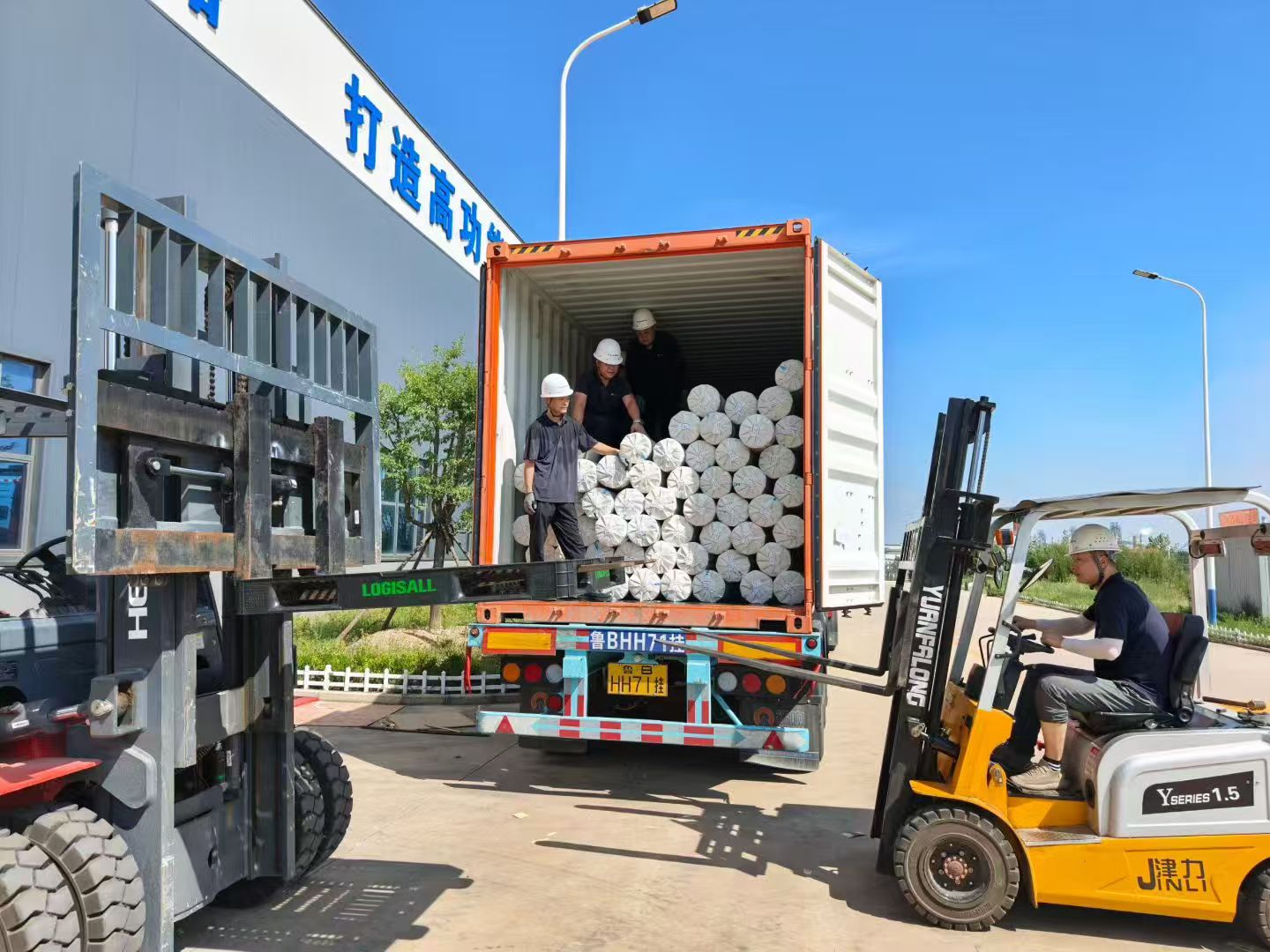
SHENGDING HIGHTECH MATERIALS CO., LTD, Lanshan Chemical Industry Park, Rizhao City, Shandong Province, China — manufacturer of TPU and EVA interlayer films for safety, ballistic and transport glazing.
Have Questions or Need More Details?
Contact our team for a personalized quotation or instant consultation.
Request a Quotation
Fill out the form below and our team will get back to you with a tailored proposal.
WhatsApp Direct Chat
Prefer to chat in real-time? Message us on WhatsApp for instant assistance & quick answers.
- Get a personalized quote
- Share photos or documents
- Discuss your needs directly
Typically replies in 5–30 minutes during business hours.