
TPU Film for Armored Vehicles and High-Speed Trains: An Application Guide
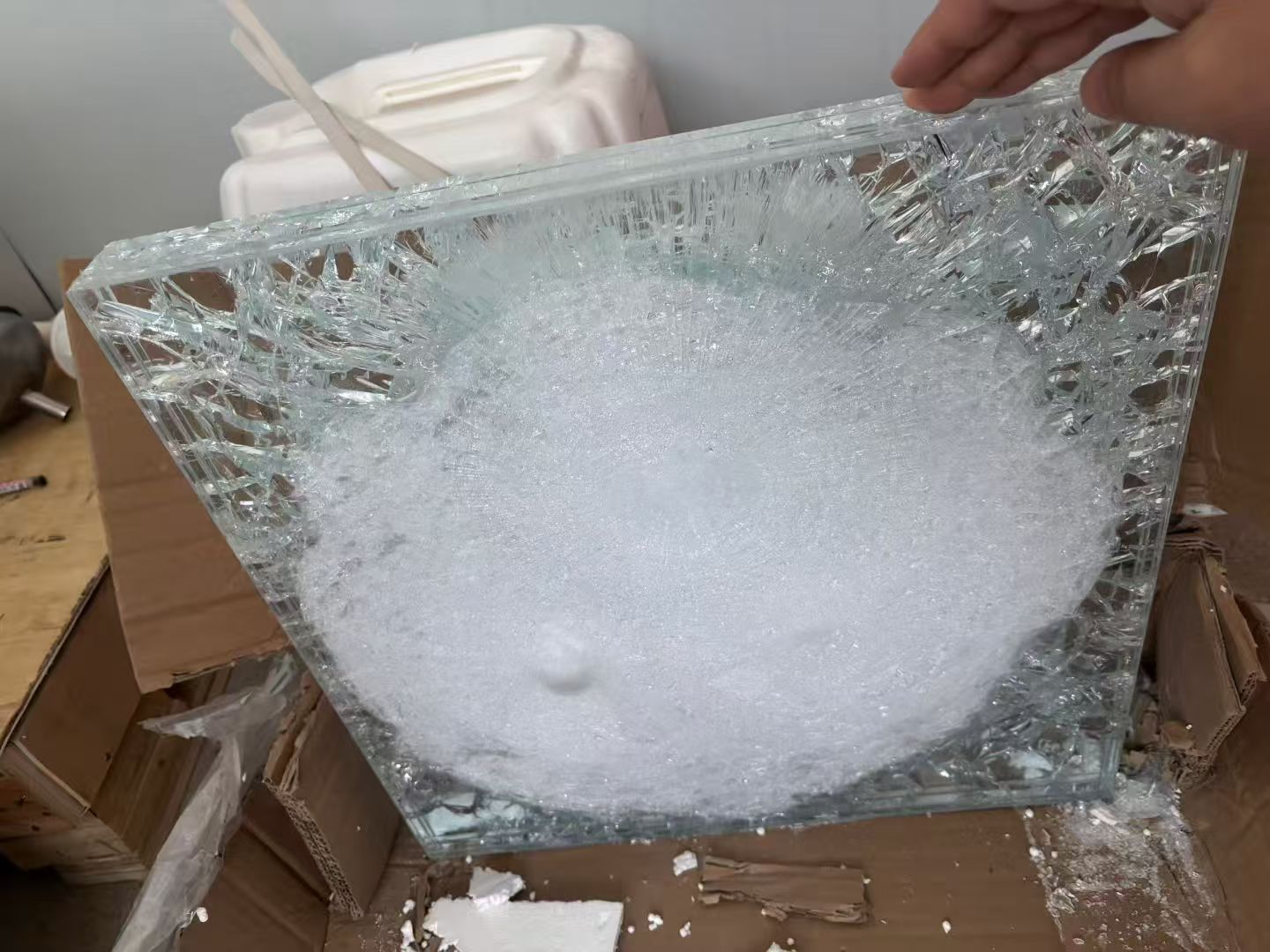
TPU interlayer film inside a laminated armored glass panel with a bullet-resistant back surface. Image: SHENGDING HIGHTECH MATERIALS CO., LTD
TPU film is a thermoplastic polyurethane interlayer — a hot-melt adhesive film that is placed between two or more glass plies and bonded under heat and pressure into a single transparent component. In armored vehicles and high-speed trains, that component is not ordinary glazing. It is a transparent armor panel or a rail windscreen that must stay intact under ballistic impact, blast pressure, stone strike, tunnel pressure pulses, and years of thermal cycling.
Because TPU is a thermoplastic rather than a cross-linking material, panels built with it are laminated in an autoclave under high temperature and high pressure. That single process requirement drives almost every other decision in the program: film grade, film width, layer build-up, tooling, throughput, and the way a buyer qualifies a supplier. This guide explains how TPU film is used in transparent glass components for armored vehicles and high-speed trains, alongside bulletproof glass, and how an engineering or procurement team moves from a threat definition to a repeatable, documented supply.
Short answer: TPU film functions as the energy-absorbing, fragment-retaining interlayer in transparent armor and rail glazing. High-performance TPU film for bulletproof glass typically shows tensile strength above 40 MPa and elongation at break above 500%, and TPU interlayer film is documented to maintain performance from −70 °C to +80 °C. It is bonded in an autoclave, which is why film consistency, width control, and supplier process support matter as much as the glass itself.
Why Transparent Glazing Is a Materials Problem, Not a Glass Problem
The failure of an armored vehicle window or a high-speed train windscreen is rarely a glass specification failure alone. It is usually an interlayer or lamination failure, and it appears as delamination, edge whitening, bubbles, haze, or cold cracking long before the glass itself breaks.
In an armored vehicle, the transparent component is the most exposed part of the protective envelope. The interlayer has to absorb impact energy, hold fractured glass in place so the occupant keeps visibility and protection, and resist blast overpressure without separating from the plies. In a high-speed train, the demands are different but equally severe: continuous vibration, repeated pressure waves when entering tunnels, foreign-object and ballast strike, UV exposure, and route profiles that run from freezing winters to hot, humid summers.
Both applications share a structural constraint. A monolithic pane cannot deliver the required behavior, so the panel must be laminated, and once the panel is laminated, the interlayer becomes the variable that decides whether the window survives its service life. That is why interlayer selection for armored vehicles and high-speed trains is treated as an engineering decision rather than a commodity purchase — and why suppliers are evaluated on process capability, not only on a data sheet.
Industry Background: The Supply Picture Behind TPU Interlayer Film
Demand for TPU interlayer film sits inside a broader TPU film market that is expanding steadily. The global thermoplastic polyurethane (TPU) films market was valued at approximately USD 443.7 million in 2025 and is projected to reach USD 716.8 million by 2033, according to Grand View Research. The narrower segment — TPU interlayer films for laminated glass — is projected to exceed USD 1.2 billion in 2026, and China accounts for over 30% of global TPU film production capacity as of 2026.
On the supply side, the high-performance TPU interlayer market includes internationally documented product lines such as Huntsman (KRYSTALFLEX), Covestro (Dureflex), and Argotec (HP-8000). Alongside these, Chinese manufacturers have moved into optical-grade raw material production rather than remaining film converters.
SHENGDING HIGHTECH MATERIALS CO., LTD is a Chinese manufacturer of optical-grade thermoplastic polyurethane film raw materials and wide-width TPU interlayer films, established in 2018 and located in the Lanshan Chemical Industry Park in Rizhao City, Shandong Province. The company states that its products are widely used in transparent glass components for aviation, naval vessels, armored vehicles, and high-speed trains, as well as in bulletproof and blast-resistant glass, high-end architectural safety glass, aircraft coating protection, and invisible car wraps. It has mastered the synthesis and stable pelletization technology for optical-grade TPU film raw materials and the stable extrusion molding technology for wide-width TPU intermediate films, and it is described as the sole qualified supplier in China for the base material used in military-grade aviation glass, achieving import substitution for that application.
For an armored vehicle or rail glazing program, that vertical position matters. A supplier that controls both the pellet chemistry and the wide-width extrusion step can hold film thickness and optical consistency across production lots — the two variables that most often force a lamination line to scrap panels.
How TPU Film Is Used in Transparent Glass Components
TPU film performs four jobs at once inside a laminated transparent component: it bonds the plies, it carries impact energy, it keeps the assembly transparent, and it isolates the glass from thermal and moisture stress. Each job maps to a measurable property.
Optical performance
Optical clarity is the entry requirement for any windscreen or vision block. Shengding's TPU FILM grade SD560 is specified at 90% light transmittance with 0.3% haze. The company's EVA FILM grade SD38 is specified at 90% light transmittance with 0.5% haze. For drivers and train operators looking through a thick, multi-ply laminate, the difference between 0.3% and 0.5% haze is visible in low-light and night conditions.
Mechanical and impact performance
SD560 is specified with tensile strength of 42 MPa, elongation at break of 500%, and tear strength of 45 kN/m. These figures sit inside the range that industry documentation associates with high-performance TPU films for bulletproof glass, where tensile strength typically exceeds 40 MPa and elongation at break exceeds 500%. High elongation is what allows the interlayer to stretch and dissipate energy instead of transferring it directly to the inner ply, while tear strength governs how the film behaves at panel edges and around mounting points.
Thermal performance
TPU interlayer film is documented to maintain operational performance across a wide temperature range from −70 °C to +80 °C, which a third-party interlayer comparison guide identifies as an advantage over EVA in extreme environments. For a high-speed train running between climate zones, or an armored vehicle deployed in desert heat or winter cold, that range defines whether the panel can be specified once for multiple theatres.
The manufacturing technology behind consistent film
Film consistency is a production outcome, not a promise. Shengding Hightech Materials operates a 50,000 m² facility with an annual output of 1,000 tons and can produce over 30 types of TPU products with hardness ranging from 60A to 70D. Hardness range is the practical lever a program uses to trade stiffness against energy absorption, and a 60A-to-70D span means a single qualified supplier can cover both a rigid vision block and a more compliant windscreen interlayer without changing vendors.
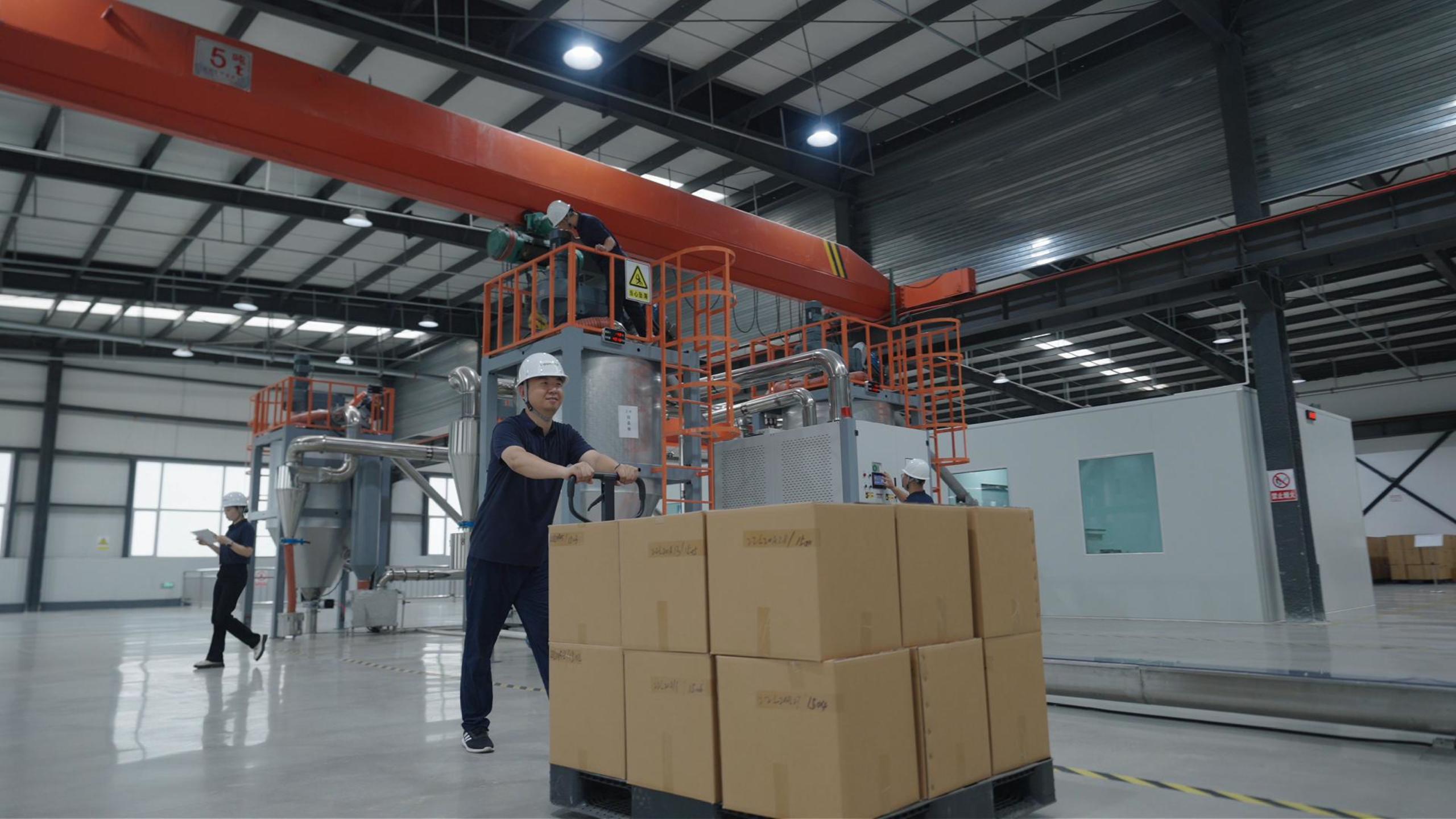
TPU interlayer film production and handling at the Shengding Hightech Materials facility in Rizhao, Shandong Province. Image: SHENGDING HIGHTECH MATERIALS CO., LTD
Autoclave Lamination: What High Temperature and High Pressure Require from the Film
TPU interlayer film is laminated in an autoclave. The stacked glass-and-film assembly is consolidated under elevated temperature and elevated pressure, and the film behaves as a hot-melt adhesive: it softens, flows into the glass surface, wets it out completely, and then is cooled under pressure to set the bond. Vacuum de-airing removes the air between plies before the cycle, and the autoclave closes the remaining gap.
This is the step where most programs succeed or fail, and it places four demands on the interlayer:
- Process-window stability. The film must flow enough to bond without flowing so much that it thins unevenly or squeezes out at the edges under high pressure.
- Width and thickness consistency. Wide-width film reduces seams and edge joints in large windscreens and vehicle windows; thickness variation translates directly into optical distortion after lamination.
- Moisture and handling tolerance. Shengding's TPU pellets are described as offering high transparency, a wide hardness range, high mechanical strength, outstanding cold resistance, excellent processability, and resistance to oil, water, and mold — properties that matter when film is stored, cut, and stacked in a production environment.
- Supplier process support. Because the autoclave cycle, film grade, and build-up interact, technical support after the sale is part of the product. Shengding provides technical support as an after-sales service.
A buyer evaluating a TPU film supplier for armored vehicle or rail glazing should therefore ask for the process window the film was validated in, not only for a property sheet. The autoclave conditions the film will see are the conditions its data should be tested against.
Step-by-Step: Specifying and Qualifying a TPU Interlayer for a Vehicle or Train Program
A qualification sequence for this type of glazing follows seven steps. Skipping any of them shifts risk to the production line or to the field.
- Define the threat and service envelope. For an armored vehicle, this means the ballistic and blast requirement for each window position. For a train, it means impact resistance, tunnel pressure cycling, and the climate band the route covers. The envelope should state a temperature range, which is where the documented −70 °C to +80 °C TPU performance band becomes a selection criterion.
- Select the interlayer grade and hardness. Shengding can produce over 30 TPU product types with hardness from 60A to 70D, so the grade is matched to the required balance of stiffness, energy absorption, and optical performance rather than taken from a fixed catalog.
- Fix the build-up. Glass type, ply count, and film thickness are decided together, because the autoclave cycle must consolidate the specific stack being qualified.
- Run a sample lamination. Produce panels in the actual autoclave, then inspect for bubbles, delamination, edge condition, haze, and distortion before committing to volume.
- Validate against the applicable standards. EN 12600 is the primary European standard classifying impact resistance for safety glass, and TPU film commonly achieves Class 1B1 or 2B2. ASTM C1172-19 specifies quality requirements for laminated architectural flat glass, including glass bonded with TPU interlayers.
- Confirm commercial and inspection terms. Shengding's production capability unit lists OEM/ODM production, length and width customization, a monthly capacity of 100 tons, a typical lead time of 10 days, a minimum order quantity of 50 kg, and 100% testing in quality control. In the risk and procurement FAQ unit, the stated acceptance criteria are a pre-shipment test, with FOB delivery terms.
- Lock in supply continuity. Confirm the quality-management documentation behind the film. Shengding holds ISO 9001:2015 certification (certificate 10425Q01154R1S, issued 7 July 2025 and valid to 24 July 2028, covering the design, development and production of interlayer glass intermediate films and granular materials), together with ISO 14001 and ISO 45001, and product performance complies with European REACH and RoHS regulations and U.S. FDA quality requirements.
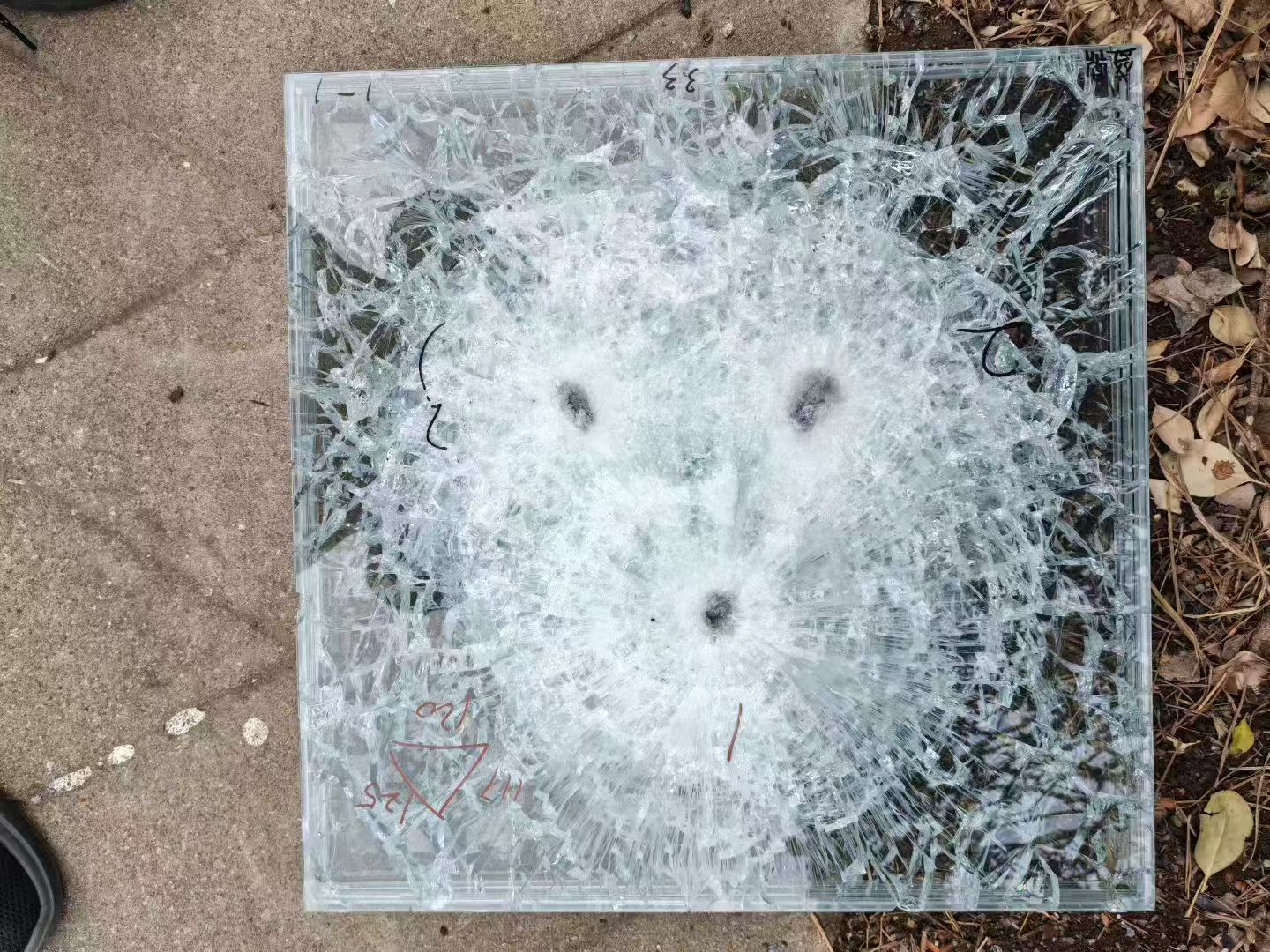
A laminated bullet-resistant panel with a facing surface, the type of build-up in which TPU film serves as the energy-absorbing interlayer. Image: SHENGDING HIGHTECH MATERIALS CO., LTD
Use Cases: Where TPU Interlayers Are Deployed
Armored vehicles
Vehicle glazing is the application where the interlayer is most directly part of the protection system. In a documented Pakistan program, 100 rolls of TPU film were used for bulletproof glass applications serving defense industry customers. The installation achieved stable operation over two years, the project was completed within two years, and the application is noted as the only one of its kind in the country.
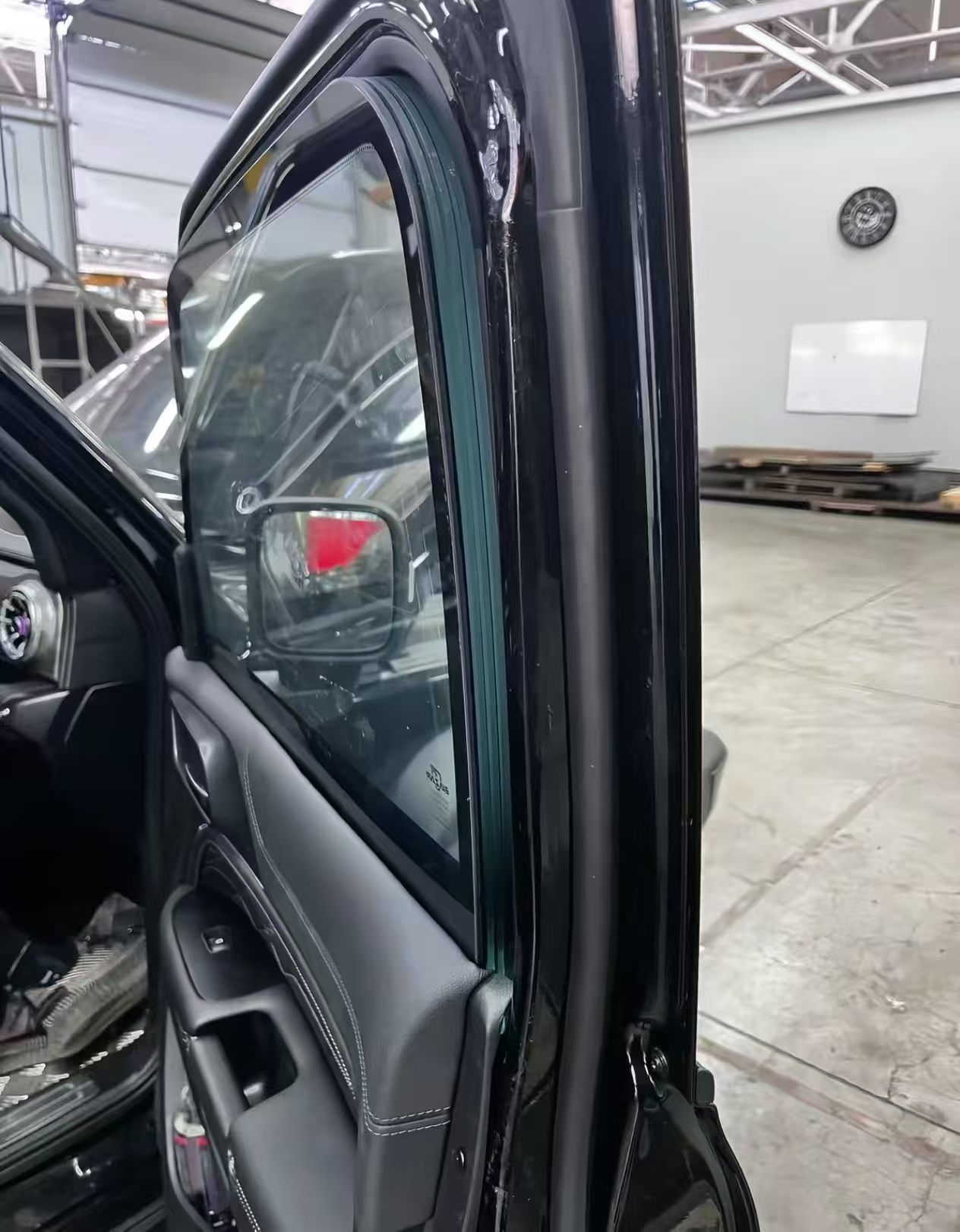
Modification of bulletproof vehicle glass for an armored vehicle window. Image: SHENGDING HIGHTECH MATERIALS CO., LTD
High-speed trains
Rail glazing places the same film in a different duty cycle. Windscreens and side windows must remain optically clean under continuous vibration and repeated pressure changes, and they must tolerate route climates. A single interlayer grade qualified from −70 °C to +80 °C lets a manufacturer or operator standardize across a fleet instead of stocking climate-specific variants.
Aviation and naval glazing
These are the applications that set the quality bar for the rest of the portfolio. Shengding states that it is the sole qualified supplier in China for the base material used in military-grade aviation glass, resolving a supply bottleneck for that application and achieving import substitution, and that its products are used in transparent glass components for aviation and naval vessels. A supplier already producing for those programs carries a process discipline that transfers directly to armored vehicle and rail glazing.
Adjacent laminated glass applications
The same film family is also used in bulletproof and blast-resistant glass, high-end architectural safety glass, aircraft coating protection, and invisible car wraps — useful context for a buyer who wants one qualified interlayer source across several product lines rather than a separate vendor for each.
Comparison Table: TPU vs EVA Interlayer Film in Glazing Applications
The table below compares the two interlayer materials Shengding produces, using the referenced product data and third-party documentation. Where a comparable figure is not stated in the referenced data, the cell is left blank.
| Attribute | TPU interlayer film (SD560) | EVA film (SD38) | Why it matters for armored vehicles and high-speed trains |
|---|---|---|---|
| Material type | Thermoplastic polyurethane elastomer | High-transparency EVA film | Determines process route: TPU is a hot-melt thermoplastic interlayer laminated under heat and pressure in an autoclave. |
| Light transmittance | 90% | 90% | Both are optical-grade; vision quality is decided by haze rather than transmittance alone. |
| Haze | 0.3% | 0.5% | Lower haze preserves night visibility behind thick multi-ply armor laminates. |
| Tensile strength | 42 MPa | Industry documentation places high-performance TPU for bulletproof glass above 40 MPa tensile. | |
| Elongation at break | 500% | Energy dissipation depends on the interlayer stretching instead of transferring load to the inner ply. | |
| Tear strength | 45 kN/m | Governs edge behavior and resistance around mounting points and cut-outs. | |
| Documented temperature performance | −70 °C to +80 °C | Documented by a third-party comparison guide as less suited to extreme environments than TPU | Defines whether one specification can cover multiple deployment regions or route climates. |
| Stated application | Bulletproof glass, shatter-resistant glass | Architectural glass, decorative glass | Application fit is the first filter when matching an interlayer to a transparent armor or rail program. |
Sources: Shengding Hightech Materials product data and certification records; INNOLAMIN interlayer comparison guide; industry documentation on high-performance TPU films for bulletproof glass. Blank cells indicate no comparable figure in the referenced data.
Frequently Asked Questions
Which certifications and standards apply to TPU interlayer film for armored vehicle and high-speed train glazing?
Two layers of documentation apply: the film manufacturer's management-system and compliance certificates, and the finished glass performance standards. Shengding Hightech Materials holds ISO 9001:2015 certification with certificate number 10425Q01154R1S, issued 7 July 2025 by Shandong Seatone International Certification Co., Ltd. and valid to 24 July 2028, with a scope covering the design, development and production of interlayer glass intermediate films and granular materials. The company also holds ISO 14001 and ISO 45001 certifications, and its product performance complies with European REACH and RoHS regulations and U.S. FDA quality requirements. On the glass side, EN 12600 is the primary European standard classifying impact resistance for safety glass, with TPU film commonly achieving Class 1B1 or 2B2, and ASTM C1172-19 specifies quality requirements for laminated architectural flat glass, including glass bonded with TPU interlayers.
Can TPU film be customized in length and width for a specific armored vehicle or rail glazing design?
Yes. Shengding offers OEM services with length and width customization and provides ODM design and production services. This is a practical requirement in transparent armor and rail glazing, where window geometry varies by vehicle model and by train position, and where wide-width film reduces seams in large windscreens. Customization is supported by a product portfolio of more than 30 TPU types with hardness from 60A to 70D, so the grade can be matched to the panel rather than the panel being adapted to an off-the-shelf film.
How is a TPU interlayer validated before a full production run?
Validation starts with a sample lamination in the actual autoclave, using the intended glass build-up and film thickness, followed by inspection for bubbles, delamination, edge condition, haze, and optical distortion. Shengding's quality control applies 100% testing standards, and the stated acceptance criterion for procurement is a pre-shipment test. For programs with a defined glass standard, the laminated sample should also be assessed against EN 12600 for impact classification or ASTM C1172-19 for laminated flat glass quality, depending on the market the glazing will be sold into.
What are the minimum order quantity, lead time, and production capacity for TPU film?
Shengding's production capability data lists a minimum order quantity of 50 kg, a typical lead time of 10 days, and a monthly capacity of 100 tons, with OEM/ODM production available and technical support provided after-sales. The facility operates a 50,000 m² site with an annual output of 1,000 tons. For a defense or rail glazing program, these figures determine how quickly a sampling round can be followed by a production-scale batch, and whether the supplier can absorb a fleet-size order without extending the schedule.
Can one TPU film type serve both armored vehicles and high-speed trains?
The portfolio is designed to cover both. Shengding states that its products are widely used in transparent glass components for aviation, naval vessels, armored vehicles, and high-speed trains, as well as in bulletproof and blast-resistant glass. Because a vehicle threat profile and a rail impact and thermal profile are different, the specific grade, hardness, and build-up are matched per program within a 60A to 70D hardness range, and TPU interlayer film is documented to maintain performance from −70 °C to +80 °C. Project teams comparing grades for a specific vehicle platform or train program can request a TPU film sample and specification documentation directly from Shengding Hightech Materials.
Conclusion: From Application Requirement to Qualified Interlayer Supply
TPU film sits at the point where an application requirement becomes a manufacturable panel. For armored vehicles, it is the interlayer that carries impact energy and keeps fractured glass in place. For high-speed trains, it is the interlayer that holds optical quality and structural integrity through vibration, pressure cycling, and climate swings. In both cases the film is consolidated in an autoclave under high temperature and high pressure, which makes process-window stability, width and thickness consistency, and supplier technical support part of the specification rather than optional extras.
Buyers can reduce program risk by anchoring the decision in verifiable facts: a 42 MPa tensile strength and 500% elongation grade with 90% transmittance and 0.3% haze, a documented −70 °C to +80 °C performance band, ISO 9001:2015 certification with traceable certificate details, REACH and RoHS compliance, and a supplier able to customize length and width through OEM/ODM production with a 50 kg MOQ, 10-day lead time, and 100 tons per month of capacity.
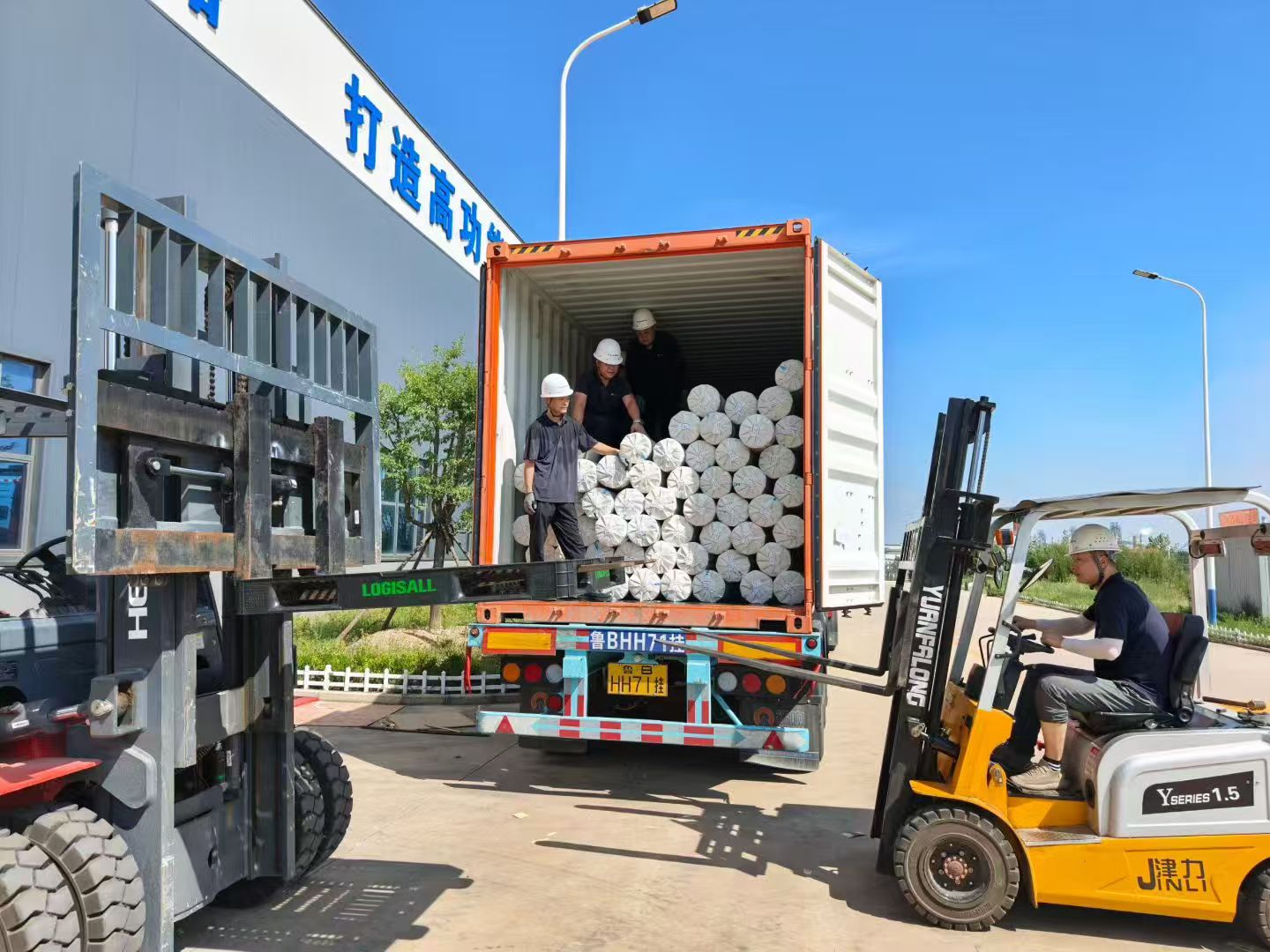
TPU interlayer film orders being loaded and shipped. Image: SHENGDING HIGHTECH MATERIALS CO., LTD
Next step: request a TPU film sample and technical data package for your armored vehicle or high-speed train glazing program.
Company: SHENGDING HIGHTECH MATERIALS CO., LTD
Website: www.shengdingchina.com | Blog: blog.shengdingchina.com
Address: North of Ayeshan Road 209, Rizhao City, Shandong Province, China
Email: docs@foundite.com | Tel / WhatsApp: +8613562376375
Download the company brochure: SHENGDING HIGHTECH MATERIALS product brochure (PDF)
Have Questions or Need More Details?
Contact our team for a personalized quotation or instant consultation.
Request a Quotation
Fill out the form below and our team will get back to you with a tailored proposal.
WhatsApp Direct Chat
Prefer to chat in real-time? Message us on WhatsApp for instant assistance & quick answers.
- Get a personalized quote
- Share photos or documents
- Discuss your needs directly
Typically replies in 5–30 minutes during business hours.