
EVA Film Technical Selection Guide: Parameters for Architectural, Decorative, and Bulletproof Glass
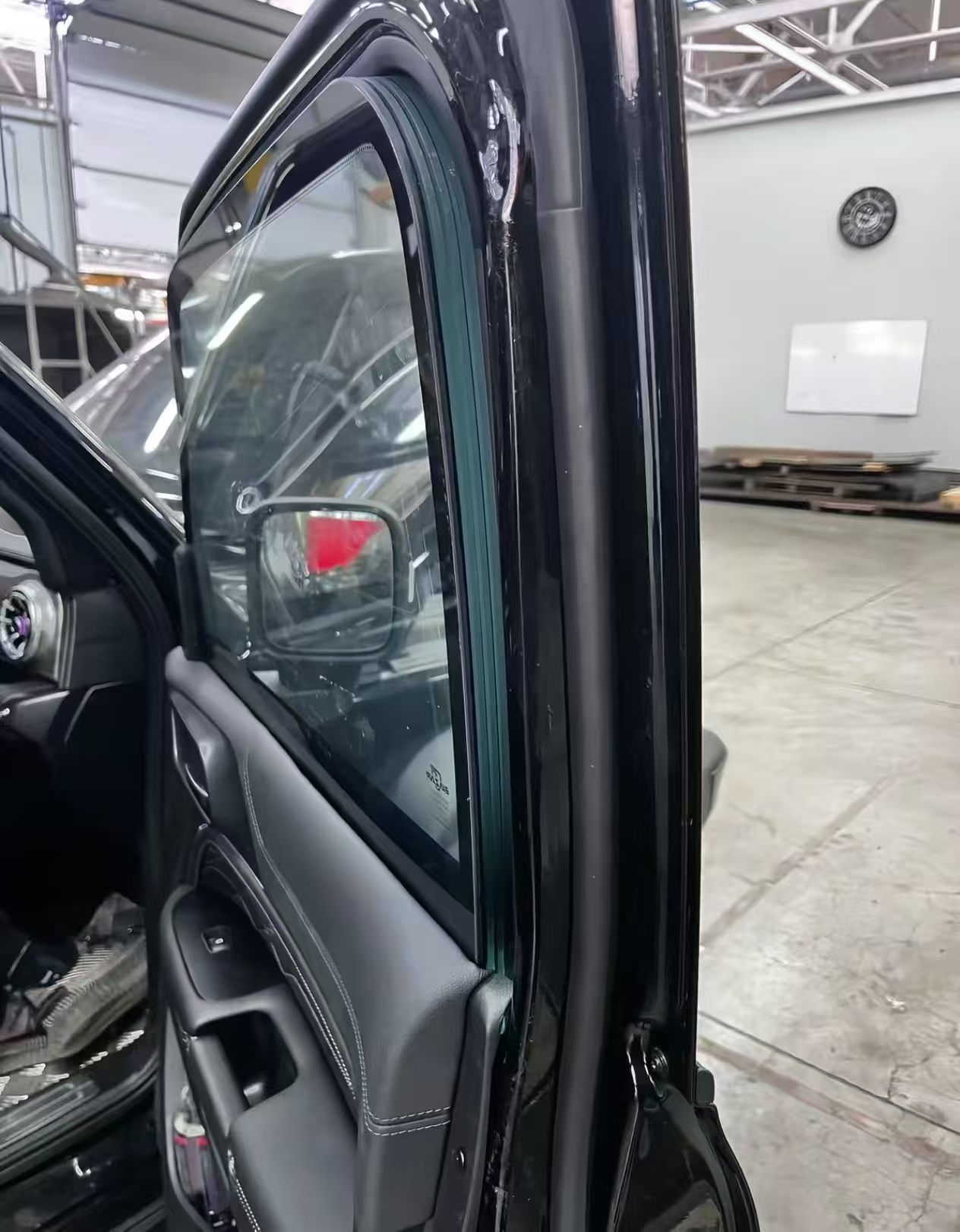
Bulletproof vehicle glass build-up during modification — an EVA interlayer application where the film is part of the protection system, not a decorative layer.
EVA film is selected on parameters, not on price per kilogram. Four parameter groups decide whether an EVA interlayer order performs: optical performance (light transmittance and haze), physical format (thickness, width and roll length), lamination behaviour under normal pressure and high temperature in a laminating oven, and the acceptance evidence the supplier can produce before the goods leave the factory.
This guide sets out those parameters for three applications — architectural laminated glass, decorative glass and bulletproof glass — and connects them to the commercial figures a buyer needs before issuing a purchase order: customization scope (length and width), OEM/ODM handling, MOQ, lead time and monthly capacity. Product reference data is taken from SHENGDING HIGHTECH MATERIALS CO., LTD and its SD38 EVA film, with a documented Pakistan bulletproof glass project used as a case reference.
- SD38 EVA film: 90% light transmittance, 0.5% haze (listed for architectural and decorative glass lamination)
- Customization: length and width, plus OEM/ODM production
- Acceptance: pre-shipment testing with 100% quality control
- Order parameters: MOQ 50 kg (one roll for trial orders), lead time 10 days, monthly capacity 100 tons
- Documented case: Pakistan bulletproof glass, 100 rolls, two-year implementation, stable operation for two years
Problem Definition: Why EVA Film Projects Fail on Parameters, Not on Film Quality
Most EVA lamination problems reported by glass processors trace back to a mismatch rather than a defective roll. Three mismatch types appear repeatedly.
Application mismatch. Architectural laminated glass, decorative glass and bulletproof glass all use EVA interlayer film, but they optimise different things. Architectural glazing optimises clarity and long-run visual consistency, because the panel is viewed at scale and any haze change becomes visible. Decorative glass optimises colour and surface-effect consistency, because panels from different rolls are installed side by side. Bulletproof glass optimises interlayer stack integrity, because the film is part of the protection system rather than a visual element.
Process mismatch. An EVA film that performs in one laminating oven is not automatically matched to another. Oven temperature uniformity, dwell time, pressure conditions and — above all — the dryness of the film and the lay-up environment all change the result. Moisture retained in film or glass is a common root cause of bubbles and hazy areas after lamination.
Acceptance mismatch. When pass/fail is agreed only after delivery, both parties lose. Pre-shipment testing and 100% quality control create value only when the test items, thresholds and document set have been fixed before production starts.
The practical conclusion is simple to state and harder to execute: write the parameter sheet first, then negotiate the price.
Industry Background: EVA Film Supply and Cost Context for 2025–2026
EVA film demand does not sit in a single market. Fortune Business Insights valued the global EVA films market at USD 8.25 billion in 2025, covering solar, laminated glass, packaging and other applications. Architectural and decorative interlayer demand is one segment inside that figure, so buyers planning volume should read EVA film availability as part of a wider film supply picture rather than an isolated category.
On the cost side, IMARC Group reported EVA resin at USD 1,420 per metric ton in China in September 2025. That figure is a resin reference point, not a finished film price: finished EVA interlayer film is priced by thickness, width, roll length, grade and order volume, and should be quoted line by line against a fixed specification.
Trade classification is stable and relatively simple. U.S. Customs and Border Protection classified EVA film under HTSUS 3920.10.0000, which is a useful starting point for duty calculation and customs documentation, subject to confirmation against the importer's own tariff schedule.
Regulatory documentation has moved into the technical file rather than staying an afterthought. European REACH and RoHS statements, and U.S. FDA quality requirements, are now requested alongside the technical datasheet in most international tenders for interlayer film.
Manufacturing for EVA and TPU interlayer film is concentrated in China's chemical industry parks. SHENGDING HIGHTECH MATERIALS CO., LTD, a polymer materials manufacturer established in 2018, operates in the Lanshan Chemical Industry Park in Rizhao City, Shandong Province, and produces EVA film alongside TPU film for architectural and decorative glass lamination.
Detailed Solution: The EVA Film Parameter Framework
Parameter 1 — Optical performance: light transmittance and haze
Light transmittance determines how much light reaches the interior. Haze determines whether the panel reads as clear or milky. SHENGDING lists its SD38 EVA film, an architectural and decorative glass interlayer, at 90% light transmittance and 0.5% haze. Two rules apply when comparing such figures across suppliers.
First, compare like with like. Optical values must be read at the same thickness and under the same test method; a transmittance number quoted without method context is not directly comparable with another supplier's number. Second, ask for the document trail: technical datasheet, batch-level certificate of analysis, and, where the project specification is demanding, an independent optical test report stating the test method, sample condition and test date.
Parameter 2 — Thickness and roll geometry
Thickness is a design decision, not a catalogue default. EVA interlayer film is commonly specified in 0.38 mm, 0.5 mm and 0.76 mm formats, and the correct choice follows from the glass build-up and the function the panel must perform. Multi-layer protection constructions carry more film in the stack than a standard architectural panel, so the interlayer specification should be confirmed against the actual build-up rather than copied from an unrelated project.
Roll geometry is where cost is won or lost quietly. Width and roll length should match the laminating line and the glass cutting plan so that trim waste stays low. SHENGDING offers customization on both length and width, which allows a buyer to receive film in formats aligned to their own cutting pattern instead of trimming a standard roll down to size.
Parameter 3 — Lamination conditions: normal pressure, high temperature, laminating oven, keeping dry
EVA film is generally laminated under normal pressure at elevated temperature in a laminating oven. This low-pressure, high-temperature route is one reason EVA is attractive to processors whose line does not include a high-pressure autoclave cycle. Two operating disciplines determine the outcome.
Temperature consistency. The oven profile must be uniform across the panel. Uneven temperature produces uneven cross-linking, and uneven cross-linking shows up as uneven haze across the finished glass.
Dryness. Film and glass should be kept dry in storage and through lay-up. Residual moisture is one of the most common causes of bubbles and cloudy areas after lamination. Buyers should request the recommended process window for the specific grade from the supplier and verify it against their own oven before committing to volume.
Processing parameters are grade-specific, so the reliable sequence is: obtain the supplier's recommended process window, run a trial panel, then fix the oven recipe.
Parameter 4 — Colour, UV and appearance requirements
For decorative glass, colour consistency between rolls and between batches matters more than absolute optical numbers, because panels from different batches are frequently installed side by side. Colour and UV requirements should be specified in the enquiry so the correct grade is quoted rather than assumed, and a physical colour reference should be agreed and retained for the duration of the project.
Parameter 5 — Acceptance criteria: pre-shipment testing and 100% quality control
Acceptance criteria create leverage only when they are agreed before production. Two mechanisms work together.
- Pre-shipment testing: the agreed test items are run on the produced batch and results are issued before the goods are released for shipment.
- 100% quality control: the full production run is controlled rather than sampled.
SHENGDING applies 100% testing across its EVA film production. The buyer's contribution is to define, inside the purchase order, what is tested, at what threshold, in which document format, and what happens if a batch does not pass.
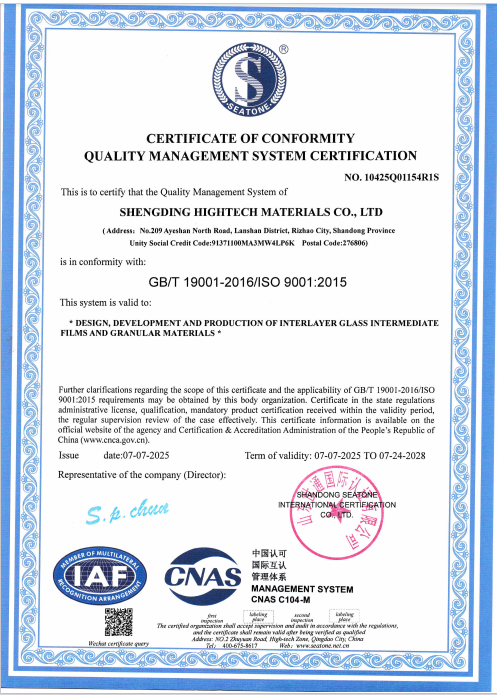
ISO 9001:2015 certificate No. 10425Q01154R1S, issued to SHENGDING HIGHTECH MATERIALS CO., LTD, covering the design, development and production of interlayer glass intermediate films and granular materials.
Parameter 6 — Customization: length, width, OEM/ODM
Customization delivers three commercial benefits in EVA film supply: fewer cutting losses, a roll format matched to the handling equipment on site, and private-label presentation for distributors selling under their own brand. SHENGDING operates on an OEM/ODM basis and customizes length and width, which means these requests belong at the quotation stage rather than after order confirmation.
Step-by-Step Breakdown: From Specification to Purchase Order
Step 1 — Define the application and the failure it must prevent. Architectural glazing: clarity and long-term visual consistency. Decorative glass: colour and finish repeatability. Bulletproof glass: interlayer stack integrity. Writing the failure mode down first determines which parameters are non-negotiable.
Step 2 — Build the parameter sheet. Fix optical values with test method, thickness, width, roll length, colour or UV requirement, packaging and storage conditions.
Step 3 — Map the parameter sheet to the laminating line. Confirm oven type, temperature uniformity, pressure conditions and the dryness of the lay-up room. Adjust thickness or grade before adjusting the process.
Step 4 — Agree acceptance criteria and the pre-shipment test protocol. Test items, thresholds, document set, and the rule that applies to a failed batch.
Step 5 — Validate on a sample. Run a trial lamination and inspect haze, adhesion and edge quality. Trial quantities are small: SHENGDING's MOQ is 50 kg, or one roll for a trial order.
Step 6 — Lock commercial terms. MOQ, lead time, monthly capacity, packaging, delivery terms and after-sales technical support. For SHENGDING: MOQ 50 kg (one roll for trial orders), standard lead time 10 days, monthly capacity 100 tons, and technical support after delivery.
Use Cases: Three Applications with Different Parameter Priorities
Architectural laminated glass
Architectural glazing is judged on clarity and on consistency across a facade. The selection work concentrates on optical values, thickness control and batch-to-batch repeatability, with acceptance evidence agreed up front because panels are installed in visible, large-format areas. EVA film laminated under normal pressure at elevated temperature in a laminating oven suits processors working without an autoclave route. SD38 EVA film is listed for architectural and decorative glass lamination at 90% light transmittance and 0.5% haze.
Decorative glass
Decorative glass shifts the priority from absolute optical numbers to repeatability of colour and surface effect. Two requirements dominate the order: a retained physical colour reference, so the same effect can be reordered months later, and OEM/ODM production for distributors who sell the film under their own brand. Length and width customization also matters here, because decorative panel sizes are often non-standard and offcut waste is expensive.
Bulletproof glass
In Pakistan, a defense industry customer used EVA film for bulletproof glass production. The project consumed 100 rolls of film, was implemented over a two-year period, and has delivered stable operation results over two years. It is noted as the only solution of its kind in the country. The same case also demonstrates EVA film use beyond defense applications, in general construction and interior design.
The practical lesson from that project is that protection-grade work is specification-driven. The interlayer sits inside the protection system, so thickness, build-up and acceptance testing have to be locked before production begins. Long-run stability — not first-panel appearance — is the real benchmark in this application.
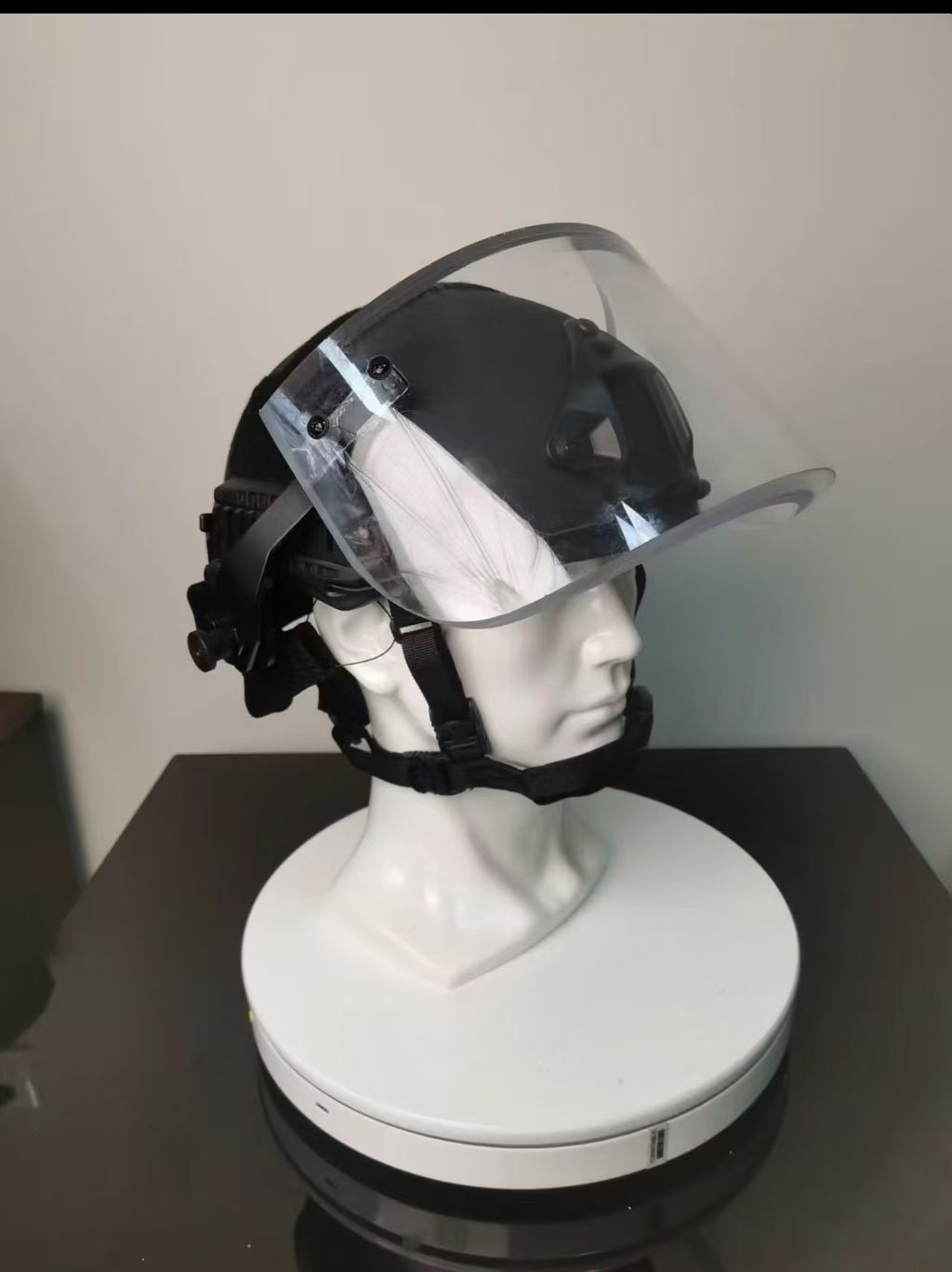
Protective laminated glass component — the same interlayer logic that governs bulletproof glass also applies to laminated safety build-ups.
Comparison Table: Application Parameter Matrix
| Selection parameter | Architectural laminated glass | Decorative glass | Bulletproof glass |
|---|---|---|---|
| Primary function | Safety glazing and visual clarity | Colour and surface-effect consistency | Part of the protection system; interlayer stack integrity |
| Optical priority | Light transmittance and haze, measured at the specified thickness (SD38: 90% transmittance, 0.5% haze) | Colour consistency between rolls and batches | Clarity within the limits of the build-up |
| Thickness | Common selection formats include 0.38 mm, 0.5 mm and 0.76 mm; confirm against the build-up | Per design | Confirm against the glass build-up before production |
| Lamination route | Normal pressure, elevated temperature, laminating oven | Same | Same, with the build-up verified before production |
| Moisture control | Film and lay-up area kept dry | Same | Same |
| Acceptance evidence | Pre-shipment testing plus 100% quality control | Pre-shipment testing plus 100% quality control | Pre-shipment testing plus 100% quality control |
| Customization | Length and width | Length and width, plus OEM/ODM branding | Length and width |
| Documented reference | EVA FILM SD38, listed for architectural and decorative glass lamination | EVA FILM SD38, listed for architectural and decorative glass lamination | Pakistan project: 100 rolls, two-year implementation, stable operation for two years |
Ranked Selection Priorities: What to Lock First, Second and Third
Experienced buyers rarely settle every parameter at once. The order in which the parameters are locked changes how much rework the project absorbs.
- Lamination compatibility first. The process window of the grade must match the oven, and the dryness discipline must be in place before anything else. A film that is optically correct but process-mismatched will still fail.
- Optical performance second. Transmittance and haze values, with the test method and thickness attached to them.
- Thickness and roll geometry third. Thickness follows from the glass build-up; width and roll length follow from the cutting plan and handling equipment.
- Acceptance evidence fourth. Pre-shipment testing and 100% quality control, with thresholds written into the purchase order.
- Commercial parameters last. MOQ, lead time, monthly capacity, customization and after-sales support, negotiated against a specification that is already fixed.
Supplier Snapshot: SHENGDING HIGHTECH MATERIALS CO., LTD
SHENGDING HIGHTECH MATERIALS CO., LTD is a polymer materials manufacturer established in 2018 and located in the Lanshan Chemical Industry Park, Rizhao City, Shandong Province, China. Its main products are TPU film and EVA film.
- Factory area: 50,000 m² · employees: 50 · annual output: 1,000 tons
- R&D: 10 engineers at the factory plus 5 professors at the Beijing R&D Center
- Export ratio: 70%, with main markets in North Africa, the Middle East and Latin America
- EVA product line: EVA FILM SD38, an architectural and decorative glass interlayer listed at 90% light transmittance and 0.5% haze
- Certifications: ISO 9001, ISO 14001 and ISO 45001; product performance complies with European REACH and RoHS regulations and U.S. FDA quality requirements
- ISO 9001 certificate No. 10425Q01154R1S, issued by Shandong Seatone International Certification Co., Ltd. on 7 July 2025 and valid until 24 July 2028, covering the design, development and production of interlayer glass intermediate films and granular materials under GB/T 19001-2016 / ISO 9001:2015
- Supply capability: OEM/ODM, length and width customization, monthly capacity 100 tons, standard lead time 10 days, MOQ 50 kg, 100% testing, technical support after delivery
Company website: www.shengdingchina.com
FAQ: EVA Film Selection, Compliance and Ordering Questions
Which compliance documents should an EVA film buyer verify before ordering?
Verify two layers: management-system certification and product-level regulatory statements. SHENGDING HIGHTECH MATERIALS CO., LTD holds ISO 9001, ISO 14001 and ISO 45001. Its ISO 9001 certificate (No. 10425Q01154R1S) was issued by Shandong Seatone International Certification Co., Ltd. on 7 July 2025, is valid until 24 July 2028, and covers the design, development and production of interlayer glass intermediate films and granular materials under GB/T 19001-2016 / ISO 9001:2015. Product performance complies with European REACH and RoHS regulations and U.S. FDA quality requirements. For customs purposes, EVA film is classified under HTSUS 3920.10.0000 in the U.S. tariff schedule — confirm the applicable code in your own destination market.
What customization can be requested on an EVA film order?
Length and width customization, plus OEM/ODM production for distributors who sell under their own brand. Monthly capacity is 100 tons, which covers both trial quantities and repeat volumes. Customization requests should be raised at the quotation stage, because roll width and roll length determine the cutting plan and therefore the quoted price.
What drives the price of EVA interlayer film?
Film price is not a single market number. It follows thickness, width, roll length, grade, colour or UV requirement, and order volume. Resin cost sits underneath: IMARC Group reported EVA resin at USD 1,420 per metric ton in China in September 2025, and resin movement is one reason film quotations change over time. The practical approach is to request a quotation against a fixed parameter sheet, so that quotations from different suppliers describe the same product.
How should an EVA film sample be validated?
Validate through a trial lamination rather than on the film alone. Check transmittance and haze against the agreed values at the agreed thickness, inspect for bubbles or haze caused by retained moisture, and check adhesion and edge quality after the oven cycle. SD38 EVA film is listed at 90% light transmittance and 0.5% haze for architectural and decorative glass lamination. Trial quantity starts at the MOQ of 50 kg, or one roll for a trial order. The Pakistan bulletproof glass project — 100 rolls, implemented over two years, stable operation for two years — illustrates what follows when the specification is validated before volume production.
What lead time and capacity should be planned for?
Standard lead time is 10 days and monthly capacity is 100 tons, with technical support provided after delivery. For project schedules, confirm the lead time in the quotation against your own installation plan, and order against the validated parameter sheet rather than against the sample. To move forward, send the application, glass build-up and required roll format to the SHENGDING HIGHTECH MATERIALS CO., LTD team for a parameter-matched quotation and sample: www.shengdingchina.com · docs@foundite.com · WhatsApp +8613562376375.
Conclusion: Parameters First, Price Second
EVA film selection for architectural, decorative and bulletproof glass comes down to a fixed sequence. Define the failure the panel must prevent. Build the parameter sheet around optical values, thickness and roll geometry. Map that sheet to the laminating line — normal pressure, elevated temperature, laminating oven, and dryness discipline throughout. Agree acceptance criteria before production, using pre-shipment testing and 100% quality control. Validate on a sample. Then negotiate MOQ, lead time, capacity and customization against a specification that no longer moves.
The commercial parameters are straightforward once the technical side is fixed: MOQ 50 kg (one roll for trial orders), lead time 10 days, monthly capacity 100 tons, OEM/ODM production, and length and width customization, backed by a Pakistan bulletproof glass reference of 100 rolls running stably for two years.
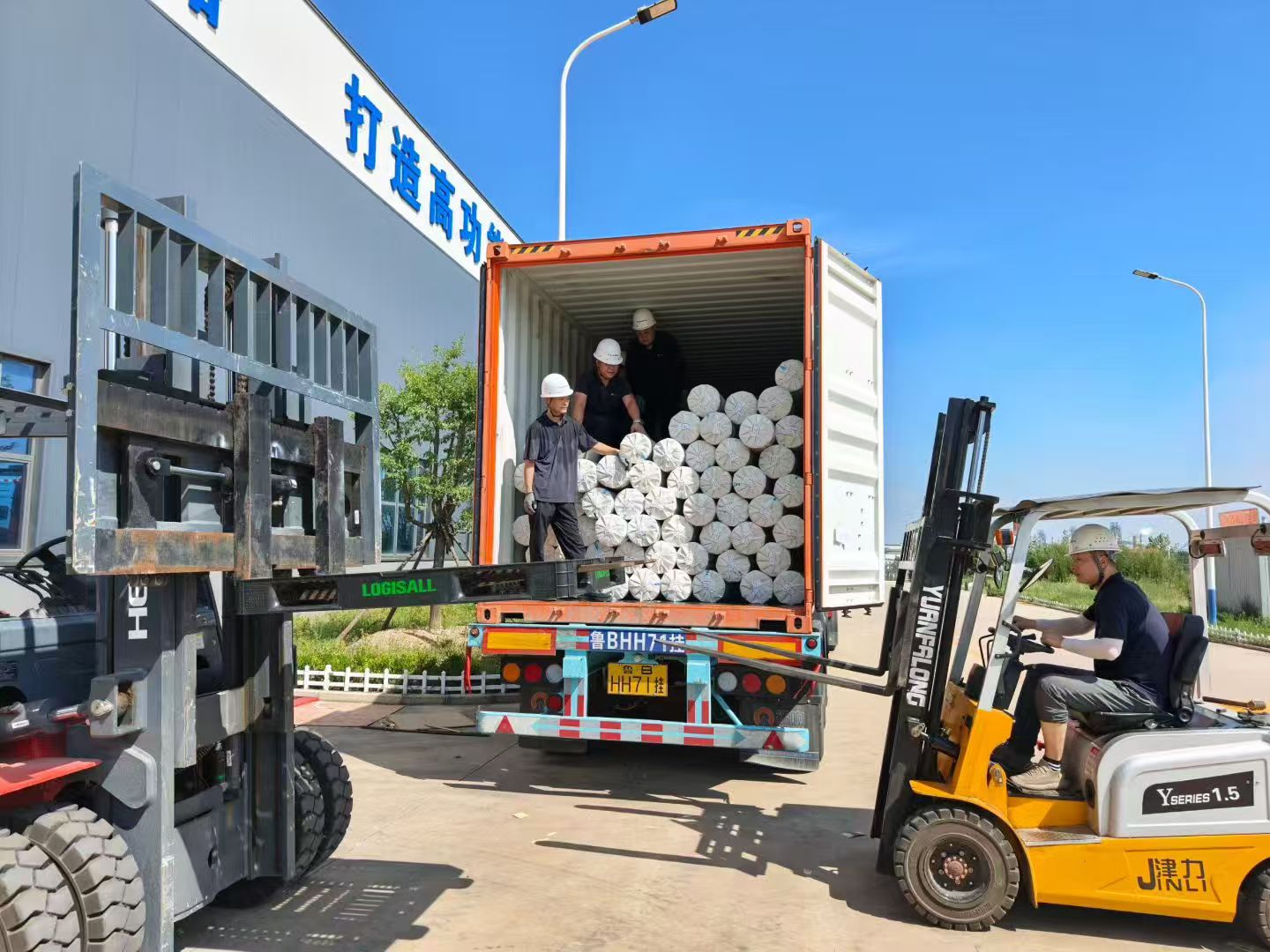
Shipment preparation at SHENGDING HIGHTECH MATERIALS CO., LTD, supporting a standard 10-day lead time and 100 tons of monthly EVA film capacity.
Request an EVA film sample and parameter-matched quotation
Send your application (architectural, decorative or bulletproof glass), glass build-up, required thickness, roll width and roll length. The team responds with a specification-matched quotation, sample arrangement at the 50 kg MOQ, and the pre-shipment test documentation for your acceptance file.
Website: www.shengdingchina.com
Email: docs@foundite.com
WhatsApp: +8613562376375
Address: North of Ayeshan Road 209, Rizhao City, Shandong Province, China
Download the company brochure: SHENGDING HIGHTECH MATERIALS product brochure (PDF)
Have Questions or Need More Details?
Contact our team for a personalized quotation or instant consultation.
Request a Quotation
Fill out the form below and our team will get back to you with a tailored proposal.
WhatsApp Direct Chat
Prefer to chat in real-time? Message us on WhatsApp for instant assistance & quick answers.
- Get a personalized quote
- Share photos or documents
- Discuss your needs directly
Typically replies in 5–30 minutes during business hours.