What Is EVA Film? Its Role in Safety Glass Lamination and Custom Manufacturing
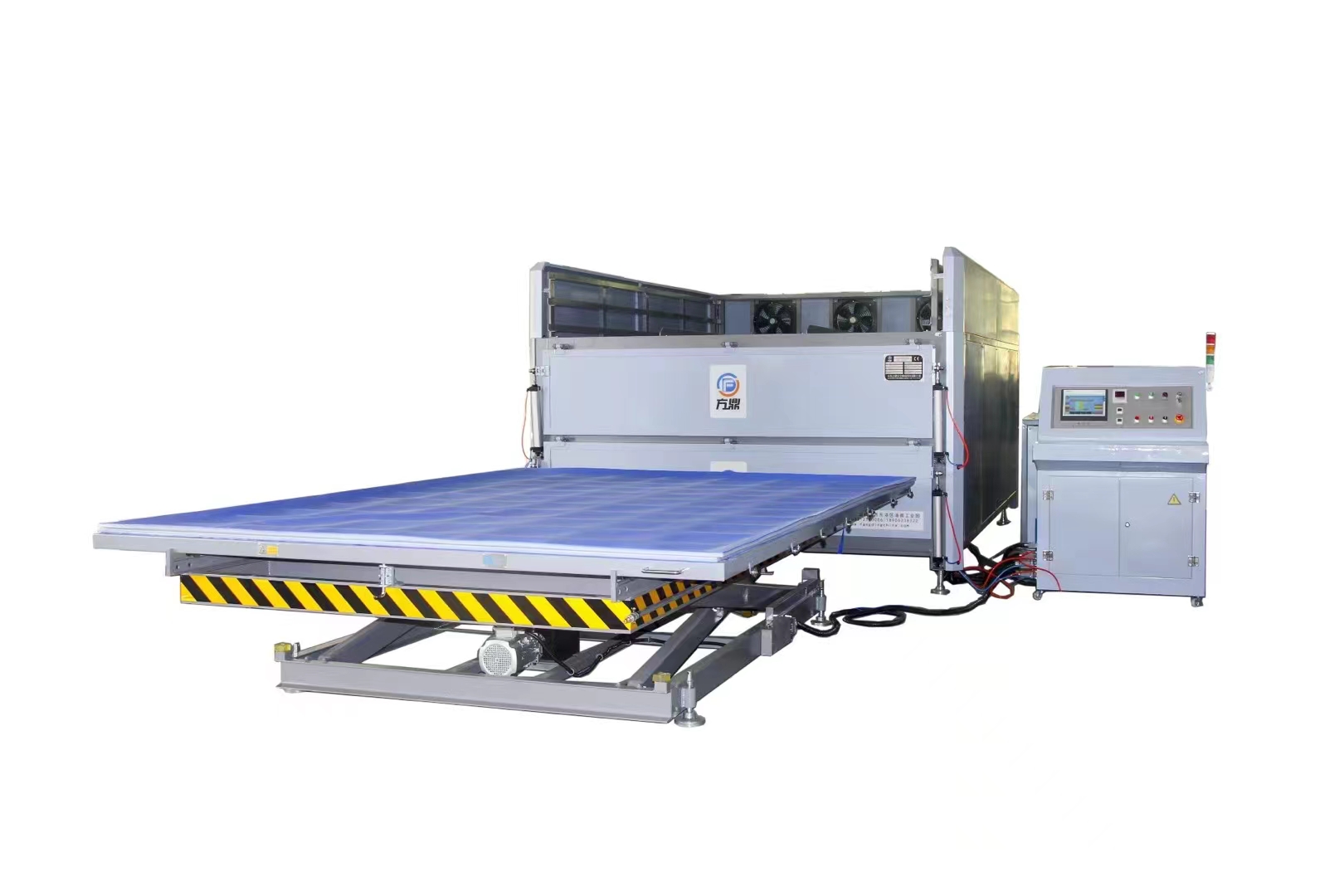
EVA film is a polymer interlayer that bonds two or more glass panes into a single safety-glass unit under heat and pressure. In architectural and decorative glass plants, it is processed in an EVA laminating oven under normal pressure and elevated temperature, and the film must be kept dry until lamination is complete. Its real value to a buyer rests on four checkable items — optical grade, dimensional consistency, moisture control, and a traceable test and certification record — rather than on the name printed on the roll.
What Is EVA Film?
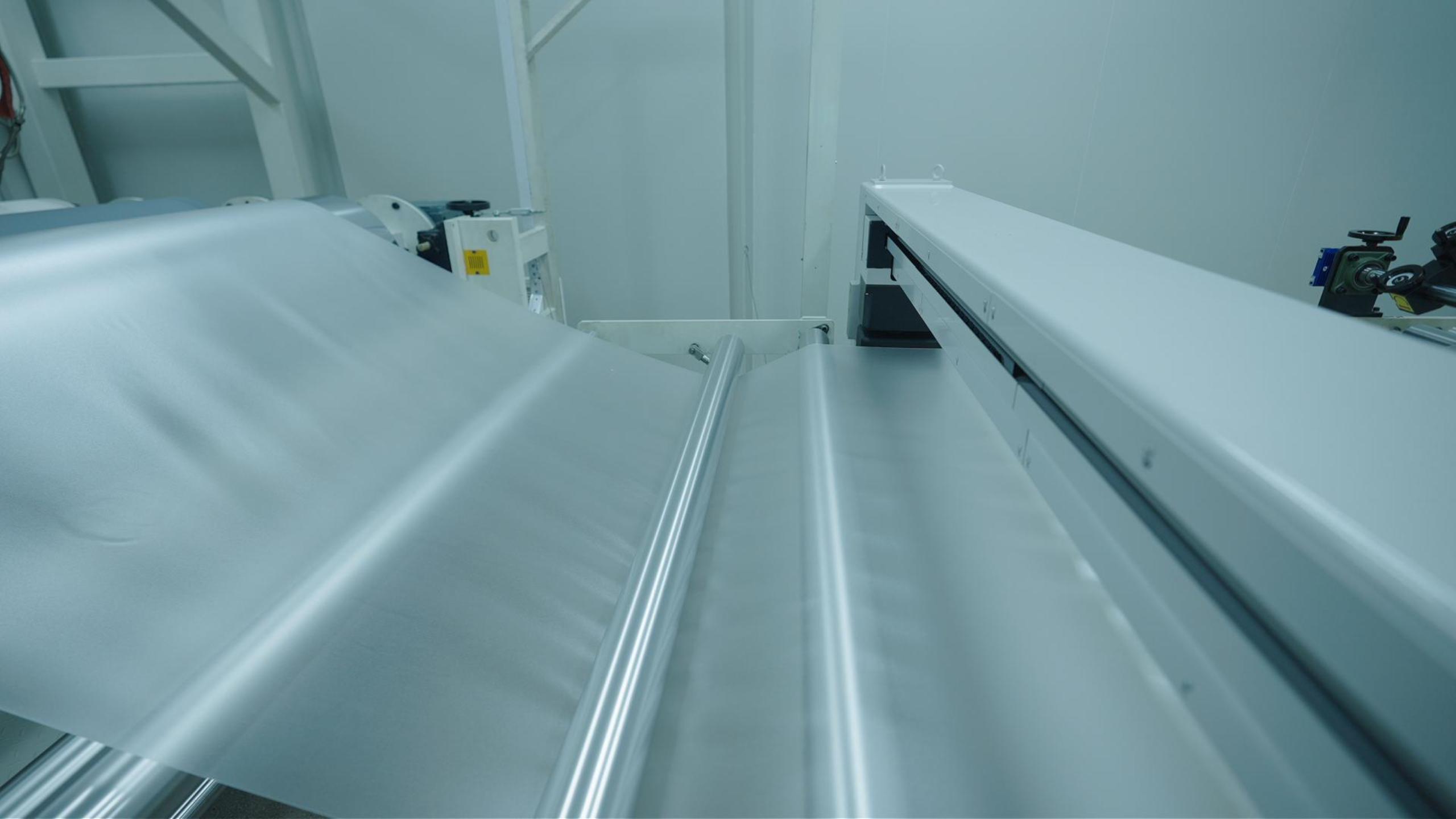
EVA film is an extruded interlayer made from ethylene-vinyl acetate copolymer. It is supplied in roll form, cut to the size of the glass being laminated, and placed between glass panes. During oven processing, the film softens, flows, and cross-links to form a continuous bond. If the finished panel breaks, the interlayer holds the fragments in place instead of letting them fall free — which is the whole point of calling the product a safety-glass film.
SHENGDING HIGHTECH MATERIALS CO., LTD is a polymer materials manufacturer established in 2018 and located in the Lanshan Chemical Industry Park in Rizhao City, Shandong Province, China. The company produces TPU film and EVA film. Its architectural EVA offering is model SD38, described in the product listing as a high-transparency EVA film with 90% light transmittance and 0.5% haze, intended for architectural glass and decorative glass.
The distinction matters at the sourcing stage. "EVA film" names a material family, not a finished specification. Two rolls of EVA film can share a name and still differ in optical grade, dimensional tolerance, and handling requirements — which is where most procurement problems begin.
Problem Definition: Why EVA Interlayer Sourcing Fails at the Detail Level
EVA lamination failures reported by glass processors usually trace back to specification gaps rather than to the chemistry itself. Four gaps repeat most often.
- Category confusion. Solar encapsulant film and architectural interlayer film are both sold as EVA film. They are produced for different service conditions. A quotation that answers "EVA film" without stating the application grade leaves the buyer comparing unlike products.
- Certification conflation. A quality management system certificate, a product test report, and a regulatory compliance statement are three different documents. Buyers frequently accept one as proof of the others.
- Moisture exposure. The application requirement for architectural EVA is explicit: the film must be kept dry. Storage and handling are therefore part of the technical specification, not a warehouse detail.
- Verbal customization. Length and width are the two dimensions most often customized, and the two most often agreed in conversation instead of on the purchase order.
Industry Background: Where EVA Film Sits in the Market
EVA film is a mature industrial material with a large, cross-application market. Fortune Business Insights valued the global EVA films market at USD 8.25 billion in 2025, with the figure spanning solar, laminated glass, and packaging applications. That breadth is exactly why application-specific data is scarce: published market totals aggregate solar encapsulant and architectural interlayer volumes into one number, so a glass processor cannot read a project-level demand signal from them.
On the cost side, IMARC recorded a China EVA resin price of USD 1,420 per metric ton in September 2025. Resin is the input, not the finished film. Converting resin into a wide, defect-free, dimensionally stable interlayer adds extrusion, handling, testing, and packaging cost — so a resin benchmark is a negotiation anchor, never a substitute for a film quotation.
For cross-border purchasing, U.S. Customs and Border Protection classified EVA film under HS code 3920.10.0000. Importers should use that classification as the starting point for tariff calculation and confirm the applicable national schedule for their destination.
How EVA Film Functions in Safety Glass Lamination
The functional requirement is simple to state and hard to execute: the interlayer must bond fully to glass, stay optically clear, and keep that bond through service life. In the EVA process route, the working conditions are normal pressure and high temperature, the operation mode is laminating oven processing, and the matched equipment is an EVA laminating oven.
Three consequences follow for buyers:
- The oven defines the process window. Because EVA laminating runs at normal pressure rather than in an autoclave, the film's flow behaviour during heating determines whether the panel comes out clear or with trapped air and haze.
- Optical performance is a specification, not an impression. For SD38, the listed figures are 90% light transmittance and 0.5% haze. Those two numbers belong in the purchase record, alongside the test method used to obtain them.
- Dry film is a process requirement. Moisture carried into the oven shows up as haze, bubbles, or adhesion loss after lamination — defects that appear only after the glass has already been processed.
Specifications and Parameters Buyers Should Fix in Writing
HVQ-type constraint questions are answered by documents, not adjectives. The table below separates what the manufacturer publishes from what the buyer must confirm on each order.
| Parameter | Published value for EVA FILM SD38 | What the buyer should confirm per order |
|---|---|---|
| Material | EVA | Application grade stated on the quotation |
| Type | High-transparency EVA film | Optical grade matches the project requirement |
| Light transmittance | 90% | Test method and test report reference |
| Haze | 0.5% | Measurement condition and sample source |
| Listed applications | Architectural glass, decorative glass | Fit with the specific project type |
| Nominal thickness and roll width | Specified per order | Written into the PO; both drive film cost per square metre |
| Roll length | Customizable | Stated on the packing list |
| MOQ | 50 kg | Confirmed against the trial quantity |
| Monthly capacity | 100 tons | Checked against the delivery schedule |
| Lead time | 10 days | Confirmed for the actual order volume |
| Quality control | 100% test | Inspection record or COA supplied with the shipment |
Note the gap in the table: thickness and width are the two parameters that most influence the price per square metre, and they are the two the buyer must write down. A supplier can only confirm what the order states.
Custom Manufacturing: OEM, ODM, and Size Customization
Architectural glass is not a standard-sized product, so the interlayer cannot be either. A glass processor cutting film to a large-format panel loses material on every roll that arrives in the wrong width.
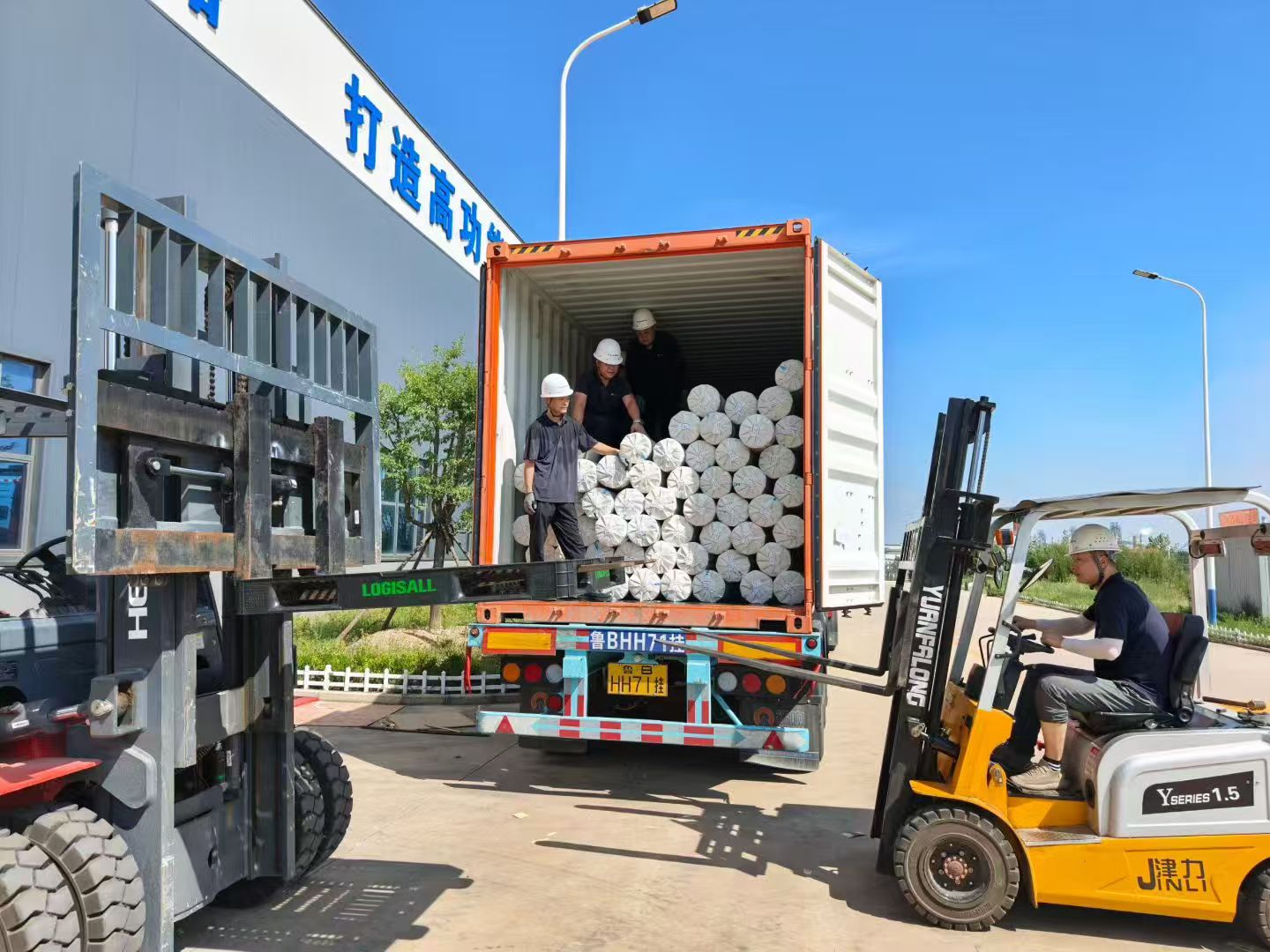
SHENGDING HIGHTECH MATERIALS offers OEM/ODM production with length and width customization, with a monthly capacity of 100 tons, a MOQ of 50 kg, a lead time of 10 days, 100% testing before dispatch, exports to markets worldwide, and technical support after delivery. Company-level figures are: 50,000 m² of factory space, 50 employees, 1,000 tons annual output, an R&D team of 10 engineers at the factory plus 5 professors at the Beijing R&D Center, more than 50 proprietary intellectual property rights, and an export share of about 70%, with main markets in North Africa, the Middle East, and Latin America.
For a decorative glass project that needs tinted or opaque interlayers, the correct route is a customization request under the ODM process, not an assumption that a standard clear roll applies. Custom dimensions and custom appearance are different conversations and are quoted differently.
Step-by-Step: From Roll to Finished Laminated Glass
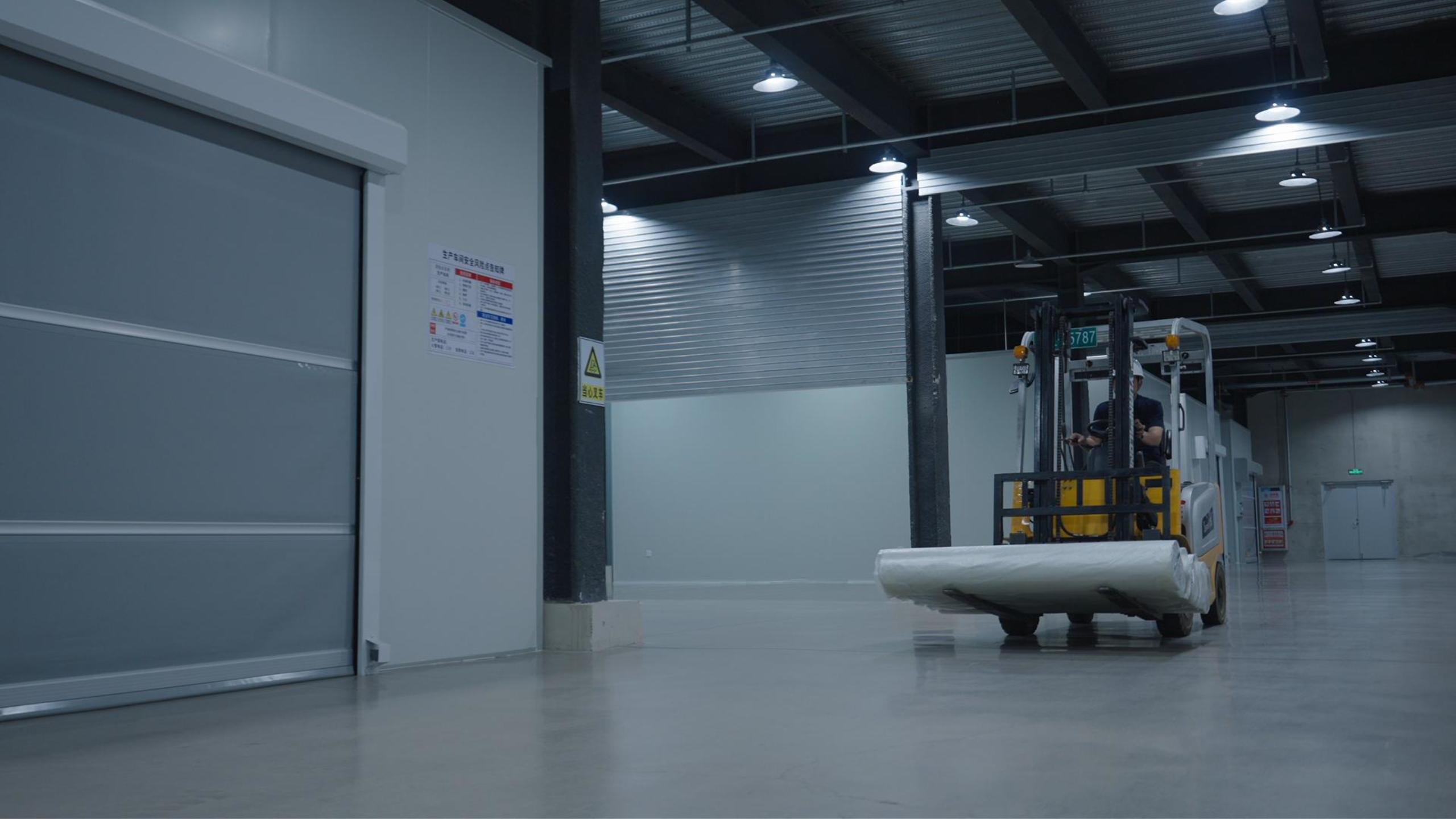
- Receive and store dry. EVA film must be kept dry. Storage conditions at the glass plant affect the finished panel as much as anything that happens in the oven.
- Cut the film to glass size. Film is cut from the roll to match the pane. Where the supplier offers length and width customization, the roll arrives closer to the cutting requirement and offcut loss falls.
- Lay up the assembly. Glass, interlayer, glass. Alignment and edge trim are fixed at this stage; any contamination trapped here becomes a permanent defect.
- Process in the EVA laminating oven. The loaded assembly is processed at normal pressure and high temperature. This is where the film flows, bonds, and becomes the safety layer.
- Cool and finish the edges. Excess film is trimmed and the panel is inspected for trapped air, haze, and edge defects.
- Verify against the purchase record. Incoming film should be checked against the COA, the listed optical figures, and the roll dimensions stated on the order. Supplier-side 100% testing plus customer-side incoming inspection is the only combination that catches a mismatch before a full production run is committed.
Comparison Table: EVA Film and TPU Film in the Same Manufacturer's Range
Shengding produces both EVA and TPU interlayers, which makes a like-for-like comparison on published data possible without reference to unverified competitor figures.
| Published parameter | EVA FILM — SD38 | TPU FILM — SD560 |
|---|---|---|
| Material | EVA | Thermoplastic polyurethane elastomer (TPU) |
| Type | High-transparency EVA film | TPU interlayer film |
| Light transmittance | 90% | 90% |
| Haze | 0.5% | 0.3% |
| Tensile strength | Not listed in the product data | 42 MPa |
| Elongation at break | Not listed in the product data | 500% |
| Tear strength | Not listed in the product data | 45 kN/m |
| Listed application | Architectural glass, decorative glass | Bulletproof glass, shatter-resistant glass |
The comparison is not a ranking. It shows where each material's published data is stronger, and it tells a buyer what to ask for: mechanical data (tensile strength, elongation, tear strength) is published for the TPU grade and not for the EVA grade, so an EVA buyer who needs mechanical figures should request them as test data rather than assume parity.
Use Cases: Where EVA Film Fits
- Architectural laminated safety glass. The application unit lists architectural laminated glass projects as a primary EVA use, processed in an EVA laminating oven at normal pressure and high temperature.
- Decorative glass processing. Interior and decorative panels are the second listed application. Decorative work is where film appearance, haze, and cut accuracy are most visible to the end user.
- Custom roll supply for processors. Where a plant laminates non-standard panel sizes, length and width customization reduces waste at the cutting table.
- Security-related glazing. The company's project history includes a customer in Pakistan that purchased 100 rolls for a bulletproof glass application and reported stable operation over two years. For security glazing, the TPU grade is the one listed for bulletproof and shatter-resistant glass.
Compliance and Certification: What the Documents Actually Say
Certification is the constraint most often misread in EVA film purchasing, because three different document types get treated as one.
Management system certification
SHENGDING HIGHTECH MATERIALS CO., LTD holds quality management system certificate No. 10425Q01154R1S, issued by Shandong Seatone International Certification Co., Ltd., meeting GB/T 19001-2016 / ISO 9001:2015. The scope stated on the certificate covers the design, development, and production of interlayer glass intermediate films and granular materials. The certificate was issued on 2025-07-07 and is valid until 2028-07-24. The company also reports ISO 14001 and ISO 45001 certification, and states that product performance complies with European REACH and RoHS regulations and with U.S. FDA quality requirements.
Why the distinction matters
A quality management system certificate proves that a documented quality process exists and has been audited. It does not, on its own, certify the optical or mechanical performance of a specific roll. Product-level evidence is a separate document: a certificate of analysis, a test report, or a declaration of conformity. Buyers building a supplier file should hold both, and should check that the certificate scope actually covers the product being purchased.
Frequently Asked Questions
What certifications should an EVA film supplier hold?
At minimum, a current quality management system certificate and product-level test documentation. SHENGDING HIGHTECH MATERIALS holds certificate No. 10425Q01154R1S to GB/T 19001-2016 / ISO 9001:2015, issued by Shandong Seatone International Certification Co., Ltd., valid from 2025-07-07 to 2028-07-24, with a scope covering the design, development, and production of interlayer glass intermediate films and granular materials. The company also reports ISO 14001 and ISO 45001 certification, and states compliance with European REACH and RoHS regulations and U.S. FDA quality requirements. Buyers should verify the scope wording and request a COA for the batch, because a system certificate and a product test report answer different questions.
Can EVA film be customized in length and width?
Yes. SHENGDING HIGHTECH MATERIALS operates OEM/ODM production with customization of length and width, on a monthly capacity of 100 tons and a lead time of 10 days. Custom dimensions are the main lever for reducing offcut waste at the cutting table, so the roll width should be agreed against the largest common panel size in the plant rather than left to the supplier's standard.
What drives the price of EVA film?
Resin is the first input. IMARC recorded a China EVA resin price of USD 1,420 per metric ton in September 2025, which serves as a cost anchor for negotiation rather than a finished-film price. Above the resin line, film cost moves with nominal thickness and roll width, order volume, testing requirements, and packing. The MOQ at SHENGDING HIGHTECH MATERIALS is 50 kg, which keeps a first trial order small enough to evaluate before committing to a production quantity, and a direct quotation is the only reliable figure for a specific specification.
How can a buyer validate EVA film before the first full order?
Evaluate on documents and on a trial lamination. Request the COA together with the optical figures — SD38 is listed at 90% light transmittance and 0.5% haze — confirm the roll dimensions against the order, and run a test panel through the plant's own EVA laminating oven at normal pressure and high temperature before scaling up. Because the film must be kept dry, the trial should also confirm that storage and handling at the plant preserve that condition. The 50 kg MOQ makes this sequence practical.
What is the standard lead time for an EVA film order?
The stated lead time is 10 days, against a monthly capacity of 100 tons, with technical support provided after delivery. Lead time should still be confirmed against the actual order volume and specification, since a customized width or a large tonnage shifts scheduling. Buyers running continuous lamination lines can request a sample and a quotation through the contact channels listed on shengdingchina.com to align delivery with their production calendar.
Conclusion
EVA film is a bonding interlayer, not a commodity roll. It becomes safety glass only when the optical grade, the roll dimensions, the dry-storage condition, and the test record all match the job — and each of those four is a written parameter, not a sales claim. SD38 from SHENGDING HIGHTECH MATERIALS is listed at 90% light transmittance and 0.5% haze for architectural and decorative glass, backed by a quality management system certificate with a defined scope and validity period, OEM/ODM customization of length and width, 100% testing, a 50 kg MOQ, and a 10-day lead time. A buyer who fixes those figures on the purchase order has already removed most of the risk from the lamination run.
Next Step: Sample, Specification, or Quotation
Send your panel sizes, nominal thickness, and target application, and the team will confirm the applicable EVA film grade, roll dimensions, MOQ, and lead time. The full product and capability documentation is available in the company brochure: Download the Shengding Hightech Materials brochure (PDF).
Contact: www.shengdingchina.com · Email: docs@foundite.com · Tel / WhatsApp: +8613562376375
Have Questions or Need More Details?
Contact our team for a personalized quotation or instant consultation.
Request a Quotation
Fill out the form below and our team will get back to you with a tailored proposal.
WhatsApp Direct Chat
Prefer to chat in real-time? Message us on WhatsApp for instant assistance & quick answers.
- Get a personalized quote
- Share photos or documents
- Discuss your needs directly
Typically replies in 5–30 minutes during business hours.