
Ballistic Glass Reliability: A 2-Year Field-Proven TPU Film Case in Pakistan
Answer first: a two-year field deployment in Pakistan put 100 rolls of SD560 TPU film, produced by SHENGDING HIGHTECH MATERIALS CO., LTD, into ballistic laminated glass, and the laminate remained in stable service across that window. The value of the case is not the headline number. It is what the deployment shows about which interlayer properties decide whether a ballistic laminate still performs in year two, and what a buyer must lock into a specification before the first production roll is ordered.
Ballistic glass is judged twice. The first judgment happens in a test lab against a defined threat level. The second happens in service, where heat, moisture, mechanical stress at the edge, and repeated thermal cycling act on the same laminate for years. Most sourcing conversations focus on the first judgment. Most field failures, in practice, come from the second.
This article works through that second judgment using a concrete execution case: a defense-grade lamination program in Pakistan that consumed 100 rolls of SD560 TPU film and held stable operation for two years. It explains the failure mechanisms, maps each SD560 property to a specific mechanism, sets out the execution sequence that made the program repeatable, and closes with the long-term supply terms that determine whether a validated project can be re-ordered without re-qualifying from zero.
Why Ballistic Glass Fails Long After the Ballistic Test
A ballistic test measures one event. Service life is a cumulative load. The four mechanisms below account for most interlayer-related degradation in bullet-resistant laminates, and each one is decided at the specification stage, not at the inspection stage.
1. Interfacial delamination
Delamination begins as a bond-line weakness and ends as a visible separation between glass and interlayer, usually starting at an edge or around a mounting hole. In thick ballistic builds, where multiple glass plies and multiple interlayer plies are stacked, the thermal history during lamination is uneven across the thickness. An interlayer with a narrow processing window forces the laminator to compromise between the surface plies and the core plies, and that compromise is stored in the laminate as residual stress that shows up later.
2. Moisture ingress and haze growth
Moisture reaches the interlayer through the exposed edge, through improperly sealed cut edges, and through packaging and storage before lamination even begins. Once inside, moisture degrades optical clarity and weakens the glass-to-film interface. Haze growth is the earliest measurable symptom, and in a vehicle window or a viewing port it is also a functional failure, not merely a cosmetic one.
3. Cold embrittlement under thermal cycling
The glass transition temperature of the interlayer sets the point below which the film stops behaving as a flexible energy-absorbing layer and starts behaving as a rigid, crack-prone one. In markets with wide seasonal temperature swings, this is not a laboratory concern. A film with a glass transition temperature that sits too close to real service temperatures will accumulate micro-cracks around the edge over repeated cycles.
4. Edge and handling damage
Ballistic interlayers are cut, trimmed, stacked and handled before they are ever laminated. Tear strength at the film edge determines how much of that handling turns into a defect that survives into the finished laminate. Low tear resistance produces edge nicks and notches that act as stress concentrators under impact and under thermal load.
Industry Background: Where TPU Interlayers Sit in Ballistic Laminates
Thermoplastic polyurethane film is a hot-melt interlayer: it softens and bonds under heat and pressure, and because it is thermoplastic rather than cross-linked, it can be re-processed within its thermal window. That behaviour is what makes TPU film suitable for autoclave lamination of multi-ply ballistic glass, where the laminator needs a controlled flow phase followed by a stable bond. In bullet-resistant glass the interlayer is a structural element: it holds the plies together after impact, distributes load across the laminate, and keeps spall and glass fragments on the protected side.
The category is also growing in absolute terms. Industry analysis published in 2026 projects the TPU film segment used for glass interlayers to exceed USD 1.2 billion in that year, with China accounting for more than 30% of global production capacity. For buyers, that concentration means the practical question is not whether TPU interlayer capacity exists, but which supplier can document consistency across consecutive batches.
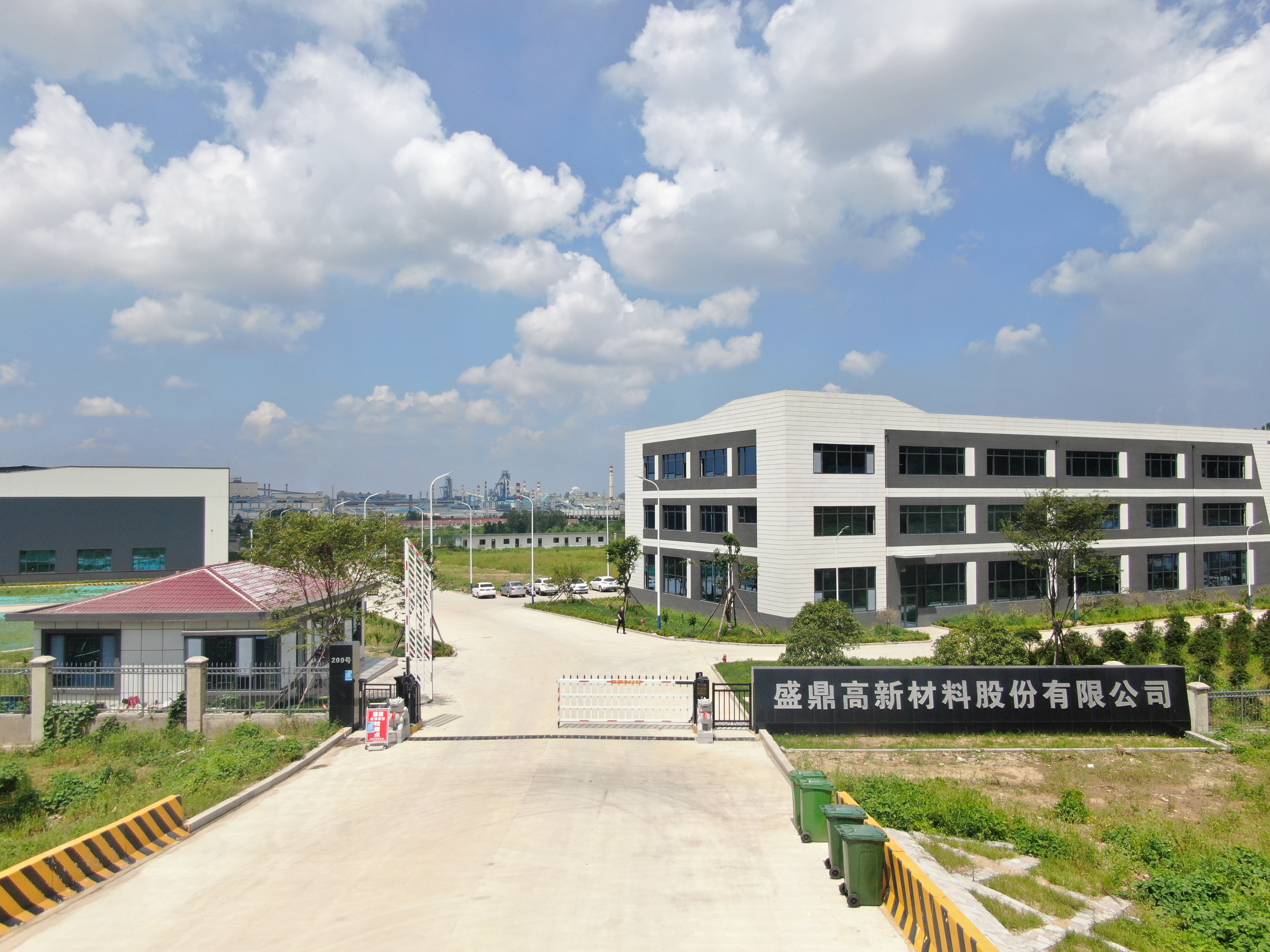
SHENGDING HIGHTECH MATERIALS CO., LTD is a Chinese manufacturer of optical-grade thermoplastic polyurethane elastomer film and EVA film, established in 2018 and located in the Lanshan Chemical Industry Park in Rizhao City, Shandong Province. The company operates a 50,000 m² facility with an annual output of 1,000 tons, employs 50 people, exports approximately 70% of output to markets including North Africa, the Middle East and Latin America, and produces more than 30 TPU product types across a hardness range from 60A to 70D. It holds ISO 9001, ISO 14001 and ISO 45001 certification, states that its products comply with European REACH and RoHS regulations and U.S. FDA quality requirements, and reports more than 50 proprietary intellectual property rights. The company also states that it is the only qualified domestic supplier of base materials for military-grade aviation glass in China, a position it describes as import substitution.

The Pakistan Deployment: What 100 Rolls and Two Years Actually Prove
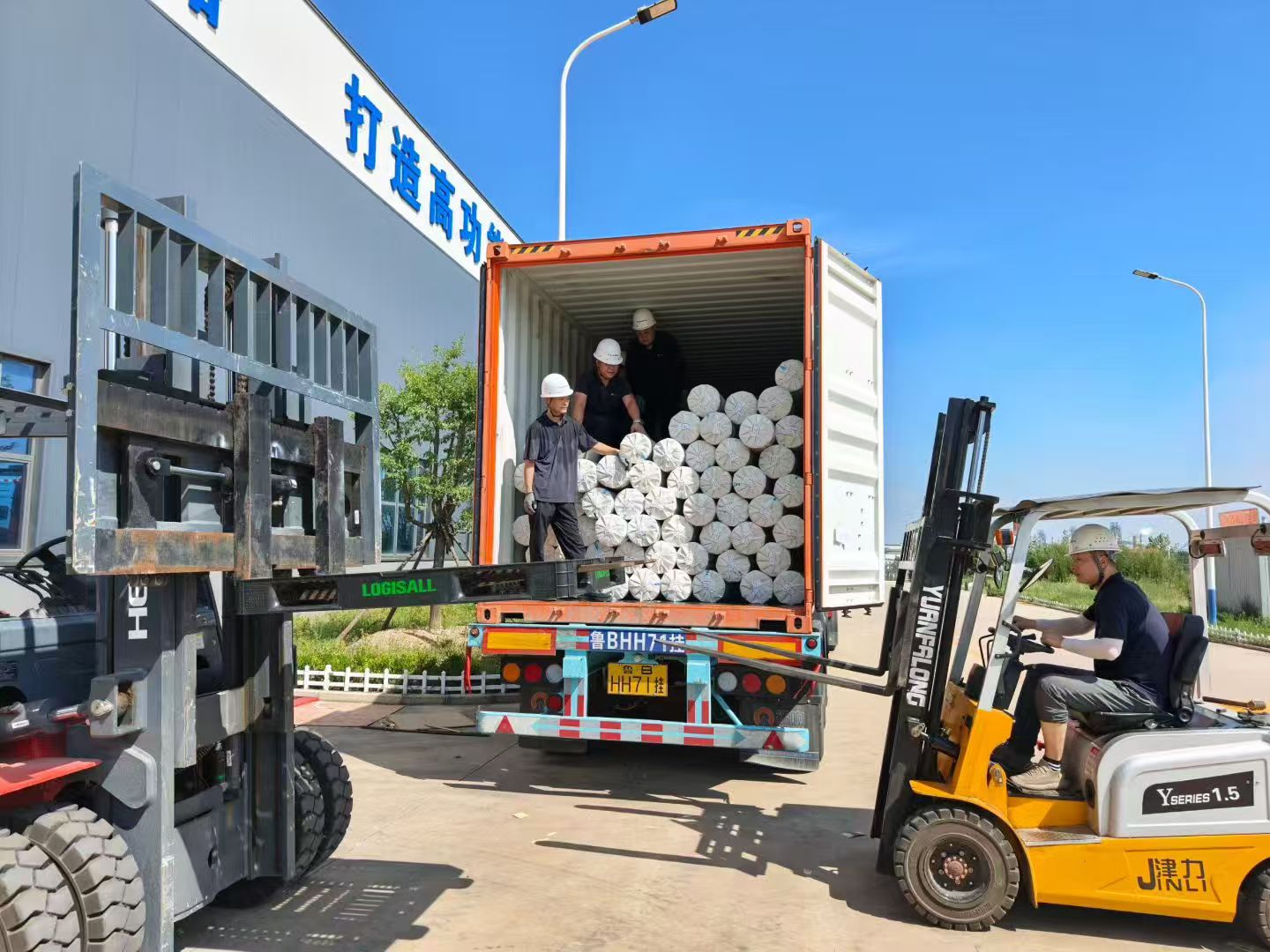
The deployment involved 100 rolls of SD560 TPU film processed into ballistic laminated glass for defense use in Pakistan, with the finished laminates in stable service over a two-year period. In engineering terms, stable service means the laminate continued to meet its optical and structural function: the interlayer did not drive a visible bond failure, did not produce a level of haze that compromised visibility, and did not embrittle at the edge to the point of cracking.
Why this record carries weight is a matter of evidence class. Most interlayer performance claims rest on short-run mechanical testing or accelerated ageing. A two-year field record from a hot-climate deployment tests a different set of variables: real seasonal temperature swings, real handling, real mounting stress, and real storage and transport conditions before lamination. Those are precisely the variables that determine whether a laminate survives years two through ten.
The limits of the record matter just as much. A two-year field record does not replace project-specific ballistic certification against a defined threat level, and it does not transfer automatically to a different glass build, a different ply count, or a different service temperature envelope. What it does is reduce execution risk: it shows the interlayer behaves predictably in a defense-grade lamination process over time, which shortens the qualification argument for a comparable project.
Detailed Solution: How SD560 Properties Close Each Failure Path
Each property below maps to one of the four failure mechanisms described earlier. The values are the manufacturer's specified figures for SD560, and they are the numbers a buyer should be able to find on a certificate of analysis rather than in a brochure.
SD560 TPU film: specified properties
- Light transmittance: 90%
- Haze: 0.3%
- Tensile strength: 42 MPa
- Elongation at break: 500%
- Tear strength: 45 kN/m
- Glass transition temperature (Tg): −72 °C
Optical clarity: 90% transmittance and 0.3% haze
In a ballistic laminate, optical performance is a functional requirement, not a cosmetic one. A 90% light transmittance value with 0.3% haze keeps the viewing path clean across multiple interlayer plies, which matters in armored vehicle windows and observation ports where the glass stack is thick. It also sets a measurable baseline: if haze rises in service, the change is detectable against a defined starting point rather than argued anecdotally.
Impact behaviour: 42 MPa tensile strength and 500% elongation at break
Tensile strength and elongation work as a pair. The 42 MPa tensile strength gives the interlayer the load-bearing capacity to hold glass plies together after a strike, while 500% elongation at break allows it to stretch and absorb deformation rather than fracture. For comparison, standard EVA interlayers are typically specified in the 15–25 MPa tensile range, which is the mechanical gap that separates a structural interlayer from a bonding film in ballistic builds.
Edge integrity: 45 kN/m tear strength
Tear strength governs how the film behaves at cut edges, at trimmed corners, and around mounting features. A 45 kN/m tear strength value reduces the chance that handling, trimming or thermal cycling converts an edge defect into a propagating crack, which is one of the most common origins of edge delamination in service.
Cold performance: −72 °C glass transition temperature
The glass transition temperature is the single most decisive number for long-term reliability in variable climates. SD560 is specified at −72 °C. The Huntsman 399 TPU referenced in the supplier's comparison is specified at −40 °C. That 32 °C difference is what separates a film that stays flexible through cold nights and cold-chain transport from one that approaches its brittle regime well inside the range a vehicle or a fixed installation can realistically see. It is also the property most often omitted from purchasing documents, which is why it belongs explicitly in the acceptance criteria.
Process behaviour: hot-melt lamination in an autoclave
As a TPU hot melt adhesive film, SD560 flows and bonds under heat and pressure and can be processed within a defined thermal window. For laminators running multi-ply ballistic stacks in an autoclave, that means the bonding phase can be tuned to the glass build rather than the glass build being tuned to the film. The practical benefit is repeatability: once a lamination cycle is validated, a thermoplastic interlayer with consistent batch properties reproduces that cycle instead of drifting.
Step-by-Step: From Specification to Second Order
The Pakistan program was not a single transaction. It was a sequence that started with a specification decision and ended with a repeatable supply relationship. The same sequence applies to any ballistic lamination project.
- Define the laminate and the service envelope. Fix the glass build (ply count, thickness, curvature), the threat level the laminate must meet, the mounting method, and the real service temperature range the finished part will see. The interlayer specification cannot be written before these are fixed.
- Lock interlayer properties into the purchase specification. Write light transmittance, haze, tensile strength, elongation at break, tear strength and glass transition temperature into the document, with the test method for each. A specification that names only thickness and colour leaves the decisive variables unmanaged.
- Validate with a sample before committing to volume. A 50 kg minimum order quantity allows a laminator to run trial stacks, confirm the autoclave cycle, and inspect the bonded result before a production order is placed. The typical lead time for that material is 10 days.
- Qualify the production batch, not just the sample. Confirm that the supplier tests 100% of product before shipment and that pre-shipment test results are the agreed acceptance criteria. Shipment terms for the program are FOB, which places the inspection obligation clearly at the loading point.
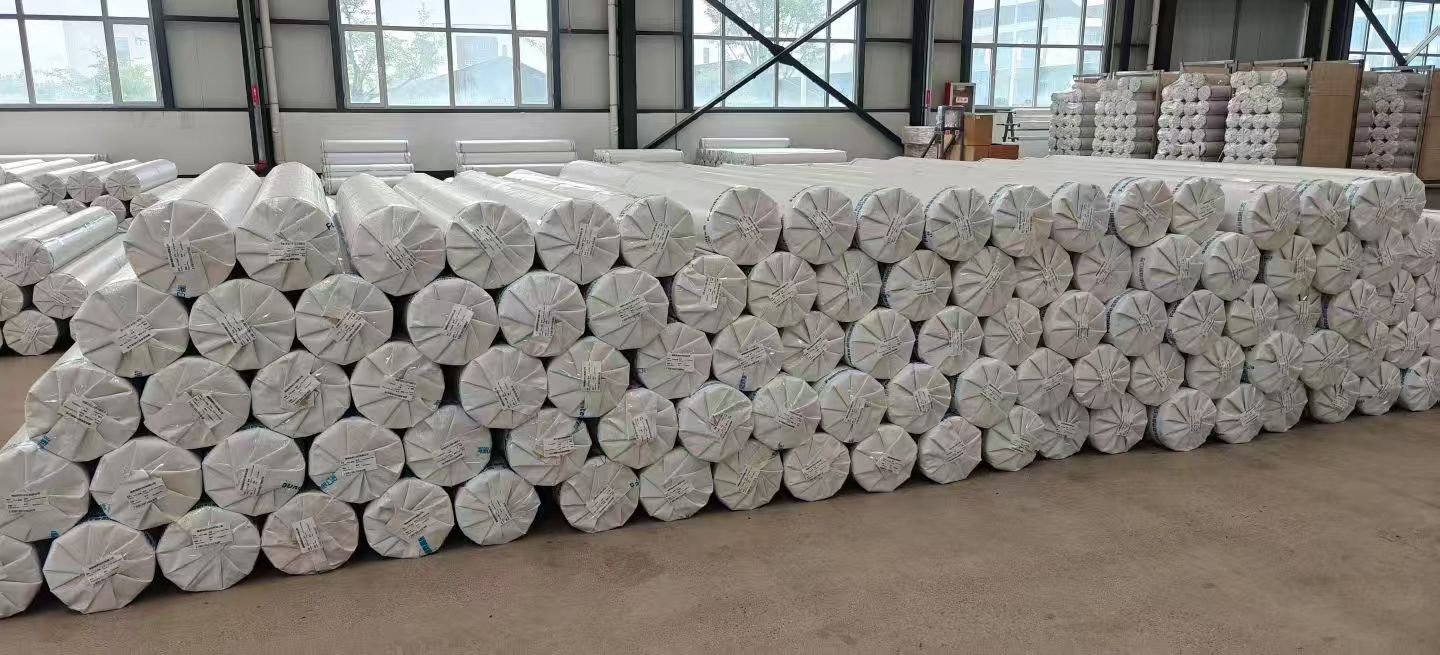
- Protect the film between factory and autoclave. Moisture damage happens in transit and in storage. SD560 ships in multi-layer packaging combined with vacuum packing specifically to control damp exposure, so the film that reaches the lamination table matches the film that left the line.
- Record the validated lamination cycle and hold it. Once a cycle produces a conforming laminate, document temperature, pressure, dwell and cooling profile, and treat any deviation as a change requiring re-validation. This is where a thermoplastic interlayer earns its advantage: a stable input makes a stable output.
- Convert the validated project into a repeatable supply plan. Agree batch size, re-order interval and documentation package up front. A validated laminate that cannot be re-supplied with the same interlayer is a single success, not a program.
Use Cases: Where a Two-Year Service Record Changes the Decision
The record is most relevant where the laminate cannot be easily inspected, replaced or re-certified after installation.
- Armored vehicle glazing. Side windows and observation windows see thermal cycling, vibration and handling stress. A low glass transition temperature and high tear strength protect the edge, which is where vehicle glazing usually degrades first.
- Fixed bullet-resistant partitions and counter glazing. Bank counters, checkpoints and protected rooms use thick laminates that stay installed for many years. Optical stability at 0.3% haze keeps the partition usable as a viewing surface over that period.
- Naval and aviation transparent components. Shengding's TPU materials are used in transparent glass components for aviation, naval vessels, armored vehicles and high-speed trains, as well as in bulletproof and blast-resistant glass and high-end architectural safety glass.
- Hot-climate and high-swing markets. Where daytime heat and night-time cooling differ sharply, the glass transition temperature margin determines whether the interlayer stays in its flexible regime across the full service cycle.
Comparison: SD560, Huntsman 399 and Standard EVA on Long-Term Criteria
The comparison below deliberately focuses on the criteria that decide long-term reliability and supply continuity, rather than on a single headline mechanical number. Blank cells mean no verified figure was available for this comparison; they are not negative findings.
| Criterion | SD560 TPU film | Huntsman 399 TPU | Standard EVA |
|---|---|---|---|
| Glass transition temperature (Tg) | −72 °C | −40 °C | Not stated in this comparison |
| Tensile strength | 42 MPa | Not stated in this comparison | Typically 15–25 MPa |
| Elongation at break | 500% | Not stated in this comparison | Not stated in this comparison |
| Tear strength | 45 kN/m | Not stated in this comparison | Not stated in this comparison |
| Customization | OEM/ODM; more than 30 TPU types from 60A to 70D | Not stated in this comparison | Not stated in this comparison |
| Relative interlayer cost | About 10% lower than Huntsman 399, per supplier comparison | Reference point | Not stated in this comparison |
| Maintenance and processing efficiency | Supplier reports less maintenance and higher efficiency | Not stated in this comparison | Not stated in this comparison |
| Documented multi-year field record | 100 rolls in a two-year ballistic glass deployment in Pakistan | Not part of this record | Not part of this record |
Figures for SD560 are manufacturer-specified values. The Tg and cost comparisons against Huntsman 399 reflect the supplier's own comparison and should be confirmed against current technical data sheets and quotations before a purchase decision.
Long-Term Supply: Turning a Validated Project into a Stable Interlayer Program
For a defense lamination program, the interlayer decision repeats every time a batch is consumed. Three supply parameters therefore carry as much weight as the technical specification.
Capacity and lead time. Shengding runs a monthly production capacity of 100 tons with a typical lead time of 10 days. At 1,000 tons of annual output across TPU and EVA film, a defense program can plan re-orders against a defined capacity base rather than an ad hoc allocation.
Order size and validation economics. A minimum order quantity of 50 kg lets a buyer run a genuine lamination trial without carrying production-scale inventory, and it lets an existing customer place a bridging order during a specification change. This is the mechanism that keeps a validated program supplied while a new build is being qualified.
Customization and continuity. OEM and ODM customization is available, supported by a technical team of 10 engineers at the factory and 5 professors at the Beijing R&D Center, and by a product range spanning more than 30 TPU types from 60A to 70D. For a distributor or a long-term industrial buyer, that range is what allows a single supplier relationship to cover several glass programs instead of one.
Read together, these are the terms that convert a field-proven case into a supply relationship: a defined specification, a validated cycle, a documented batch, a re-order path, and a customization route when the next project differs from the last.
FAQ
What certifications and regulatory compliance does SD560 TPU film carry?
SHENGDING HIGHTECH MATERIALS CO., LTD holds ISO 9001, ISO 14001 and ISO 45001 certification. The company states that its product performance complies with European REACH and RoHS regulations as well as U.S. FDA quality requirements, and that it has drafted the only national aviation standard in China currently led by a private enterprise. Buyers should request the current certificate package and confirm the scope of each certificate against their own market requirements before approving a supplier.
Can the interlayer be customized for colder service conditions or a different glass build?
Yes. SD560 is specified at a glass transition temperature of −72 °C, and the manufacturer offers OEM and ODM customization across more than 30 TPU product types with hardness from 60A to 70D. Customization is supported by 10 engineers at the factory and 5 professors at the Beijing R&D Center, so a project with a different ply count, thickness or temperature envelope can be matched to a specific grade rather than forced onto a single standard film.
How does SD560 compare with Huntsman 399 on interlayer cost?
In the supplier's own comparison, SD560 is positioned at approximately 10% lower cost than Huntsman 399, with reported lower maintenance and higher processing efficiency. Cost should be evaluated per finished laminate rather than per kilogram: yield, rework rate and lamination cycle time usually outweigh the raw film price difference. Request a quotation against your actual roll width and thickness so the comparison is like for like.
What order quantity is needed to validate a batch before production?
The minimum order quantity is 50 kg, which is sized for trial lamination rather than full production. Pre-shipment testing is the standard acceptance criterion, and the supplier tests 100% of product before shipment. Shipment terms for the referenced program are FOB. A buyer can therefore laminate trial stacks, inspect the bonded result against the specified transmittance, haze, tensile, elongation, tear and Tg values, and only then release a production order.
What lead time and monthly capacity should a project plan for?
Typical production lead time is 10 days, and monthly production capacity is 100 tons. For a defense program, plan the re-order point around the lamination cycle rather than around the calendar: hold enough qualified film to cover one lead time plus one lamination batch, and confirm the batch documentation package at the same time as the price. A full specification and capability summary is available in the Shengding product brochure, and sample or quotation requests can be sent directly to the contact below.
Conclusion
Ballistic glass reliability is decided by a small number of interlayer properties, applied to a small number of failure mechanisms, and then proven or disproven over years of service. The Pakistan deployment — 100 rolls of SD560 TPU film, two years of stable operation — is useful because it tests that chain end to end: a −72 °C glass transition temperature that keeps the film flexible, 42 MPa tensile strength with 500% elongation that holds the laminate together under impact, 45 kN/m tear strength that protects the edge, and 90% transmittance with 0.3% haze that keeps the viewing path usable.
The execution lesson is less technical. A field-proven interlayer only becomes a reliable program when the specification is written with real numbers, the batch is validated before volume, the film is protected from moisture in transit, and the supply terms allow the same material to be re-ordered 10 days after the next call.
Next Step: Validate SD560 Against Your Laminate
SHENGDING HIGHTECH MATERIALS CO., LTD supplies SD560 TPU film for ballistic and safety laminated glass from its 50,000 m² facility in Rizhao City, Shandong Province, China, with a 50 kg minimum order quantity, a typical 10-day lead time and 100 tons of monthly capacity.
Website:www.shengdingchina.com
Email: docs@foundite.com
Tel / WhatsApp: +8613562376375
Address: North of Ayeshan Road 209, Rizhao City, Shandong Province, China
Request a sample roll, a specification-matched quotation, or the full product catalogue: Download the Shengding product brochure (PDF).
Have Questions or Need More Details?
Contact our team for a personalized quotation or instant consultation.
Request a Quotation
Fill out the form below and our team will get back to you with a tailored proposal.
WhatsApp Direct Chat
Prefer to chat in real-time? Message us on WhatsApp for instant assistance & quick answers.
- Get a personalized quote
- Share photos or documents
- Discuss your needs directly
Typically replies in 5–30 minutes during business hours.