
TPU Film vs EVA for Laminated Glass: A Comparative Guide for Safety and Ballistic Applications
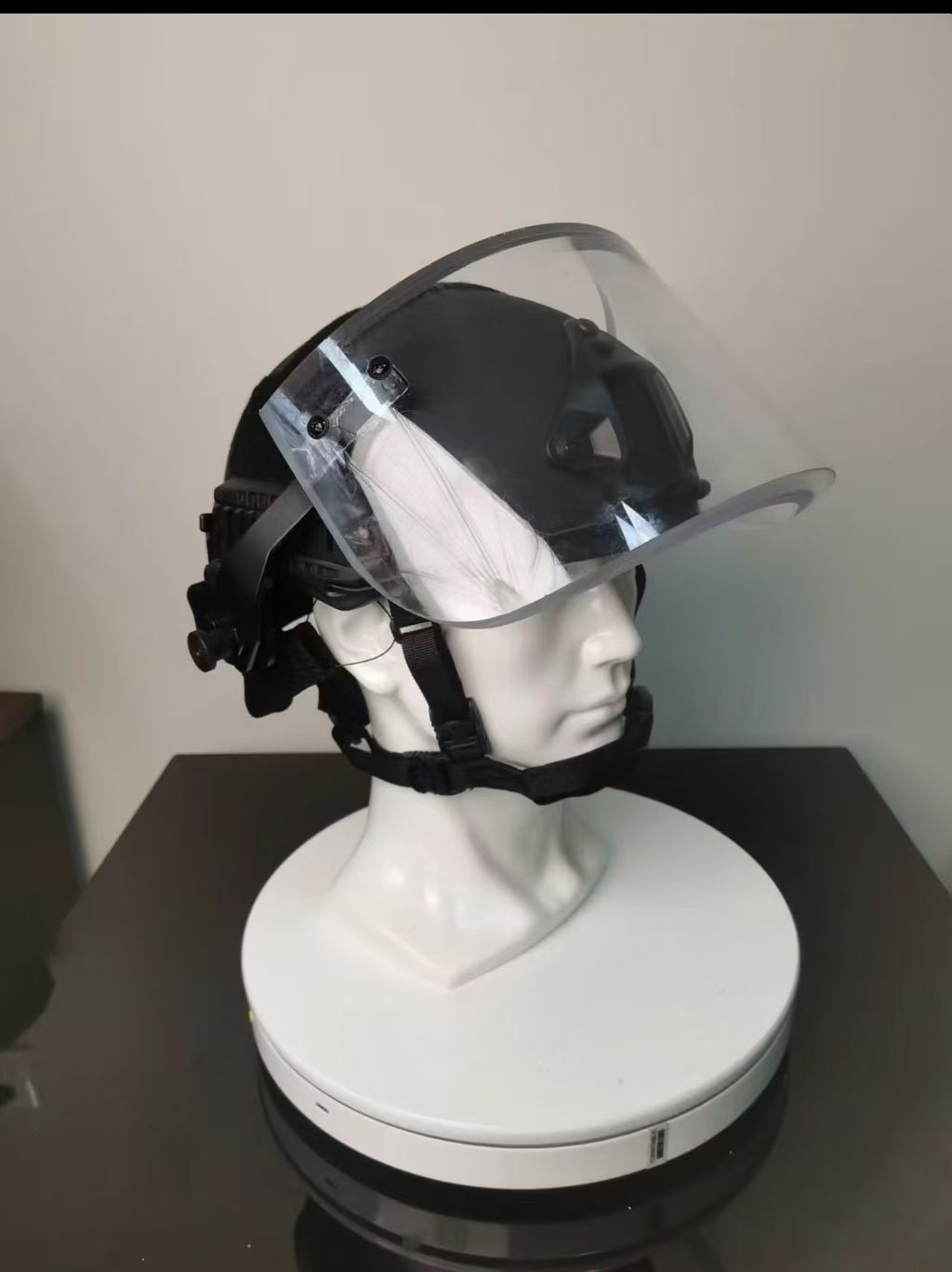
For procurement professionals evaluating interlayer materials for laminated safety glass, the choice between TPU (thermoplastic polyurethane) film and EVA (ethylene-vinyl acetate) film directly impacts product performance, certification compliance, and long-term durability. SHENGDING HIGHTECH MATERIALS CO., LTD, established in 2018 and located in the Lanshan Chemical Industry Park in Rizhao City, Shandong Province, China, is a high-tech enterprise specializing in polymer materials, including TPU and EVA films. This guide provides a fact-based comparison to support informed sourcing decisions for safety and ballistic glass applications.
Defining the Procurement Challenge
Industrial buyers tasked with selecting interlayer films for laminated glass face multiple unknowns: Which material delivers the necessary mechanical strength for bullet-resistant glazing? Can a single supplier meet both architectural and defense-grade requirements? How do technical parameters like tensile strength, light transmittance, and temperature tolerance translate into real-world safety performance? Without a structured comparison, procurement teams risk selecting a material that underperforms in critical safety scenarios or exceeds budget without added value.
The global market for TPU interlayer films specifically for laminated glass is projected to exceed USD 1.2 billion in 2026 (EIN Presswire, 2026), indicating rapid adoption driven by demand for higher safety standards. China alone accounts for over 30% of the global production capacity for TPU film as of 2026 (Industry Report, 2026). Understanding the differences between TPU and EVA film is therefore essential for any procurement strategy targeting safety, ballistic, or architectural glass.
Industry Background: TPU Film in Laminated Glass
TPU film is a thermoplastic polyurethane elastomer interlayer used in laminated glass to bond glass panels while providing impact resistance, adhesion strength, and optical clarity. High-performance TPU films for bulletproof glass typically exhibit a tensile strength exceeding 40 MPa and elongation at break above 500% (SD560 Specification). TPU interlayer film maintains operational performance across a wide temperature range from -70°C to +80°C, making it superior to EVA for extreme environments (INNOLAMIN, 2025).
In contrast, EVA film is widely used in general construction and interior design applications. For example, SHENGDING’s EVA film (model SD38) offers a light transmittance of 90% and haze of 0.5%, suitable for architectural and decorative glass. However, EVA lacks the mechanical strength and thermal stability required for ballistic or blast-resistant glazing.
Detailed Solution: High-Performance TPU Film from SHENGDING HIGHTECH MATERIALS CO., LTD
SHENGDING HIGHTECH MATERIALS CO., LTD has mastered the synthesis and stable pelletization technology for optical-grade TPU film raw materials, as well as stable extrusion molding for wide-width TPU interlayers. The company’s flagship product, TPU FILM model SD560, delivers the following verified parameters:
- Tensile strength: 42 MPa
- Elongation at break: 500%
- Tear strength: 45 kN/m
- Light transmittance: 90%
- Haze: 0.3%
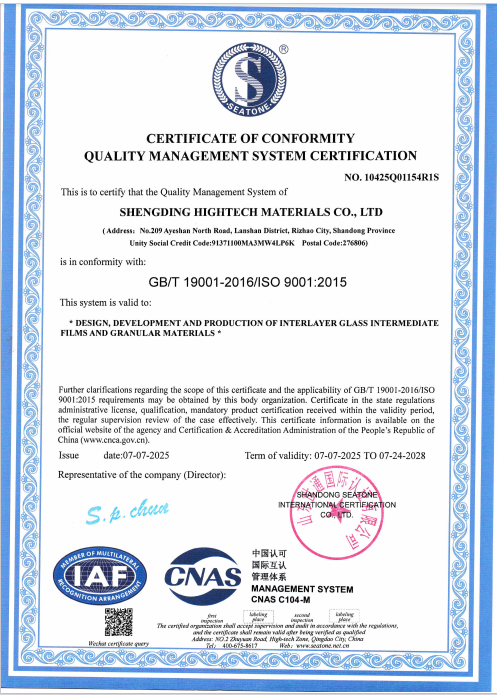
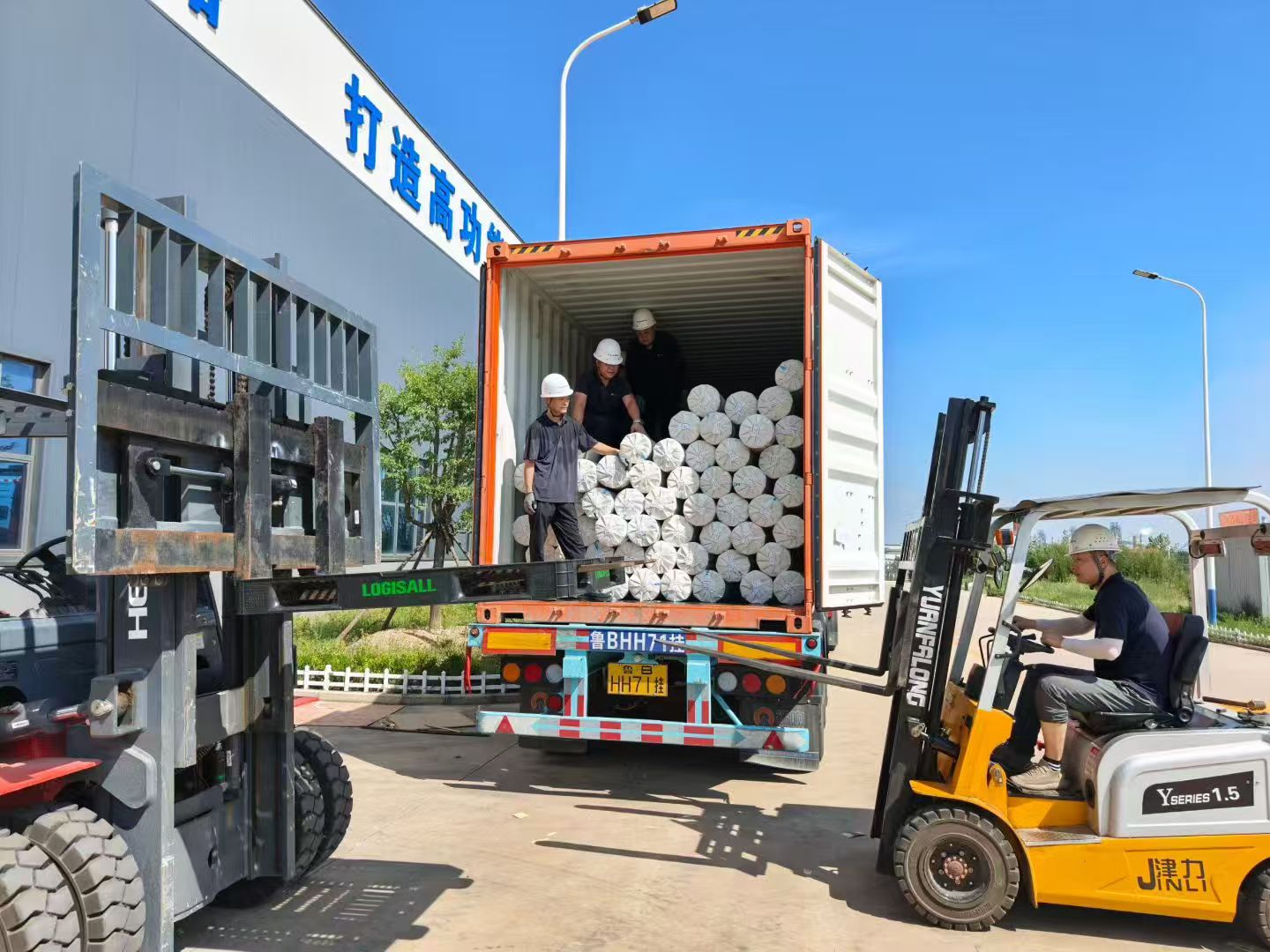
These figures meet or exceed the high-performance threshold for bulletproof glass (tensile >40 MPa, elongation >500%). The company operates a 50,000 m² facility with an annual output of 1,000 tons and a monthly capacity of 100 tons. A dedicated R&D team of 10 in-factory engineers plus 5 professors at the Beijing R&D Center supports continuous innovation. SD560 is manufactured under ISO 9001:2015 (Certificate No. 10425Q01154R1S, issued 2025-07-07, expires 2028-07-24) and complies with European REACH, RoHS, and U.S. FDA quality requirements.
Step-by-Step Supplier Evaluation for TPU Film Procurement
- Verify certifications. Confirm ISO 9001, ISO 14001, and relevant product standards (e.g., EN 12600 for impact resistance, ASTM C1172-19 for laminated architectural flat glass).
- Request technical datasheets. Compare tensile strength, elongation, tear strength, light transmittance, and haze against project requirements.
- Evaluate production capability. Assess monthly capacity, lead time, and MOQ. SHENGDING offers a lead time of 10 days and an MOQ of 50 kg.
- Request samples for in-house testing. 100% quality testing is performed at the factory. Conduct your own adhesion and impact tests.
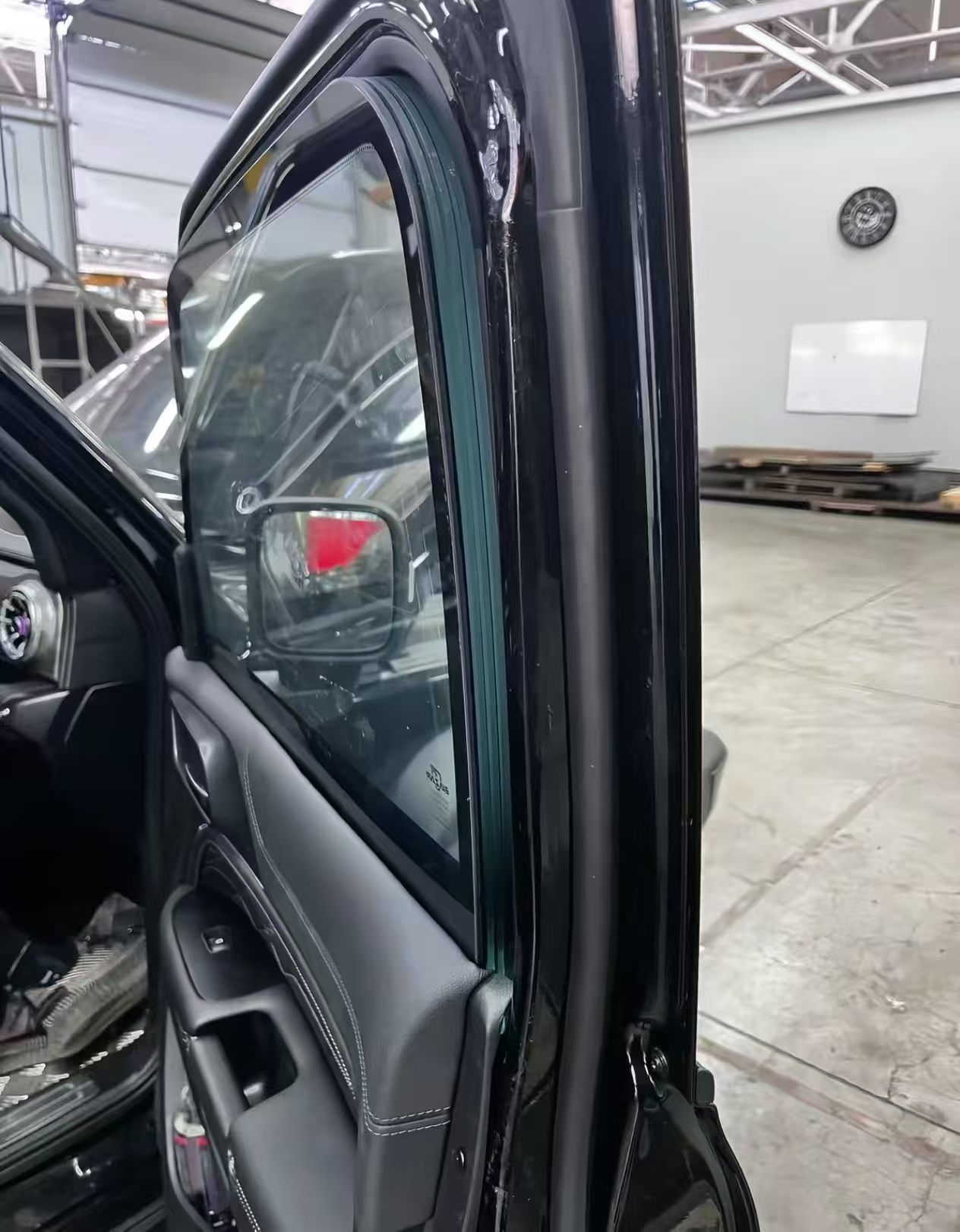
- Review case studies. For instance, a TPU film bulletproof glass project in Pakistan used 100 rolls for defense industry customers, achieving stable operation for over 2 years and noted as the only one in the country for this application.
- Compare total cost of ownership (TCO). TPU films may have a higher upfront cost per kg than EVA, but the extended lifecycle and safety performance often justify the investment.
Use Cases: Where TPU Film Excels
- Bulletproof and armored glass: TPU’s high tensile strength and elongation provide superior energy absorption. The Pakistan defense project is a proven example.
- Aviation, naval, and high-speed train glazing: Optically clear TPU with wide temperature tolerance (-70°C to +80°C) meets demanding environmental conditions.
- High-end architectural safety glass: TPU interlayers prevent spalling and maintain structural integrity under impact. EVA remains suitable for general construction and interior design where ballistic protection is not required.
TPU vs EVA: Key Performance Comparison
| Parameter | TPU Film (SD560) | EVA Film (SD38, Typical) |
|---|---|---|
| Tensile Strength | 42 MPa | ≈12-18 MPa (industry typical) |
| Elongation at Break | 500% | 400-600% (but lower tear resistance) |
| Light Transmittance | 90% | 90% |
| Haze | 0.3% | 0.5% |
| Operating Temperature Range | -70°C to +80°C | -30°C to +70°C (typical) |
| Typical Applications | Bulletproof glass, aviation, armored vehicles | Architectural glass, interior design |
Note: EVA typical values are from industry knowledge; specific product data may vary by manufacturer. SD560 and SD38 data from SHENGDING HIGHTECH MATERIALS CO., LTD.
Frequently Asked Questions
Q: What certifications should a TPU film supplier hold for laminated glass?
For safety and ballistic glass applications, look for ISO 9001 quality management certification covering the design, development, and production of interlayer glass intermediate films. For example, SHENGDING HIGHTECH MATERIALS CO., LTD holds certificate 10425Q01154R1S under GB/T 19001-2016/ISO 9001:2015. Additionally, product compliance with European REACH, RoHS, and U.S. FDA standards is recommended. For impact classification, EN 12600 (Class 1B1 or 2B2) and ASTM C1172-19 for architectural flat glass may apply.
Q: What is the difference in performance between TPU and EVA for laminated safety glass?
TPU film (e.g., SD560) offers significantly higher tensile strength (42 MPa vs. typical 12-18 MPa for EVA) and maintains performance from -70°C to +80°C. EVA film is generally limited to -30°C to +70°C and has lower tear resistance. TPU is preferred for ballistic, blast-resistant, and extreme-environment applications, while EVA remains cost-effective for standard architectural glass and interior design where high mechanical strength is not required.
Q: How does the cost of TPU film compare to EVA film for laminated glass?
TPU film typically has a higher per-kilogram price than EVA due to its advanced mechanical properties and raw material cost. However, for safety-critical projects, the total cost of ownership may favor TPU because it provides longer service life, fewer failures, and compliance with stringent standards. Procurement teams should evaluate cost against performance requirements and certification needs. Contact SHENGDING for a customized budget analysis based on your project specifications.
Q: Can the TPU film be customized in terms of dimensions?
Yes, SHENGDING HIGHTECH MATERIALS CO., LTD offers OEM/ODM services for length and width customization. The company can produce over 30 types of TPU products with hardness ranging from 60A to 70D. Monthly capacity is 100 tons, with a standard lead time of 10 days and an MOQ of 50 kg.
Q: How can I obtain a sample of SD560 TPU film for evaluation?
To request a sample, please contact SHENGDING HIGHTECH MATERIALS CO., LTD via email at docs@foundite.com or WhatsApp at +8613562376375. Provide your intended application, required dimensions, and quantity. The company will provide a sample for in-house testing, backed by 100% factory quality testing before shipment.
Conclusion
Choosing the right interlayer film is a critical decision for laminated glass manufacturers and procurement professionals. TPU film, with its superior tensile strength, elongation, and temperature range, is the preferred material for safety, ballistic, and extreme-environment applications. SHENGDING HIGHTECH MATERIALS CO., LTD provides a reliable, ISO 9001-certified supply of high-performance TPU film, supported by a proven case in Pakistan’s defense sector, a 1,000-ton annual capacity, and an experienced R&D team. For projects where architectural or interior design is the primary concern, EVA film remains a viable alternative. For any procurement inquiry, download the company brochure or reach out directly to discuss your requirements.
Have Questions or Need More Details?
Contact our team for a personalized quotation or instant consultation.
Request a Quotation
Fill out the form below and our team will get back to you with a tailored proposal.
WhatsApp Direct Chat
Prefer to chat in real-time? Message us on WhatsApp for instant assistance & quick answers.
- Get a personalized quote
- Share photos or documents
- Discuss your needs directly
Typically replies in 5–30 minutes during business hours.