
TPU Film Supply Partnership: FAQ on MOQ, Lead Time, OEM/ODM and After-Sales
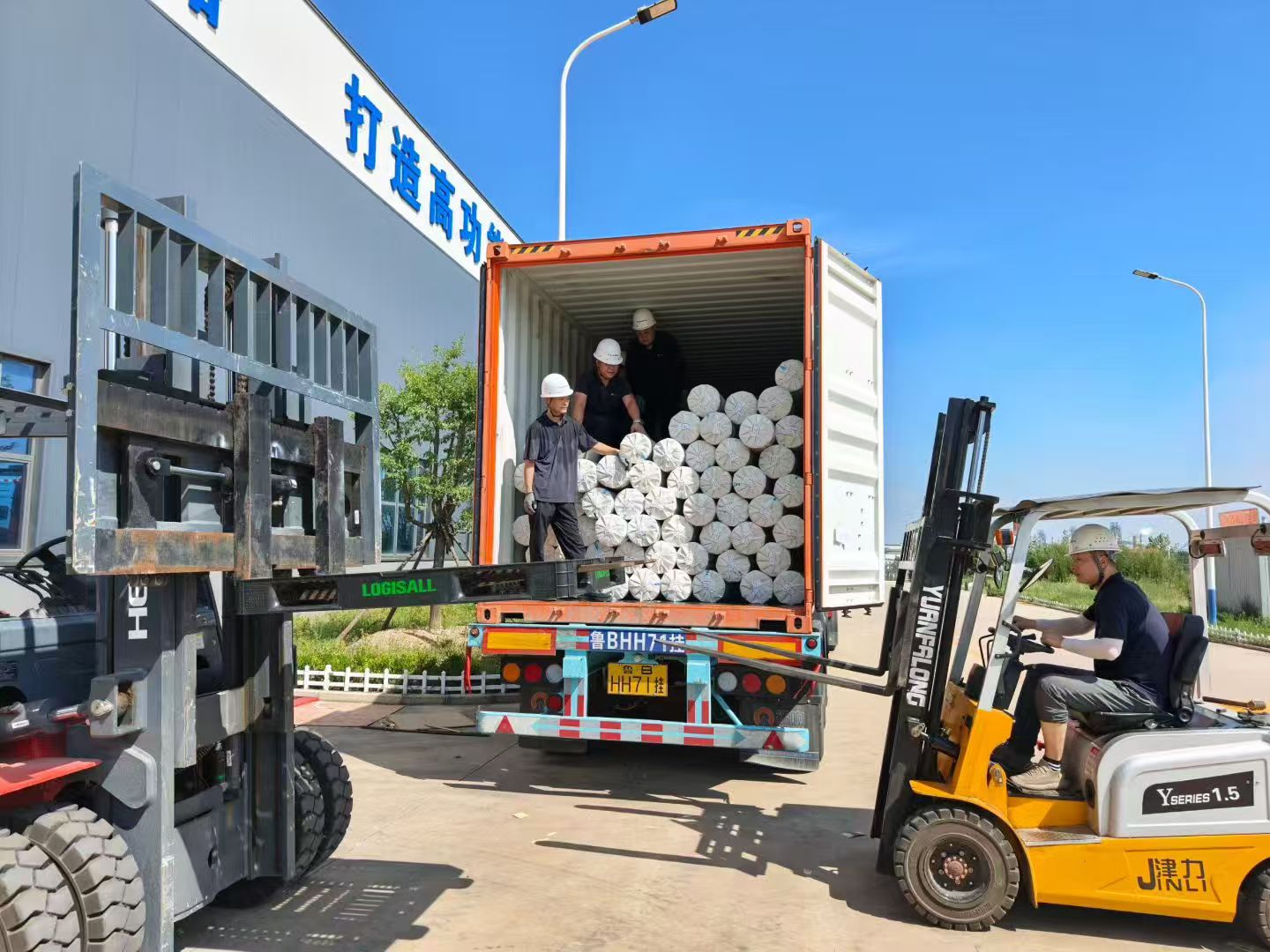
Container loading at Shengding Hightech Materials in Rizhao, Shandong. Every long-term TPU interlayer agreement starts with a first shipment that has to arrive on schedule.
Shengding Hightech Materials Co., Ltd. is a Chinese manufacturer of optical-grade TPU and EVA films, established in 2018 and based in the Lanshan Chemical Industry Park in Rizhao City, Shandong Province. This FAQ was written for one kind of reader: the procurement, engineering or quality manager at a safety glass or bulletproof glass manufacturer who has already compared interlayer materials and now has to decide whether a TPU film supplier can be relied on for the next two to five years, not just for the next container.
Twenty minutes of technical discussion usually settles whether a TPU film laminates well. The questions that remain are commercial and operational, and they are the ones this page answers in five parts: minimum order quantity (MOQ), lead time and monthly capacity, OEM/ODM customization, quality and compliance evidence, and after-sales technical support. Every figure below comes from Shengding's own production and quality records or from published third-party industry sources, and each is attributed where it appears.
Problem Definition: Technical Approval Is Only Half of a Supply Decision
Most laminated glass manufacturers qualify a TPU interlayer in the lamination lab, not in the purchasing office. Tensile strength, elongation at break, haze and adhesion are tested through the autoclave cycle, impact performance is checked against the applicable glazing standard, and the film is treated as approved. That is also where the real risk usually starts, because a film that performs perfectly in a trial run can still turn out to be the wrong long-term partner.
For safety glass and ballistic-resistant glass, supply failure modes are predictable. An MOQ that is too high makes a new glass build-up uneconomical to trial. A lead time that moves with the supplier's order book disrupts a lamination schedule. A length or width that must be trimmed down from a standard roll adds waste and cost. A compliance file that cannot be refreshed blocks an export market. After-sales support that ends at the invoice leaves the laminator alone with a process question. None of these are technical failures, which is precisely why they are asked last and answered least often.
On bulletproof glass programs the cost of those failures compounds. Armored vehicle glazing, counter and window glazing for high-security buildings, and transparent components for aviation, naval and rail applications are multi-year programs. The interlayer specified when the program was designed must still be available, and must still behave identically, when replacement panes are ordered two or three years later. MOQ, lead time, monthly capacity and customization flexibility therefore become long-term project variables rather than one-off purchasing details.
Industry Background: TPU Interlayer Demand Is Growing Faster Than Supplier Qualification
The category is expanding. Grand View Research valued the global thermoplastic polyurethane (TPU) films market at approximately USD 443.7 million in 2025 and projects it to reach USD 716.8 million by 2033. Inside that figure, the segment that matters most to laminators, TPU interlayer film used in laminated glass, is projected to exceed USD 1.2 billion in 2026 according to industry analysis published by EIN Presswire. Growth of that order puts pressure on supply relationships that were designed around much smaller volumes.
Production is also concentrated. China accounts for more than 30% of global TPU film production capacity as of 2026, which is one reason laminated glass manufacturers in Europe, the Middle East, North Africa and Latin America evaluate Chinese film producers alongside established Western brands such as Huntsman (KRYSTALFLEX), Covestro (Dureflex) and Argotec (HP-8000). Each of those names is a legitimate benchmark in a shortlist; the practical difference between them and a smaller specialist usually appears in MOQ, lead time and customization flexibility rather than in headline chemistry.
What buyers test has become more standardized as well. EN 12600 is the primary European standard for classifying impact resistance in safety glass, with TPU film commonly achieving Class 1B1 or 2B2. ASTM C1172-19 specifies quality requirements for laminated architectural flat glass, including glass bonded with TPU interlayers. On performance, third-party comparison guides report that TPU interlayer film maintains operational performance across a temperature range of -70 C to +80 C, which is one reason it is specified for extreme environments.
None of that tells a buyer what will happen when 20 tons are needed in a single quarter, or when a 1,800 mm wide roll is required instead of a standard width. Those questions are answered by the supplier's own operating model.
The Shengding Supply Model in Detail
Shengding Hightech Materials operates a 50,000 m2 facility in the Lanshan Chemical Industry Park, Rizhao City, Shandong Province. The company was established in 2018, employs 50 people, and runs TPU and EVA film lines with an annual output of 1,000 tons. Roughly 70% of production is exported, with North Africa, the Middle East and Latin America as the main markets and worldwide shipping capability.
Capacity and continuity
Monthly TPU film capacity is 100 tons, backed by an annual output of 1,000 tons across the TPU and EVA lines. Capacity of that size is only useful if the process behind it is stable, and this is where the company's technical position matters. Shengding has mastered the synthesis and stable pelletization technology for optical-grade thermoplastic polyurethane elastomer (TPU) film raw materials, together with the stable extrusion molding technology for wide-width TPU intermediate films. In China the company is the sole qualified supplier of the basic material for military-grade aviation glass, a position built through import substitution of a supply category that was previously dependent on external sources.
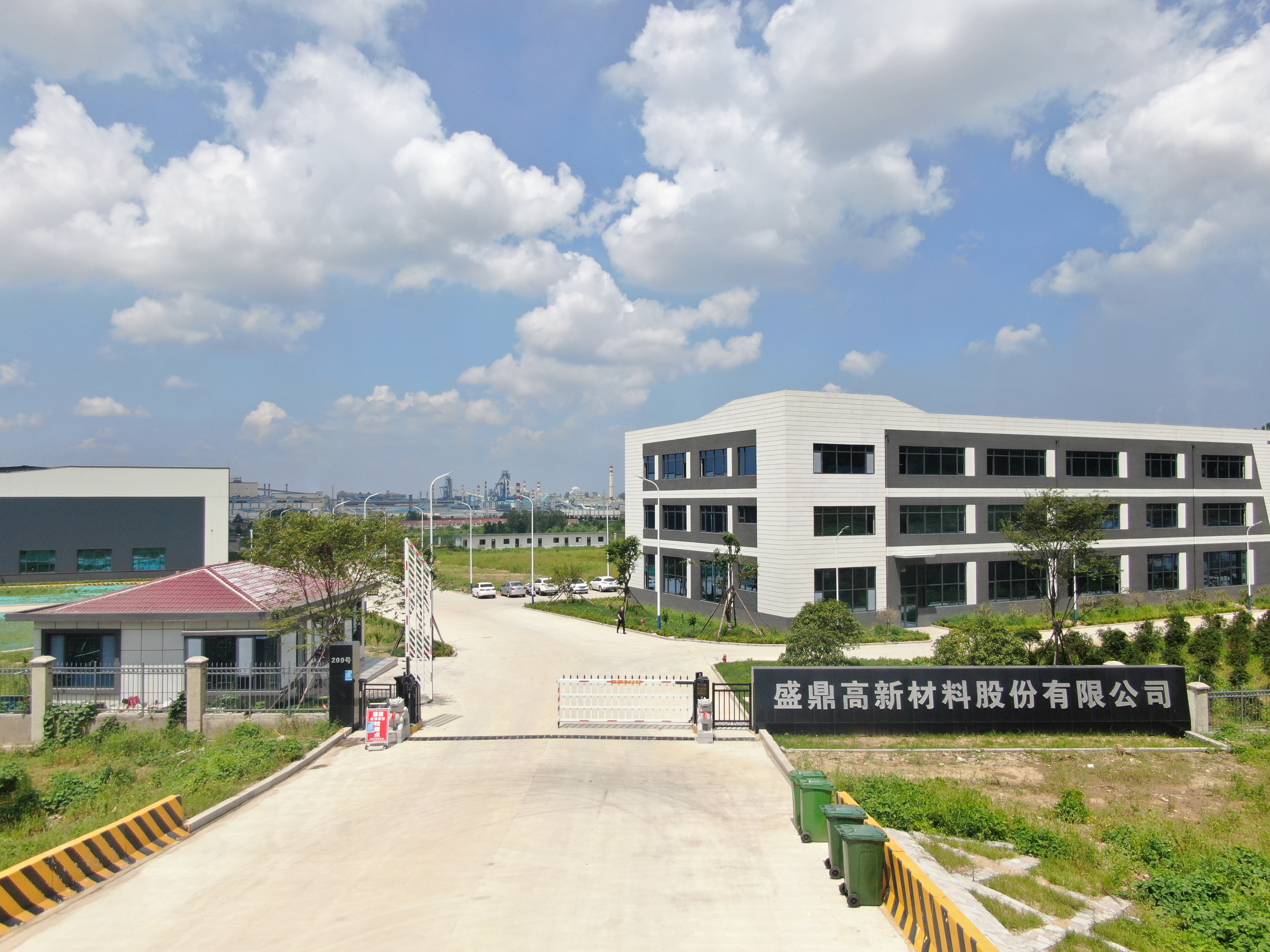
The 50,000 m2 production site in Rizhao, Shandong, where TPU interlayer film is extruded to a 100 ton monthly capacity.
MOQ and trial orders
The minimum order quantity is 50 kg. That number is deliberately small for a laminator. It is enough to run a complete autoclave qualification cycle on a new glass build-up, checking roll handling, width tolerance, lamination consistency and haze, before committing to volume. It is also small enough that a new specification can be tested without writing off a container of film, which matters when a manufacturer is qualifying a second interlayer source for supply security.
OEM and ODM customization
Customization runs in two modes. Under OEM, Shengding produces TPU film to the buyer's specified length and width. Under ODM, the company's engineering team contributes to the film design itself, working from the customer's process and performance targets. This flexibility sits on top of a portfolio of more than 30 TPU product types with hardness ranging from 60A to 70D, developed by 10 engineers at the factory together with 5 professors at the Beijing R&D Center.
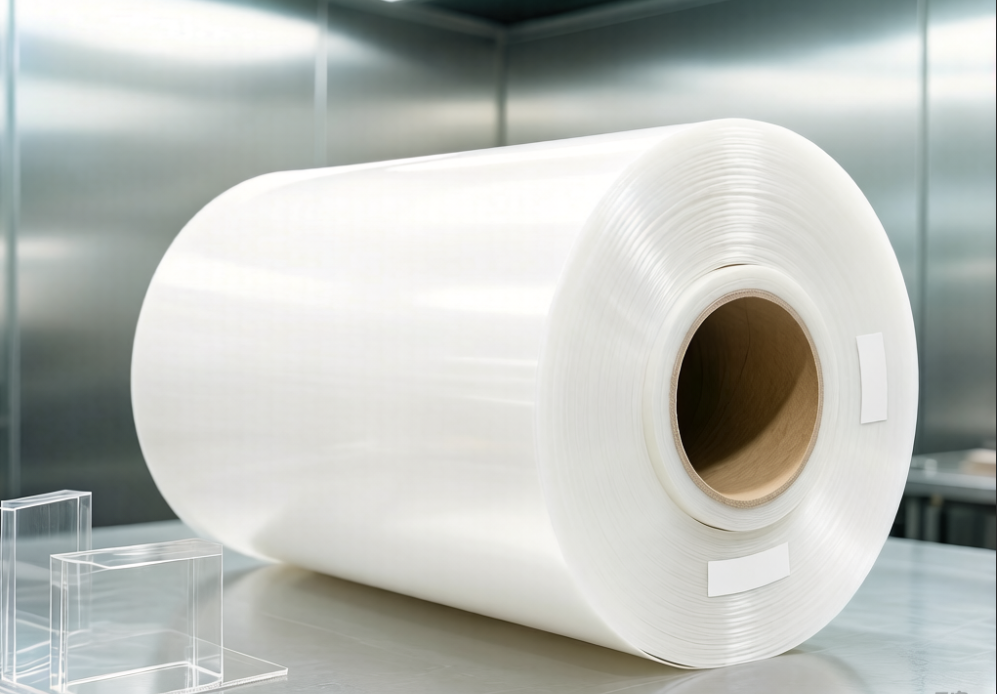
SD560 TPU film, one of more than 30 TPU grades in the range, specified for bulletproof and shatter-resistant glass.
Quality control and compliance
Quality control is applied as 100% test coverage rather than batch sampling. The company holds ISO 9001, ISO 14001 and ISO 45001 certification, and product performance complies with European REACH and RoHS regulations as well as U.S. FDA quality requirements. Shengding has accumulated more than 50 proprietary intellectual property rights and has drafted the only national aviation standard in China currently led by a private enterprise, which indicates how closely the film chemistry is tied to documented, reproducible specifications rather than to informal process knowledge.
The reference grade used throughout this article, SD560, is a thermoplastic polyurethane elastomer film with published values of 42 MPa tensile strength, 500% elongation at break, 45 kN/m tear strength, 90% light transmittance and 0.3% haze. Industry benchmarks for high-performance TPU films used in bulletproof glass typically cite tensile strength above 40 MPa and elongation at break above 500%, so this specification sits inside the range that ballistic laminators work with, and buyers can compare it directly against their existing interlayer data sheet.
Application conditions are equally well defined. The film is designed for high pressure and high temperature environments and must be processed with an autoclave as supporting equipment, and it must be kept dry. It bonds to acrylic, polycarbonate and inorganic glass, giving laminators a bond line that carries the transparency and environmental resistance expected of a TPU interlayer.
Step-by-Step: From First Inquiry to a Working Supply Partnership
- Define the glazing specification and the film's role in it. Confirm the glass build-up, the required impact classification, the autoclave cycle, and whether the film is being specified for a safety glazing line or a ballistic program. This determines thickness, width and the hardness grade that will be trialled.
- Place a 50 kg trial order. A 50 kg MOQ allows a full qualification run without a volume commitment, and it is the fastest way to see how the film behaves on your own cutting, lay-up and autoclave equipment rather than on a supplier's data sheet.
- Validate in the autoclave. The film is processed by hot-pressing in an autoclave under high pressure and high temperature, and it must be kept dry before lamination. Verify haze, adhesion and impact performance against the target standard, such as EN 12600 or ASTM C1172-19 depending on the market.
- Fix OEM length and width, or open an ODM discussion. If the film itself is acceptable but the roll format is not, OEM production to your length and width removes trimming waste. If the chemistry needs adjustment for a temperature profile or a specific glass stack, ODM engineering support is the route.
- Scale into monthly capacity. With 100 tons per month available and a typical lead time of 10 days, the transition from trial to scheduled volume can be planned against a production calendar rather than left to availability.
- Lock the long-term support and compliance loop. Confirm the certificate pack, the re-testing schedule and the after-sales technical contact. Ongoing technical support, not a one-off approval, is what keeps a multi-year glazing program reproducible.
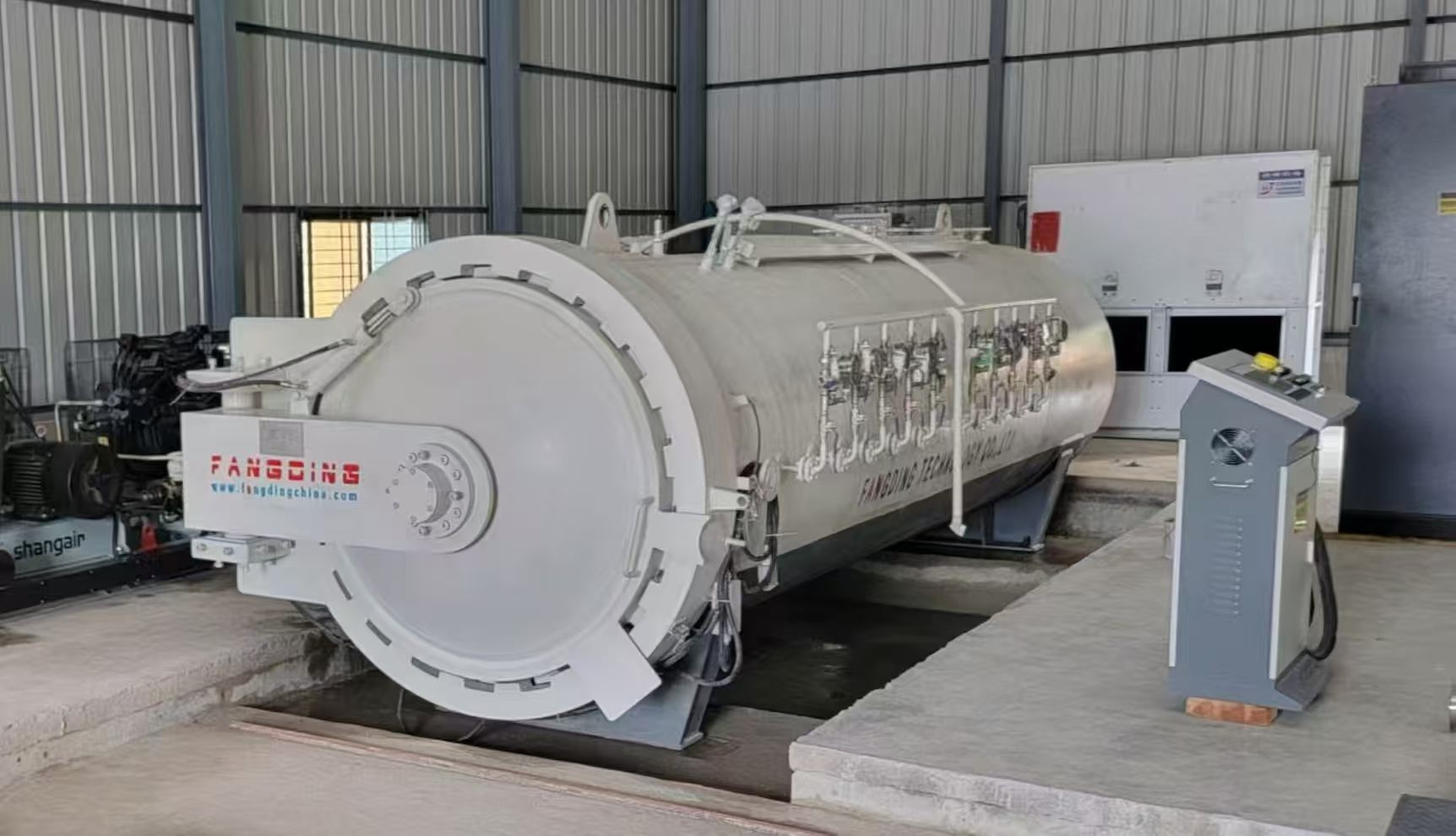
Autoclave lamination: TPU interlayer film must be processed under high pressure and high temperature, and kept dry before the cycle.
Use Cases: Where This Supply Model Fits
The clearest evidence of supply reliability comes from a program that has already run for years. A defense industry customer in Pakistan has laminated bulletproof glass with Shengding TPU film for 2 years, consuming 100 rolls of film, with stable operation reported across the duration of the project. The pattern is instructive: a modest first order, a film that behaved consistently, and repeat ordering over a multi-year horizon. That is the practical definition of a supply partnership, and it is the same pattern a laminator should expect to see before signing an annual agreement.
The same supply model fits adjacent applications with similar continuity requirements. Safety glass lamination projects benefit from the 50 kg trial option when a new architectural build-up is being qualified. Ballistic-resistant glass manufacturing programs benefit from the wide-width extrusion capability and from a film that is documented to 42 MPa tensile strength and 500% elongation. Armored vehicle glazing, including bulletproof vehicle glass modification, depends on the interlayer remaining available across a vehicle program's service life. Broader transparent glass components for aviation, naval vessels and high-speed trains, along with aircraft coating protection and invisible car wraps, draw on the same optical-grade TPU raw material and wide-width film capability.
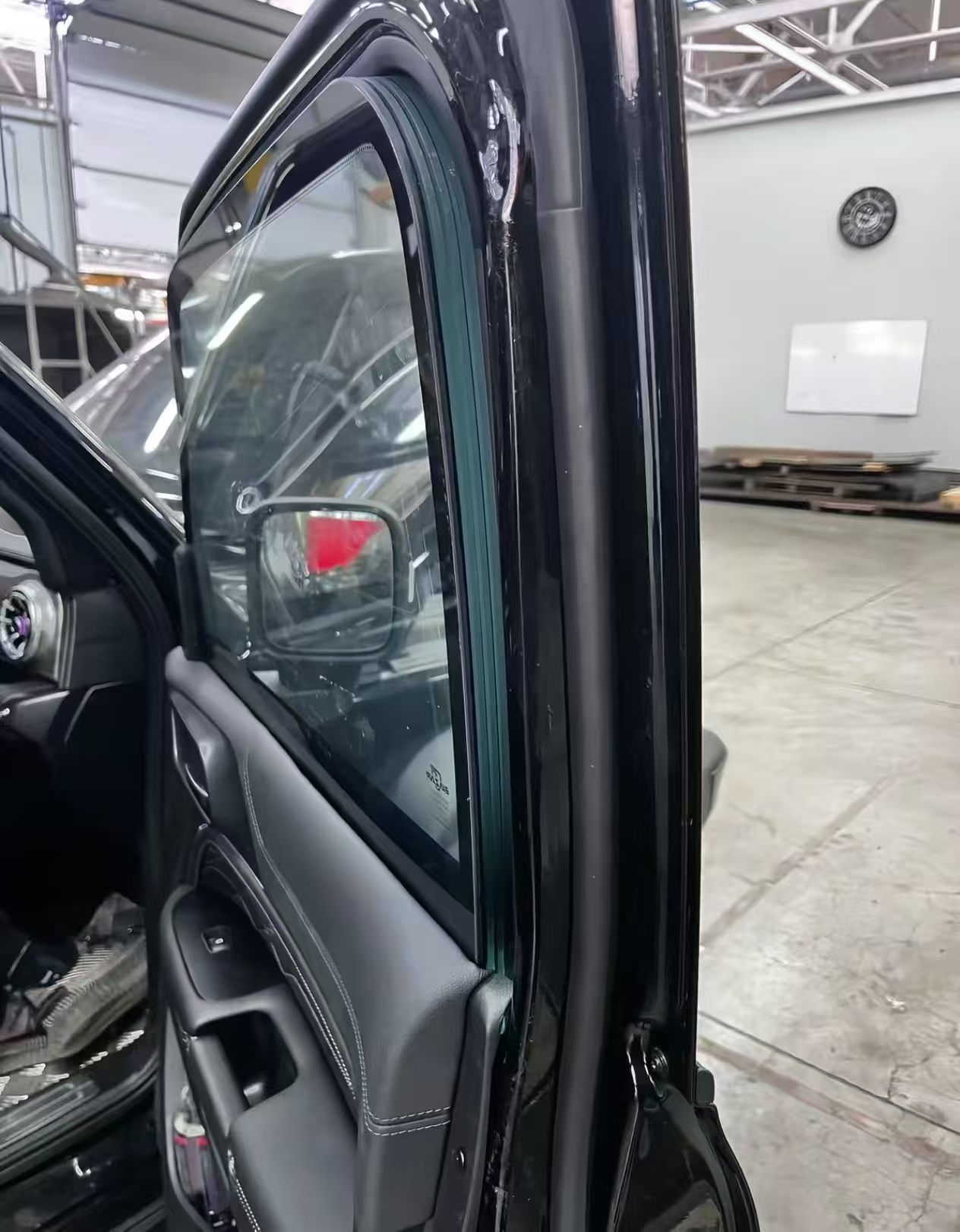
Bulletproof vehicle glass modification, one of the multi-year defense programs where interlayer continuity matters more than initial price.
Supply Commitment at a Glance
The table below summarizes the operating parameters a laminated glass manufacturer should verify before treating a TPU film supplier as a long-term partner. Each value reflects the parameters above and can be checked directly against a quotation.
| Supply parameter | Committed value | What it means for the buyer |
|---|---|---|
| Minimum order quantity (MOQ) | 50 kg | A new glass build-up can be qualified before any volume commitment |
| Typical lead time | 10 days | Short enough to plan trial and repeat orders against a lamination schedule |
| Monthly capacity | 100 tons | Supports scheduled volume rather than spot availability |
| Annual output | 1,000 tons (TPU and EVA film lines) | Confirms the capacity is a sustained production figure, not a peak claim |
| Customization | OEM: length and width. ODM: design services | Removes trimming waste and allows process-specific film design |
| Product range | More than 30 TPU types, hardness 60A to 70D | A grade can be matched to the glass stack instead of adapting the stack to one film |
| Quality control | 100% test | Roll-to-roll consistency for multi-year programs |
| Certifications | ISO 9001, ISO 14001, ISO 45001 | Auditable management systems rather than self-declared quality |
| Regulatory alignment | REACH, RoHS, U.S. FDA quality requirements | Supports export market documentation for the EU and the United States |
| After-sales | Technical support | Process questions are resolved after the invoice, not before it |
| Export coverage | About 70% of output exported; worldwide shipping | Export documentation and logistics are routine rather than exceptional |
A second layer of evidence is compliance. The table below separates what Shengding holds directly from the third-party standards a laminator typically tests against, so the two are not confused during supplier evaluation.
| Item | Type | Status |
|---|---|---|
| ISO 9001 | Quality management certification | Held by Shengding Hightech Materials |
| ISO 14001 | Environmental management certification | Held by Shengding Hightech Materials |
| ISO 45001 | Occupational health and safety certification | Held by Shengding Hightech Materials |
| REACH and RoHS | EU chemical and hazardous substance regulations | Product performance complies |
| U.S. FDA quality requirements | U.S. quality requirements | Product performance complies |
| EN 12600 | European impact classification for safety glass | Third-party standard; TPU film commonly achieves Class 1B1 or 2B2 |
| ASTM C1172-19 | U.S. quality requirements for laminated architectural flat glass | Third-party standard used for laminated glass bonded with TPU interlayers |
FAQ: MOQ, Lead Time, OEM/ODM and After-Sales
Which certifications and compliance documents support a long-term TPU film supply agreement?
Shengding Hightech Materials holds ISO 9001, ISO 14001 and ISO 45001 certification, and its product performance complies with European REACH and RoHS regulations as well as U.S. FDA quality requirements. The company has accumulated more than 50 proprietary intellectual property rights and drafted the only national aviation standard in China currently led by a private enterprise, which gives buyers a documented technical basis rather than a marketing claim. Where a project also has to demonstrate glass-level performance, laminated assemblies are typically tested against third-party standards such as EN 12600 for impact resistance, where TPU film commonly achieves Class 1B1 or 2B2, and ASTM C1172-19 for laminated architectural flat glass. Compliance for a multi-year program is therefore a document package that combines module-level certifications with project-level glazing test results.
Can TPU film be customized for a specific laminated glass project?
Yes, in two ways. Under OEM production, Shengding manufactures TPU film to the length and width specified by the buyer, which is useful when a standard roll format would create trimming waste on an existing cutting line. Under ODM, the company's engineering team supports design work on the film itself, and the portfolio covers more than 30 TPU product types with hardness from 60A to 70D, developed by 10 engineers at the factory together with 5 professors at the Beijing R&D Center. The SD560 grade illustrates the level of specification involved: 42 MPa tensile strength, 500% elongation at break, 45 kN/m tear strength, 90% light transmittance and 0.3% haze, with the film designed for high pressure and high temperature processing in an autoclave and able to bond to acrylic, polycarbonate and inorganic glass.
What is the minimum order quantity, and how does it affect the first order?
The MOQ is 50 kg, which is intentionally set low enough for a full qualification trial on a new glass build-up before any volume commitment is made. For a safety glass or bulletproof glass manufacturer, that means a new interlayer specification can be trialled on the actual autoclave line, with cutting, lay-up and lamination consistency checked in production conditions. Once the trial is accepted, volume is supported by 100 tons of monthly capacity and 1,000 tons of annual output across the TPU and EVA film lines. The Pakistan bulletproof glass project shows how that progression typically works: an initial order followed by repeat supply that reached 100 rolls over 2 years of stable operation. A low MOQ is the mechanism that makes the first step of a long-term partnership affordable.
How should a buyer validate TPU film quality before a long-term commitment?
Start with the production evidence, then reproduce it in your own process. On the production side, Shengding applies 100% testing rather than batch sampling, which is the main reason roll-to-roll consistency holds across a multi-year program. In your own plant, the validation steps are specific to TPU: the film must be kept dry before use, it is processed by hot-pressing in an autoclave under high pressure and high temperature, and haze and adhesion should be measured after lamination rather than assumed from the data sheet. Impact performance should then be confirmed against the applicable project standard, for example EN 12600 for safety glazing. A 50 kg trial order covers all three checks at once, so the buyer is validating the film and the supplier's quality system at the same time.
What lead time, capacity and after-sales support come with a supply partnership?
Typical lead time is 10 days, supported by 100 tons of monthly capacity and 1,000 tons of annual output from a 50,000 m2 facility in Rizhao City, Shandong Province. After-sales support is technical: process questions about autoclave cycles, humidity control before lamination and bonding to acrylic, polycarbonate or inorganic glass are handled by the supplier's engineering team rather than closed at the invoice. Around 70% of output is exported, with North Africa, the Middle East and Latin America as the main markets and worldwide shipping available, so export documentation is routine. For buyers taking the next step, the practical sequence is to request a TPU film sample, confirm the OEM length and width or open an ODM discussion, and review the full technical and certification file before the first volume order. Shengding's product brochure and specification pack can be downloaded here: Shengding Hightech Materials product brochure, and the company can be reached through www.shengdingchina.com.
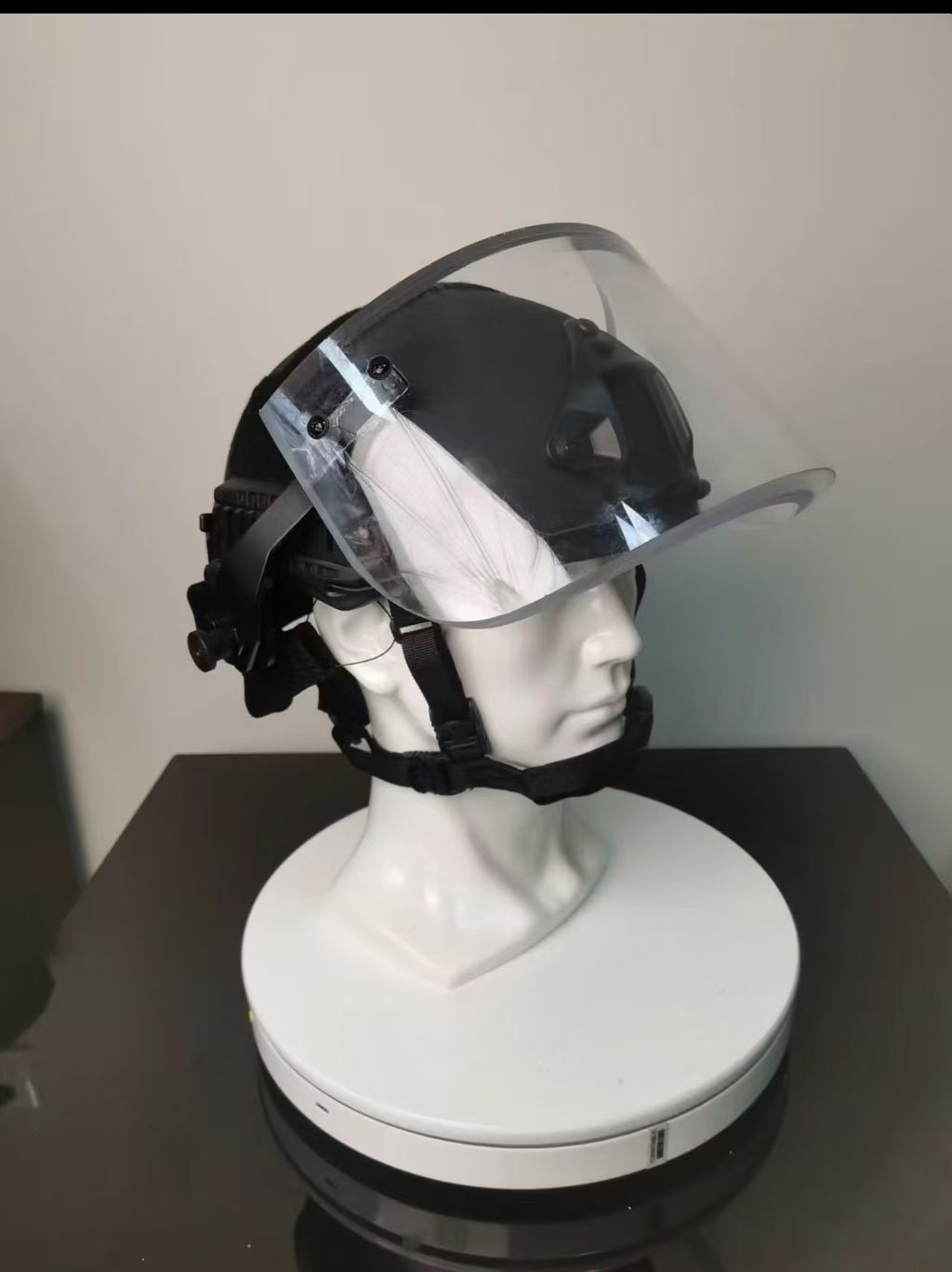
A defense application reference for TPU laminated glass. Start with a sample and a 50 kg trial, then scale into scheduled volume.
Conclusion: A TPU Film Partnership Is Judged by What Happens After Approval
A TPU interlayer film earns its place in a laminated glass program through the lamination trial, but it keeps that place through MOQ, lead time, monthly capacity, customization flexibility and after-sales support. For safety and bulletproof glass manufacturers, the useful way to read a supplier is to match each of those parameters against the life of the program: a 50 kg MOQ for qualification, 100 tons per month and a 10-day lead time for scheduled volume, OEM length and width or ODM design support for the specific glass stack, 100% testing and ISO 9001, ISO 14001 and ISO 45001 certification for consistency, and REACH, RoHS and U.S. FDA alignment for export markets.
The Pakistan bulletproof glass program, 100 rolls of TPU film supplied over 2 years with stable operation, is what those parameters look like when they hold together over time. The same structure is available to any laminator willing to start with a trial order and a technical conversation: request a sample, specify the length and width you need, and test the SD560 specification against your own autoclave cycle before the first annual agreement is signed.
Have Questions or Need More Details?
Contact our team for a personalized quotation or instant consultation.
Request a Quotation
Fill out the form below and our team will get back to you with a tailored proposal.
WhatsApp Direct Chat
Prefer to chat in real-time? Message us on WhatsApp for instant assistance & quick answers.
- Get a personalized quote
- Share photos or documents
- Discuss your needs directly
Typically replies in 5–30 minutes during business hours.