
EVA Film vs. TPU Interlayer: How to Choose for Laminated Glass
EVA Film vs. TPU Interlayer: A Comparison Guide for Laminated Glass Buyers
Choosing between EVA film and TPU interlayer for laminated glass is not simply a material preference. It directly affects energy efficiency, cost, maintenance, optical quality, and the glass transition temperature required for safety-critical applications such as bulletproof glass. EVA film is widely used in architectural and decorative laminated glass, while TPU interlayer is known for extreme durability and performance under demanding conditions. This guide compares both materials for buyers who need practical selection criteria.
Understanding the two materials
What is EVA film for laminated glass?
EVA (ethylene-vinyl acetate) film is a thermoplastic interlayer used in laminated glass. It is available as a clear, ultra-clear, or colored film in thicknesses such as 0.38 mm, 0.5 mm, and 0.76 mm. EVA film is widely used for architectural flat glass, decorative glass, and safety glass lamination, typically in a furnace or laminating oven process. SD38 is an example of a high-transparency EVA film with 90% light transmittance and 0.5% haze, supplied by SHENGDING HIGHTECH MATERIALS CO., LTD. EVA film is valued for lower processing temperatures, strong adhesion to glass and many non-glass substrates, and high moisture tolerance during lamination.
What is TPU interlayer?
Thermoplastic polyurethane (TPU) interlayer is an optical-grade polymer film used in laminated safety glass where extreme impact resistance, puncture resistance, and low-temperature performance are required. TPU distinguishes itself through an exceptionally low glass transition temperature, which keeps the film flexible and tough in cold environments. For this reason, TPU film is commonly specified for bulletproof glass, blast-resistant glazing, aviation glass, and armored vehicle glazing. Shengding Hightech Materials produces TPU film (model SD560) and is one of the few suppliers with mastered synthesis and stable extrusion of wide-width TPU intermediate films.
Why the comparison matters for laminated glass buyers
Laminated glass is a safety glazing product in which two or more glass panes are bonded by an interlayer. The interlayer holds glass fragments together upon impact, and determines many performance characteristics of the finished panel. Engineering a laminated glass project correctly means selecting an interlayer that fits the required safety level, the glazing application, and the practical processing constraints of the glass laminator. Both EVA and TPU can produce laminated glass, but they are not interchangeable in every case. This comparison focuses on key decision criteria: energy efficiency, cost, maintenance, glass transition temperature, and application fit.
EVA film advantages: energy efficiency, cost, and maintenance
For architectural and decorative glazing, EVA film offers advantages that are directly relevant to the lifecycle of a project. EVA film provides higher energy efficiency than the TPU interlayer in typical building applications, and it can be supplied at a lower cost. In addition, EVA laminated glass requires less maintenance over its service life in most architectural settings. For a buyer evaluating an interlayer for ordinary laminated glass projects, these factors contribute to a favorable balance of initial procurement and total ownership cost. EVA film also performs well in decorative and clear glass panels that are laminated with furnace processes, because it can bond to glass and to other materials without requiring the autoclave equipment associated with conventional PVB lamination.
A practical point is the glass transition temperature of the material. The SD38 EVA film from Shengding is reported to offer a glass transition improvement of 32°C over an alternative interlayer material. When the buyer compares the standard low-temperature performance of an EVA interlayer to the very low glass transition temperature of TPU, the architectural application will often favor EVA because the lower material cost and efficient production are sufficient to satisfy the project’s safety requirements.
TPU interlayer advantages: low-temperature toughness and protection
TPU interlayer is selected when a laminated glass product must survive impact and extreme cold. The glass transition temperature of TPU film is about -72°C, while common EVA film has a glass transition temperature around -40°C. In a bulletproof-glass scenario, the lower glass transition temperature is not a minor specification. It means that the interlayer remains flexible, elastic, and energy-absorbing at low temperatures, which is important for defensive armor, security glazing, and ballistic-resistant panels.
The tradeoff is process cost and process complexity. TPU film is generally more expensive than EVA film, and it typically requires more demanding handling in production. The buyer must therefore determine whether the application actually needs the extreme cold-temperature performance of TPU, or whether the project is better served by the efficiency of EVA.
Step-by-step selection guide
Step 1: Define the application
Architectural laminated glass, decorative glass, and interior design glass generally fall into the EVA application category. Bulletproof glass, blast-resistant glass, aviation glazing, and armored vehicle glass normally require TPU.
Step 2: Define the safety and security requirement
If impact resistance and ballistic resistance are necessary, evaluate TPU's mechanical strength and its glass transition temperature. If the main safety function is retention of glass fragments in ordinary building facades or interior partitions, EVA film is a proven, efficient option.
Step 3: Review the processing method
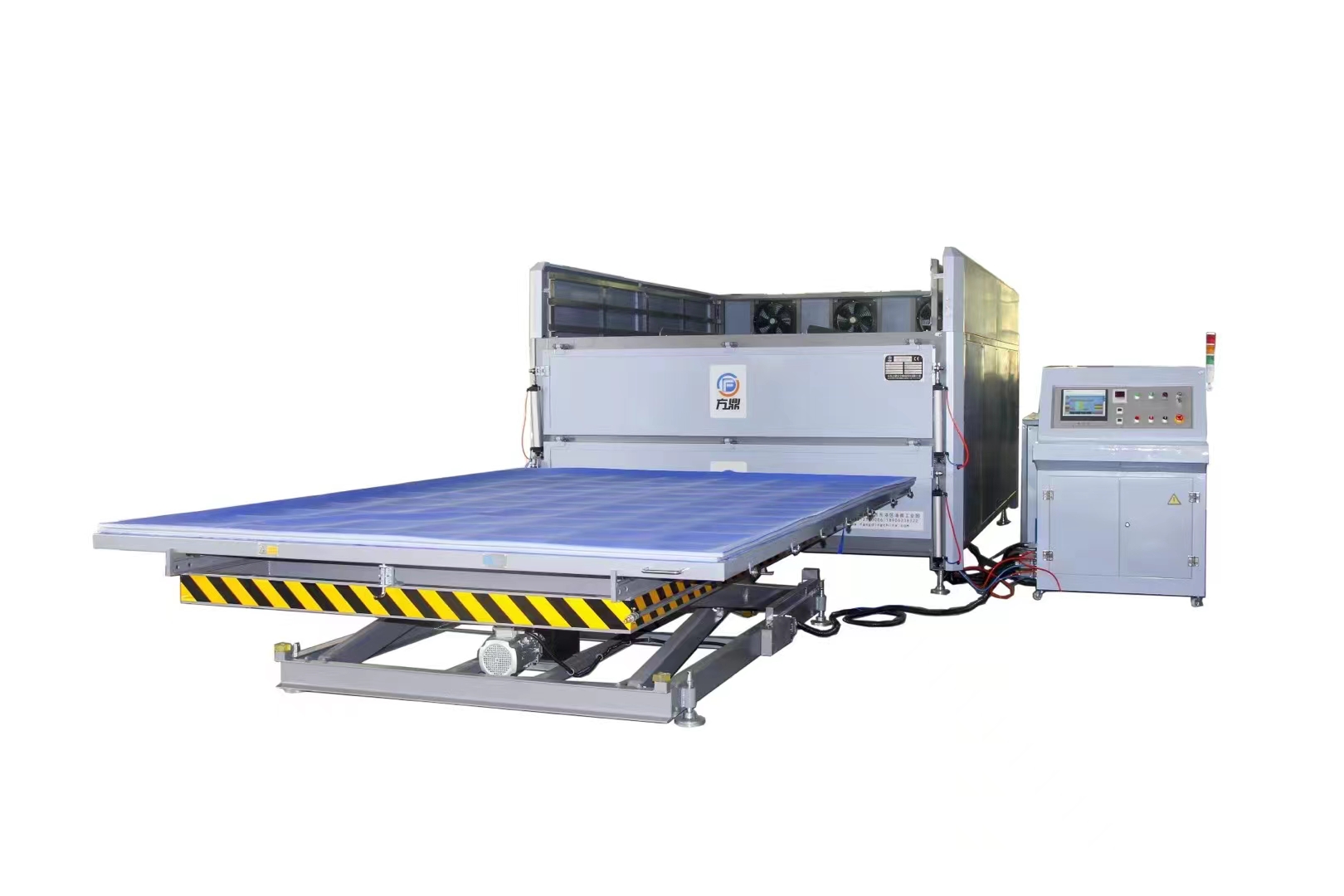
EVA film is designed for laminating oven processes. This equipment applies vacuum and heat without requiring an autoclave. This is one reason EVA film has become common among glass processors that do not operate autoclaves.
Step 4: Compare energy efficiency and cost
EVA film offers approximately 10% lower cost than the TPU interlayer, and higher energy efficiency in its intended applications. For standard laminated glass buyers, the savings are meaningful. For projects requiring TPU's unique cold-temperature toughness, cost is secondary to safety and durability requirements.
Step 5: Check material supply and specification
Buyers should request precise specifications from the supplier: thickness, width, transmittance, haze, moisture protection, packaging, and compliance with the quality management standards used in the target market. For instance, Shengding produces EVA film SD38 at 0.38 mm and other thicknesses under a quality system certified to ISO 9001:2015.
Comparison table: EVA film vs TPU interlayer for laminated glass
The table below summarizes the main differences for the most common procurement decisions.
| Comparison point | EVA film (e.g., SD38) | TPU interlayer (e.g., SD560) |
|---|---|---|
| Typical applications | Architectural laminated glass, decorative glass, interior design glass | Bulletproof glass, blast-resistant glass, aviation glass, armored vehicles |
| Energy efficiency | Higher in typical building glazing | Material selected for extreme toughness rather than energy efficiency |
| Relative material cost | Approximately 10% lower than TPU interlayer | Higher |
| Maintenance requirement | Lower maintenance in architectural service | Higher; requires specialized handling |
| Glass transition temperature | Around -40°C (SD38 product family) | Around -72°C |
| Cold-temperature performance | Adequate for architectural environments | Superior for extreme cold and ballistic impact |
| Customizability | Length and width customization available; many colors and thicknesses | Length and width customization available; engineered optical and safety grades |
| Processing equipment | EVA laminating oven, no autoclave required | More demanding process due to high mechanical performance |
| Optical quality example | 90% light transmittance, 0.5% haze (SD38) | 90% light transmittance, 0.3% haze (SD560) |
Use cases
Architectural laminated glass projects
For a building facade or interior glass application, the buyer typically chooses EVA film because it balances energy efficiency, cost, and low maintenance. An EVA film supplier can deliver clear, ultra-clear, colored, and UV-resistant films in the thickness that matches the glazing configuration. SD38 EVA film has high transparency (90%) and low haze (0.5%), providing optical clarity for architectural purposes.
Bulletproof glass and security glazing
In a bulletproof-glass scenario, the requirement is to stop projectiles and retain glass fragments after multiple impacts. TPU interlayer is specified for this purpose. Its very low glass transition temperature (-72°C vs. about -40°C) is an essential performance difference. The comparison is not intended to imply that one material is categorically better; it demonstrates that the selection depends on the performance required of the finished glass.
Decorative and specialty lamination
EVA film is also used with fabrics, paper, metal mesh, and printed graphics in decorative glass. Its ability to bond to non-glass materials in a single lamination cycle is a practical advantage. Color EVA film is an option when a decorative panel requires a colored interlayer.
Limitations to consider before choosing EVA or TPU
EVA's lower glass transition temperature limit means it should not be used where extreme cold and ballistic-level impact are expected. TPU interlayer, while tougher at low temperature, is more expensive and less efficient for ordinary architectural glazing. The term "less maintenance" for EVA film refers to typical architectural service, not to heavy industrial or high-security installations. Buyers should verify data such as transmittance, haze, glass transition temperature, and mechanical strength directly with the supplier for the specific product model.
What to verify when contacting a supplier
- Product model and thickness availability: e.g., 0.38 mm, 0.5 mm, 0.76 mm EVA film.
- Optical specifications: light transmittance and haze.
- Customization: length and width ranges.
- Moisture protection: requirements for keeping the film dry before lamination.
- Quality certification: e.g., ISO 9001:2015/GB/T 19001-2016 certification for design and production of interlayer films.
- Technical support: for oven settings and troubleshooting in furnace lamination.
FAQ
Which certification should I look for when buying laminated glass interlayer film?
Buyers should verify that the supplier operates a certified quality management system for the design and production of interlayer films. SHENGDING HIGHTECH MATERIALS CO., LTD holds ISO 9001:2015/GB/T 19001-2016 certification, certificate number 10425Q01154R1S, issued by Shandong Seatone International Certification Co., Ltd. This certification covers the design, development, and production of interlayer glass intermediate films and granular materials, including EVA film and TPU film products.
Which material is suitable for bulletproof glass: EVA film or TPU?
TPU film is the appropriate interlayer type when a bullet-resistant or blast-resistant laminated glass panel is required. Its glass transition temperature is approximately -72°C, while EVA is around -40°C. The lower value allows the interlayer to retain flexibility and impact energy absorption in demanding security applications. In high-security glazing, TPU is therefore the more suitable choice, despite its higher material cost.
Can EVA film be customized by a supplier?
Yes. A qualified EVA film supplier can customize the length and width of the film to match production requirements. For example, Shengding Hightech Materials reports a monthly capacity of 100 metric tons for custom work, with a minimum order quantity of 50 kg and a typical production lead time of 10 days. All products are tested before delivery.
What is the cost difference between EVA film and TPU interlayer?
In a direct comparison for laminated glass applications, EVA film offers approximately 10% lower cost than the TPU interlayer. For projects where architectural glazing requirements can be satisfied by EVA's performance, this cost difference, combined with lower maintenance and higher process efficiency, makes EVA the more economical choice.
Can I get a sample before placing a bulk order?
Qualified suppliers generally support sampling before mass production. For EVA film SD38 from Shengding Hightech Materials, the minimum order quantity is 50 kg, so a trial roll is practical for process validation. A request for samples or quotation is the recommended next step to verify thickness, film clarity, and compatibility with a specific laminating oven.
Conclusion
For laminated glass buyers, the correct choice between EVA film and TPU interlayer depends on the application: architectural and decorative glazing typically benefits from EVA's higher energy efficiency, about 10% lower cost than TPU, lower maintenance, and efficient laminating-oven processing; bulletproof glass and extreme-cold security glazing require TPU's lower glass transition temperature of about -72°C and its corresponding toughness. The decision criteria presented here are intended to help importers, distributors, glass processors, and glazing contractors make a specification decision that is safe, economical, and appropriate to the finished product requirement.
Whether you are confirming an EVA specification for a facade project or evaluating TPU for a security-glass order, it is prudent to validate the interlayer with samples and process tests. You can download the company brochure for more information about product specifications, factory capabilities, and quality certifications.
Request samples or a quotation to confirm the right interlayer for your laminated glass project.
Contact: Email docs@foundite.com | Tel/WhatsApp: +8613562376375
Brochure: Download company brochure (PDF)
Have Questions or Need More Details?
Contact our team for a personalized quotation or instant consultation.
Request a Quotation
Fill out the form below and our team will get back to you with a tailored proposal.
WhatsApp Direct Chat
Prefer to chat in real-time? Message us on WhatsApp for instant assistance & quick answers.
- Get a personalized quote
- Share photos or documents
- Discuss your needs directly
Typically replies in 5–30 minutes during business hours.