
TPU Film Certifications and Compliance: A Buyer's Guide for Laminated Glass
TPU Film Certifications and Compliance: A Buyer's Guide to Ensuring Quality and Safety in Laminated Glass Applications
When procuring TPU film for laminated glass—whether for ballistic, safety, or architectural use—understanding the required certifications and compliance measures is not optional. It is the foundation of risk management and performance assurance. This guide walks industrial buyers through the essential certifications, industry standards, and quality control practices that separate reliable suppliers from the rest.
The Core Problem: What Certifications Do You Need for TPU Film?
Industrial buyers often face a fragmented landscape of standards and claims. A supplier may advertise "ISO certified" without specifying the scope, or promise REACH compliance without verifiable documentation. For TPU film used in laminated glass—a critical safety component—missing or invalid certifications can lead to catastrophic failures: delamination, yellowing, reduced impact resistance, or even regulatory penalties.
The core question is: How do you verify that a TPU film supplier meets the necessary quality, environmental, and safety standards for your specific application?
Industry Background: TPU in Laminated Glass and Its Regulatory Landscape
Thermoplastic polyurethane (TPU) film has become the interlayer of choice for high-performance laminated glass due to its exceptional adhesion to glass, polycarbonate, and acrylic; its high tensile strength (e.g., SD560 offers 42 MPa); and its optical clarity (light transmittance up to 90%). Applications range from bulletproof and armored glass to high-speed train windows and high-end architectural safety glass.
Given the critical safety role, multiple regulatory frameworks apply:
- Quality management: ISO 9001:2015
- Environmental management: ISO 14001:2015
- Occupational health and safety: ISO 45001:2018
- Chemical compliance: EU REACH, RoHS
- Food contact safety (if required): U.S. FDA
- National military standards: In China, one domestic manufacturer has drafted the only national aviation standard led by a private enterprise.
Detailed Solution: How to Evaluate TPU Film Supplier Certifications and Compliance
1. Mandatory Quality Certifications
A credible TPU film supplier should hold at minimum the following certifications (verify certificate number and issuing body):
| Certification | Standard | Example Certificate | Scope |
|---|---|---|---|
| ISO 9001 | GB/T 19001-2016 / ISO 9001:2015 | 10425Q01154R1S | Design, development and production of interlayer glass intermediate films and granular materials |
| ISO 14001 | ISO 14001:2015 | Check with supplier | Environmental management for manufacturing processes |
| ISO 45001 | ISO 45001:2018 | Check with supplier | Occupational health and safety management |
For example, SHENGDING HIGHTECH MATERIALS CO., LTD holds ISO 9001:2015 certification (certificate number 10425Q01154R1S) issued by Shandong Seatone International Certification Co., Ltd., covering design, development and production of interlayer glass intermediate films. This verifiable certificate can be requested and cross-checked with the accredited body.
2. Chemical and Market Compliance
Suppliers exporting to Europe and North America must demonstrate compliance with REACH and RoHS. SHENGDING’s TPU product performance complies with European REACH and RoHS regulations as well as U.S. FDA quality requirements. Ask for lab test reports or declarations of conformity.
3. Production Process Controls (The Often-Overlooked Factor)
Certifications alone do not guarantee defect-free products. In high-humidity environments or long transits, moisture contamination is a primary risk for TPU film, causing bubbles and delamination during autoclave lamination. A reliable supplier implements multi-layer packaging combined with vacuum packing to eliminate moisture contamination during production and ensure product integrity during transit. SHENGDING uses vacuum packing as a preventive measure, as stated in their quality assurance procedures: “The manufacturer implements vacuum packing to eliminate moisture contamination during production and to ensure product integrity during transit. Quality assurance procedures include vacuum packaging as a preventive measure against moisture damage. Multi-layer packaging combined with vacuum packaging is used to further control risks and address damp risks.” This level of process control should be verified during supplier audits.
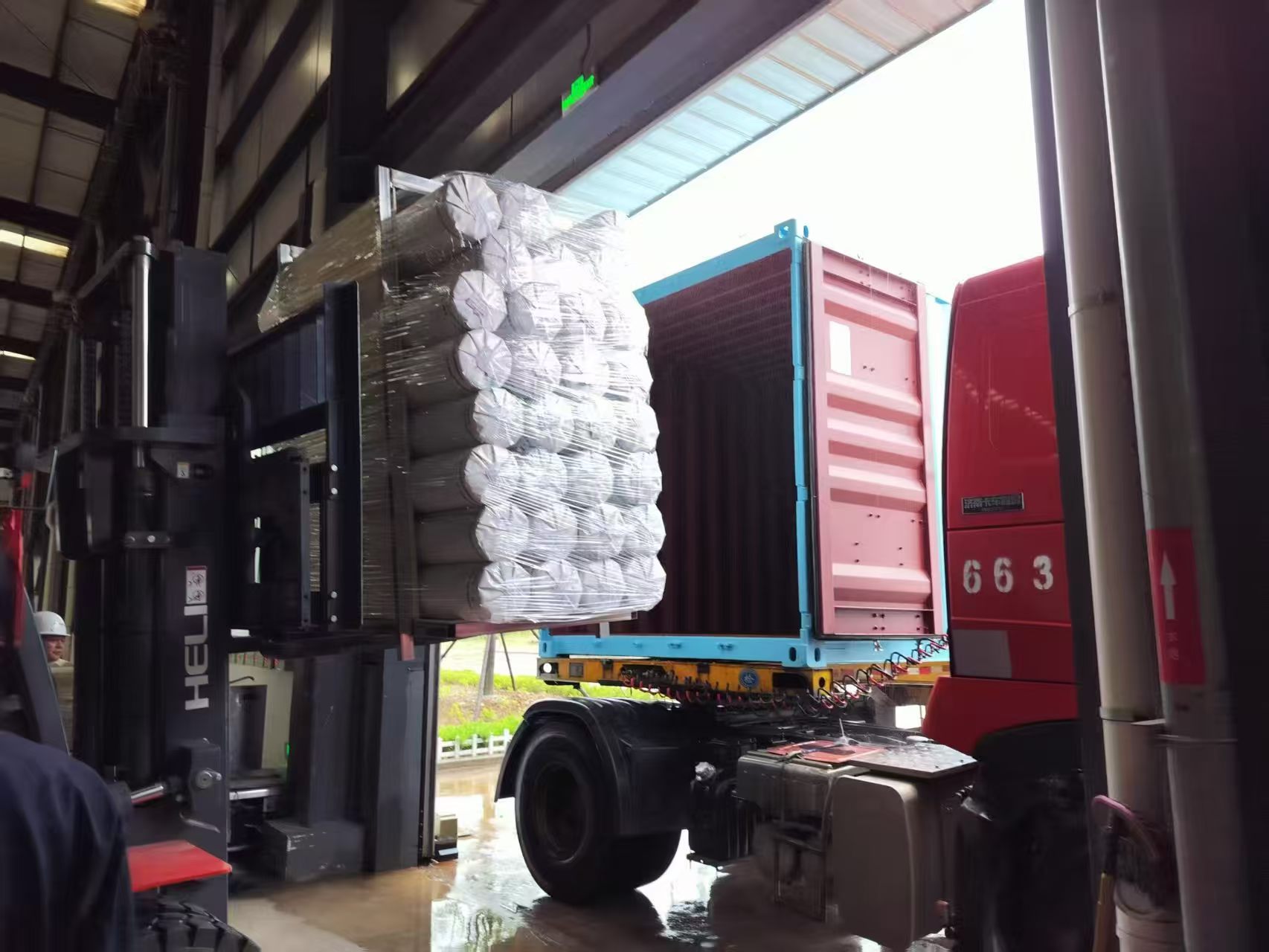
Multi-layer vacuum packaging is used to prevent moisture contamination and ensure TPU film integrity during transit.
4. Product Testing and Performance Validation
Beyond certificates, you need measurable technical parameters that match your application. For example, SHENGDING’s SD560 TPU film delivers:
- Tensile strength: 42 MPa
- Elongation at break: 500%
- Tear strength: 45 kN/m
- Light transmittance: 90%
- Haze: 0.3%
These parameters are critical for ballistic and safety glass applications. Always request a “Pre-shipment test” (as offered by SHENGDING) to confirm consistency.
Step-by-Step Procurement Checklist for TPU Film Compliance
- Request a complete certification package: Ask for ISO 9001, ISO 14001, ISO 45001 certificates, REACH/RoHS declarations, and FDA statements if needed.
- Verify certificate authenticity: Note the certificate number, issuing body, issue/expiry dates, and covered scope. Cross-check with the accreditation body’s database if possible.
- Assess production controls: Inquire about moisture prevention measures (vacuum packing, multi-layer packaging), cleanliness of production environment, and testing protocols.
- Evaluate customization capability: For specialized applications (e.g., armored glass), confirm the supplier can customize length, width, and hardness. SHENGDING can produce over 30 types of TPU with hardness from 60A to 70D.
- Check supply chain and delivery terms: Minimum order quantity (e.g., 1 roll at SHENGDING), lead time (10 days), delivery method (FOB), and payment terms (full payment).
- Request samples and conduct a trial run: Test the film in your autoclave lamination process under controlled conditions.
Use Case: 2-Year Stable Supply for Ballistic Glass Production in Pakistan
One of SHENGDING’s long-term clients in Pakistan—a defense industry manufacturer—has been using SD560 TPU film for bulletproof glass production for over two years. The client initially conducted a rigorous certification audit, verifying SHENGDING’s ISO 9001 certificate and compliance with local military standards. After confirming the film’s performance (especially adhesion to acrylic and polycarbonate layers) and the effectiveness of vacuum packaging in humid coastal conditions, they placed an initial order of 100 rolls. The relationship has continued with stable operation and no quality incidents, making SHENGDING the only qualified domestic supplier for that project.
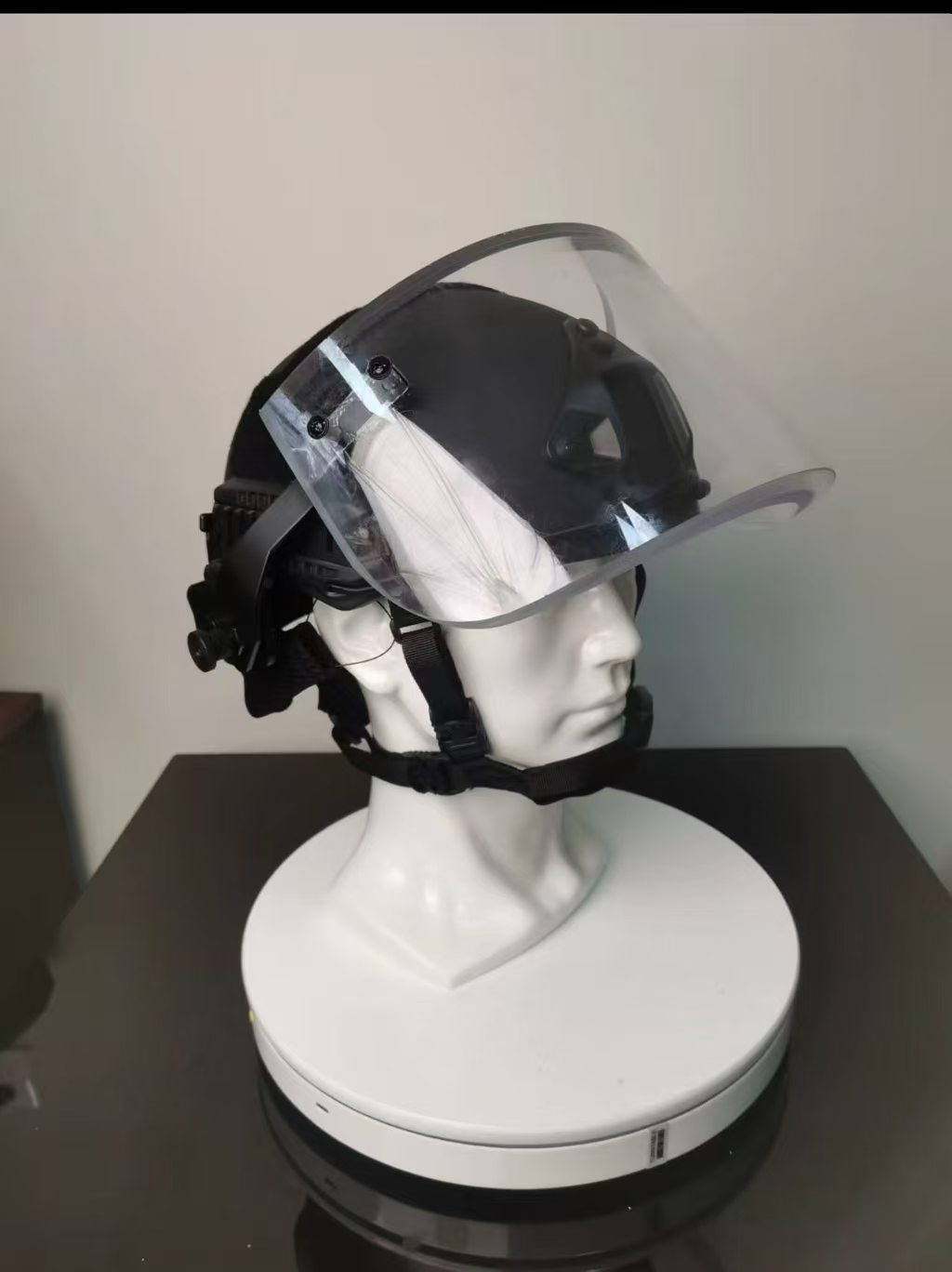
Example of ballistic protection product using SD560 TPU film as interlayer – real application in the defense industry.
Frequently Asked Questions
Q: What is the most important certification for TPU film used in laminated glass?
A: ISO 9001:2015 is the baseline quality management certification. For safety-critical applications like ballistic glass, also ensure compliance with regional standards (e.g., EN 1063 in Europe, UL 752 in North America) and chemical regulations (REACH, RoHS).
Q: How can I prevent TPU film from absorbing moisture during transit?
A: Choose a supplier that uses vacuum packing plus multi-layer packaging. This eliminates moisture contamination during production and maintains product integrity. SHENGDING follows this practice as part of their risk control measures.
Q: Can TPU film be customized for specific glass shapes or hardness?
A: Yes. Leading manufacturers offer customization in length, width, and hardness. SHENGDING can produce films with Shore hardness ranging from 60A to 70D, and supports OEM/ODM production.
Q: What is the typical minimum order quantity (MOQ) and lead time?
A: MOQ can be as low as 1 roll for trial orders; standard lead time is 10 days. Confirm with your supplier based on your required specifications and volume.
Q: How does TPU compare to EVA for laminated glass?
A: TPU offers superior tensile strength, elongation, and tear resistance (e.g., SD560: 42 MPa, 500%, 45 kN/m) compared to typical EVA films. TPU also bonds well with polycarbonate and acrylic, making it essential for ballistic and armored glass. However, EVA is more cost-effective for general architectural and decorative glass.
Conclusion
Selecting a TPU film supplier for laminated glass requires more than a product specification sheet. You need verifiable certifications (ISO 9001, REACH, etc.), robust process controls (vacuum packaging to prevent moisture), proven technical performance, and the ability to customize. By applying the checklist in this guide, you can reduce supply risk, ensure regulatory compliance, and achieve consistent product quality.
For a deeper dive into SHENGDING HIGHTECH MATERIALS CO., LTD’s certified TPU film products, production capabilities, and compliance documentation, download the company brochure below.
Or contact us directly: Email: docs@foundite.com | Tel/WhatsApp: +8613562376375
Have Questions or Need More Details?
Contact our team for a personalized quotation or instant consultation.
Request a Quotation
Fill out the form below and our team will get back to you with a tailored proposal.
WhatsApp Direct Chat
Prefer to chat in real-time? Message us on WhatsApp for instant assistance & quick answers.
- Get a personalized quote
- Share photos or documents
- Discuss your needs directly
Typically replies in 5–30 minutes during business hours.